


How do I reference a webpage… in the APA7 style?
30/03/2022

This post continues our series on referencing in the APA7 style, this time looking at webpages.
To reference a webpage, you need the following information:
- Author(s) of the webpage (Surname, Initials.) or group/organisation if the author isn’t individually named (eg. NASA).
- (Date).
- Title.
- Site Name.
- URL
And how should the reference look?
So if we were to reference this webpage in the APA7 style…
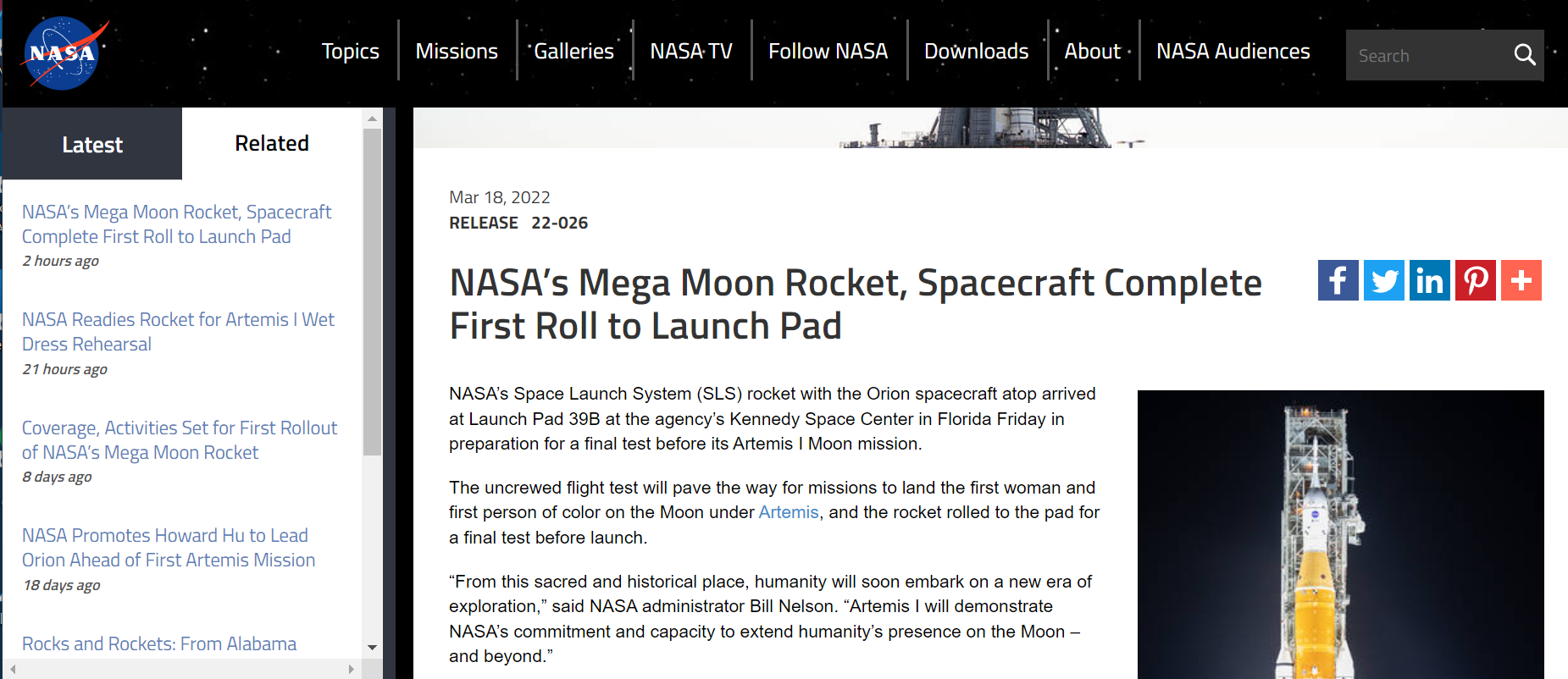
… it would look like this:
NASA. (2022). NASA’s Mega Moon Rocket, Spacecraft Complete First Roll to Launch Pad. https://www.nasa.gov/press-release/nasa-s-mega-moon-rocket-spacecraft-complete-first-roll-to-launch-pad.
NB. When the author and source name are the same, as in this example (NASA), you can omit the site name from the source element.
In the example below, the author and site name are different:
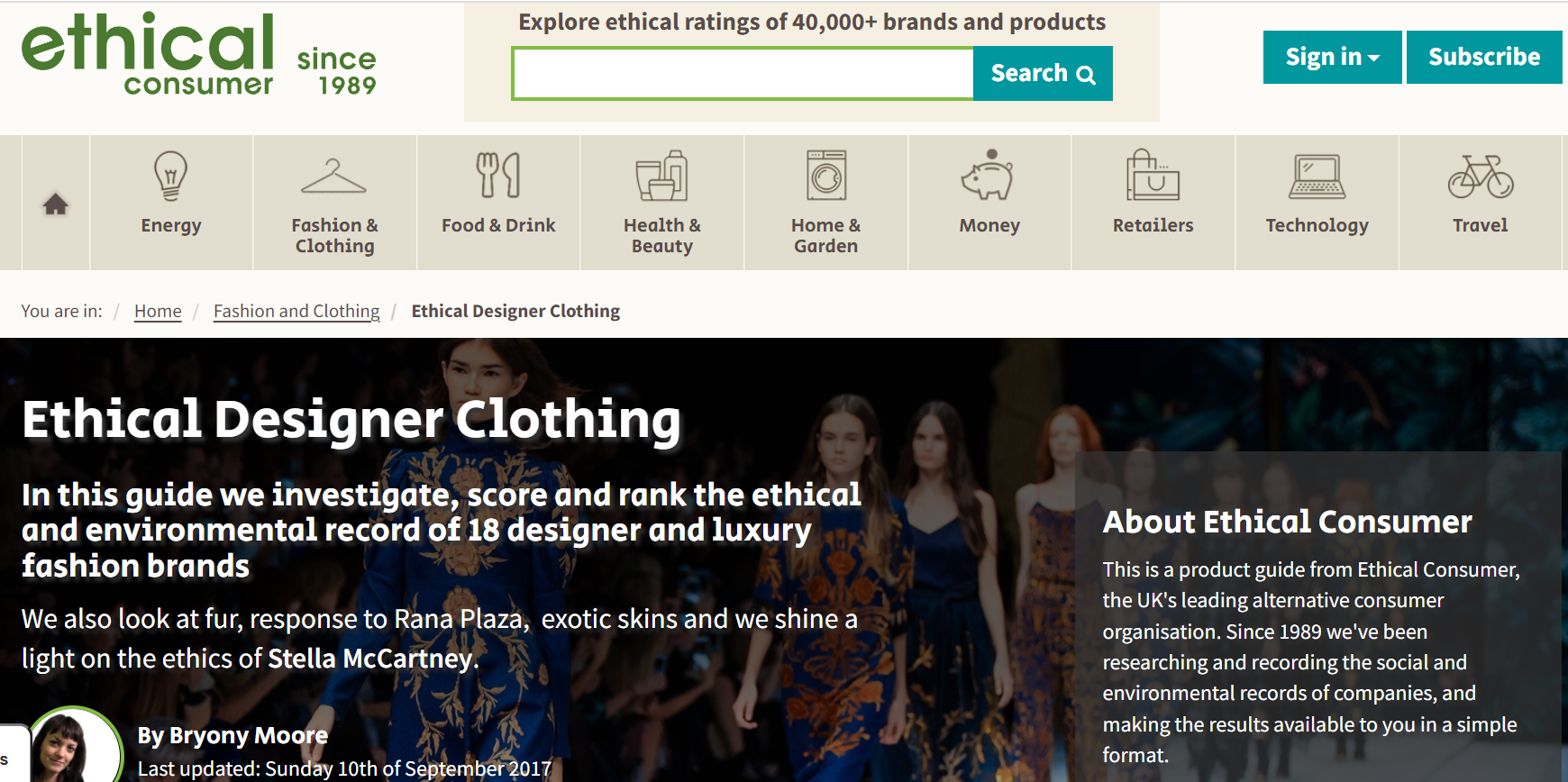
So it would look like this:
Moore, B. (2017). Ethical Designer Clothing. Ethical Consumer. https://www.ethicalconsumer.org/fashion-clothing/shopping-guide/ethical-designer-clothing.
Always remember to format your references with a hanging indent.
For all your referencing questions – please contact your Library.
Please note: Cranfield supports two different referencing styles – APA7 (Author-date) and Numbered (NLM). Please make sure you use the style preferred by your supervisor or lecturer. The advice above relates only to the APA7 style. If you have any questions about referencing, please contact the Library.
Feature image from Pixabay. Available at: https://pixabay.com/photos/office-business-accountant-620822/

Categories & Tags:
Leave a comment on this post:
You might also like…

Need help using the Python programming language?
We know some of our students are currently trying to learn Python, so we wanted to make you aware of some great LinkedIn Learning videos that can help. But don't you have to pay for ...
What does it really take to become a Chevening Scholar?
Say “Turkmenistan” to most people and you’ll get a blank look. That was true when I left Ashgabat for the UK to study an MSc in Logistics and Supply Chain Management at Cranfield University ...
The V-conomy: powering the sixth wave of global economic growth
The world could be on the verge of a major surge in economic growth and development, driven by the convergence of AI and clean energy technology. Waiting to ride the K-wave The Russian ...

Get a head start on referencing and plagiarism
We offer a module on Referencing And Avoiding Plagiarism which you can find on your Canvas dashboard. It explains the role and importance of citing references and how to incorporate the work of other authors ...
How Cranfield shaped my journey as an Aerospace Engineer
If I'm being specific about the moment it clicked, it was reading a paper called "On the Role and Challenges of Computational Fluid Dynamics (CFD) in the Aerospace Industry" by two Boeing engineers, P. ...
Introducing Kings Norton Library
Welcome to all our new students! We are looking forward to meeting you soon. You will find Kings Norton Library in the centre of the Cranfield campus, and it is open 24/7 to all staff ...