


From classroom to reality: Supply chain insights from Cranfield’s Manchester study tour
22/05/2026
Each year, Cranfield University organises a study tour for MSc Logistics and Procurement & Supply Chain Management students. For the 2025–2026 cohort, students were given the option to select one of three study groups: Liverpool, Manchester, or Cardiff. This blog focuses on the Manchester group, where we visited operational sites across Milton Keynes, Derby, and Manchester to observe supply chains in practice. The tour provided direct exposure to fulfilment, manufacturing, service logistics, and event operations, linking classroom concepts to real-world execution. Each visit represented a distinct supply chain context, enabling comparison across fulfilment, manufacturing, service logistics, and event operations.
Joybuy (JD.com): Cross-border fulfilment in practice
Our first visit was to Joybuy, part of the wider ecosystem of JD.com. The facility operates as a cross-border fulfilment centre, bridging global sourcing from China with local distribution in the UK. Rather than shipping individual orders internationally, inventory is pre-positioned locally to reduce lead times and improve service levels.
The site consists of two operations: a manual warehouse and a second facility that is already around 60% automated, supported by a high-rack cube system, with a clear roadmap towards full automation in the coming years. This phased transition reflects how organisations scale automation while maintaining operational continuity.
This model reflects a key strategic shift in modern supply chains, from cost efficiency towards responsiveness. While holding inventory locally increases storage and handling costs, it enables faster delivery and greater reliability in meeting customer expectations.
At the same time, managing high SKU variety and demand uncertainty, particularly within a niche customer segment, reinforces the growing importance of data-driven demand sensing and warehouse management systems.
Overall, the visit showed how global supply chains are increasingly structured to balance international sourcing with local responsiveness, supported by gradual automation and digital capabilities.
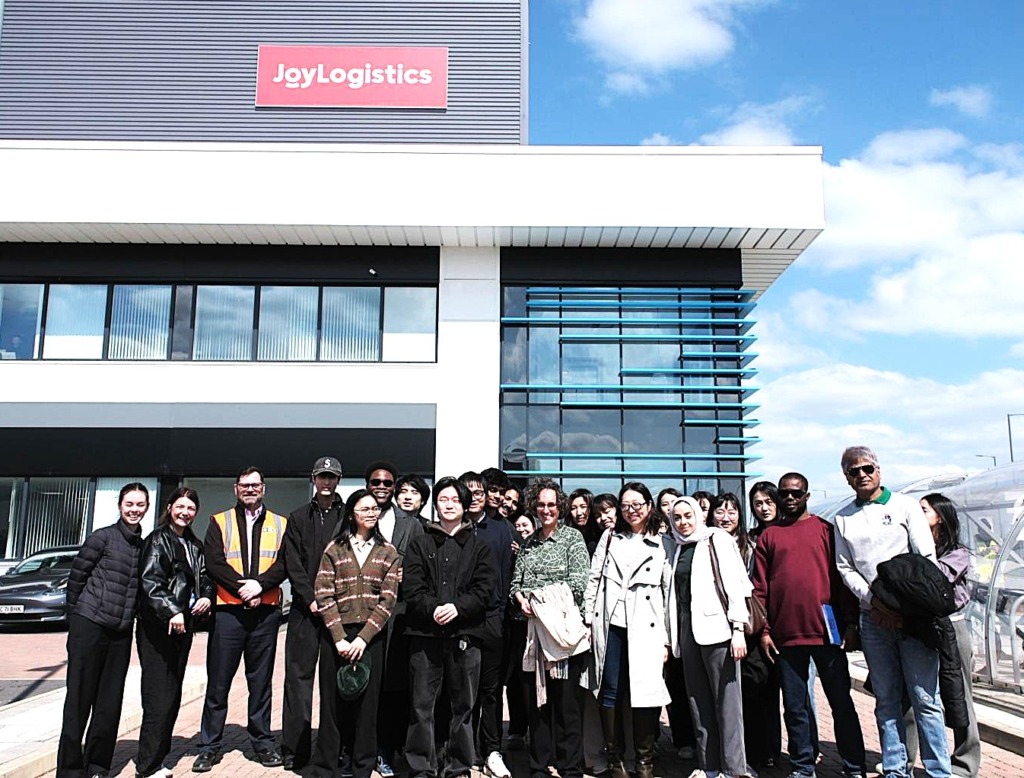
JD.com’s UK fulfilment hub: a clear example of how pre-positioned inventory and phased automation enhance
service levels in global supply chains.
Toyota: Lean principles in practice
Our visit to Toyota Motor Manufacturing UK provided a clear view of how lean principles are executed in a real manufacturing environment. Concepts studied in class, such as Just-in-Time (JIT), Jidoka, and Kaizen, were not theoretical frameworks but embedded practices shaping daily operations.
JIT ensures that components arrive precisely when required, minimising inventory while maintaining flow. Jidoka builds quality into the process, allowing issues to be identified and addressed at source rather than at the end of production. Kaizen, driven by shop-floor employees, reinforces continuous improvement as an ongoing responsibility rather than a one-time initiative. These are further supported by practices such as cross-docking and automation with human-in-the-loop, where technology enhances rather than replaces decision-making.
One notable observation was the approach taken by Toyota’s managers in engaging with students. Their emphasis was not only on explaining processes, but on ensuring that concepts were clearly understood and could be applied in practical settings. This reflects a broader organisational mindset where knowledge sharing and capability development are integral to operational excellence.
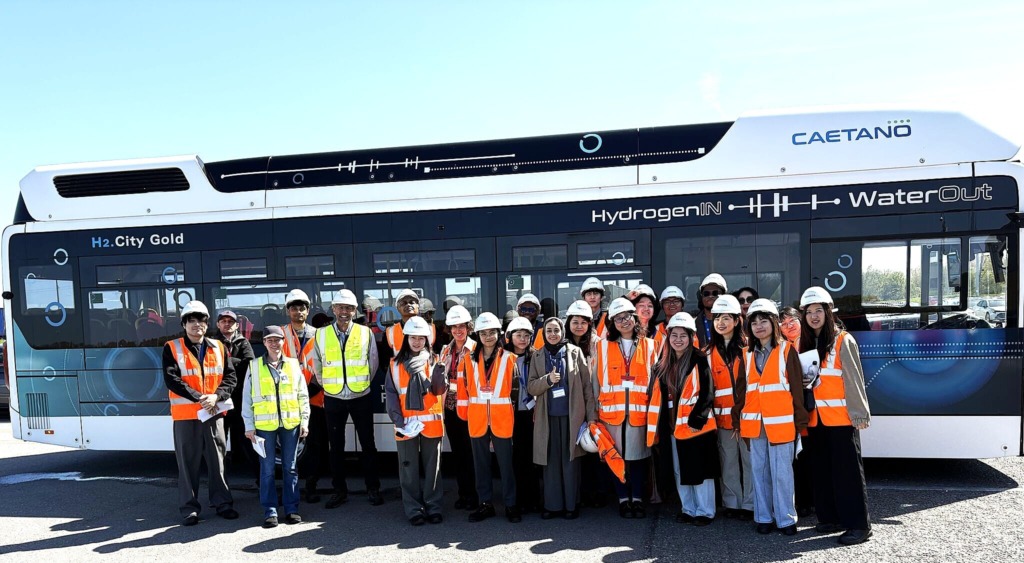
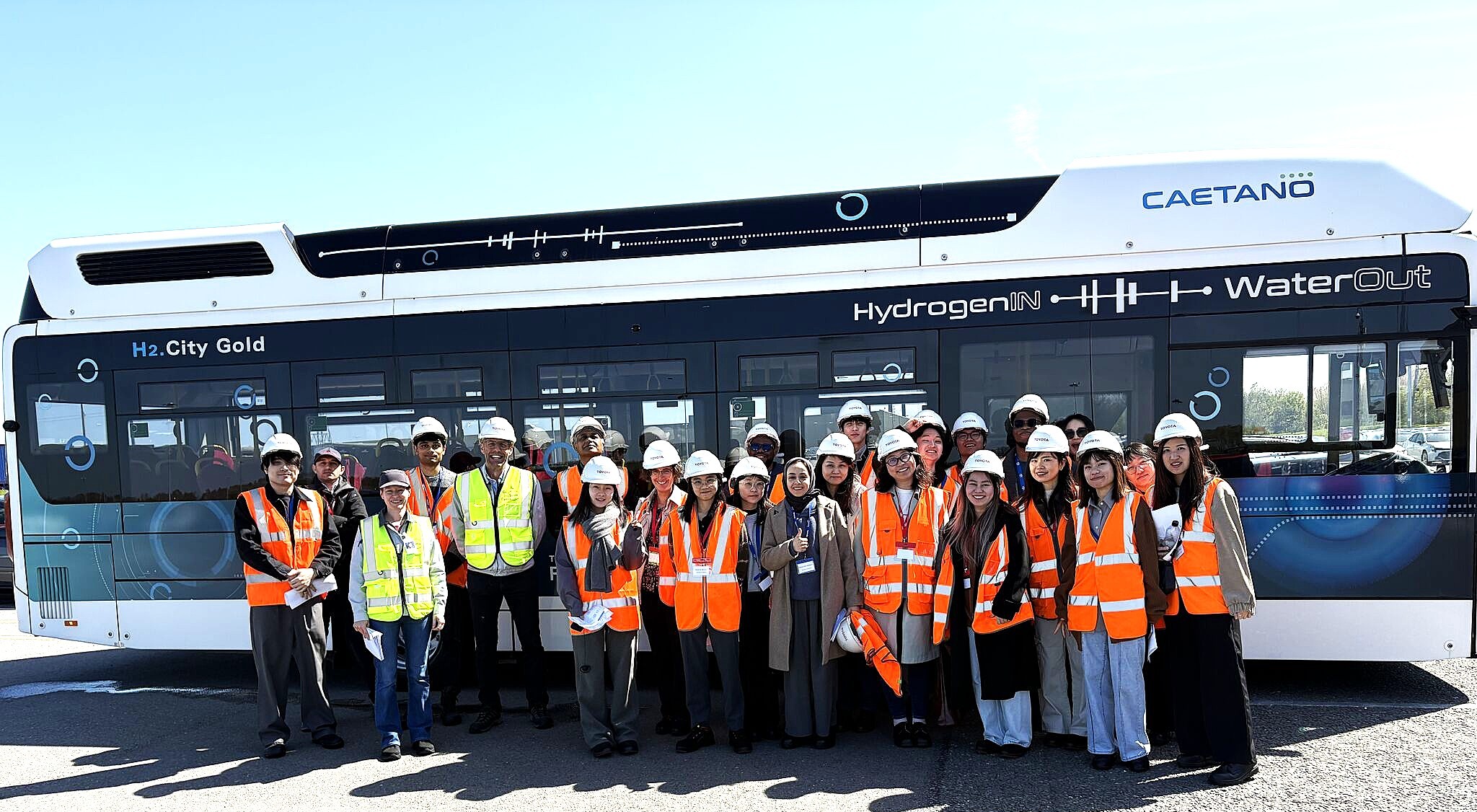
Visit to Toyota Motor Manufacturing UK in Burnaston, Derby, demonstrating integrated production and supply chain processes, and lean principles such as Just-in-Time, Kaizen, and built-in quality systems.
Another key insight was how anomalies are treated within the system. Rather than being hidden or minimised, deviations are openly recognised and used as learning opportunities. This approach not only supports root cause analysis and continuous improvement, but also reinforces a culture of vigilance, reducing the risk of complacency across the workforce.
Overall, the visit suggested that these tools are sustained by discipline and organisational culture. Effective supply chains, therefore, are not defined by complexity, but by clarity, coordination, and continuous improvement embedded across the organisation.
Etihad Stadium: Managing event-driven supply chains
Our visit to Etihad Stadium offered a different perspective on supply chains, one driven not by continuous production, but by peak demand events. As a modern, large-scale stadium in the UK, it represents a complex operational environment where infrastructure, logistics, and
service delivery must align seamlessly. The stadium currently has a capacity of around 54,000, with expansion plans expected to increase this to approximately 61,000 in the coming years. Ongoing construction and renovation further add complexity, requiring coordination between operational continuity and infrastructure development.
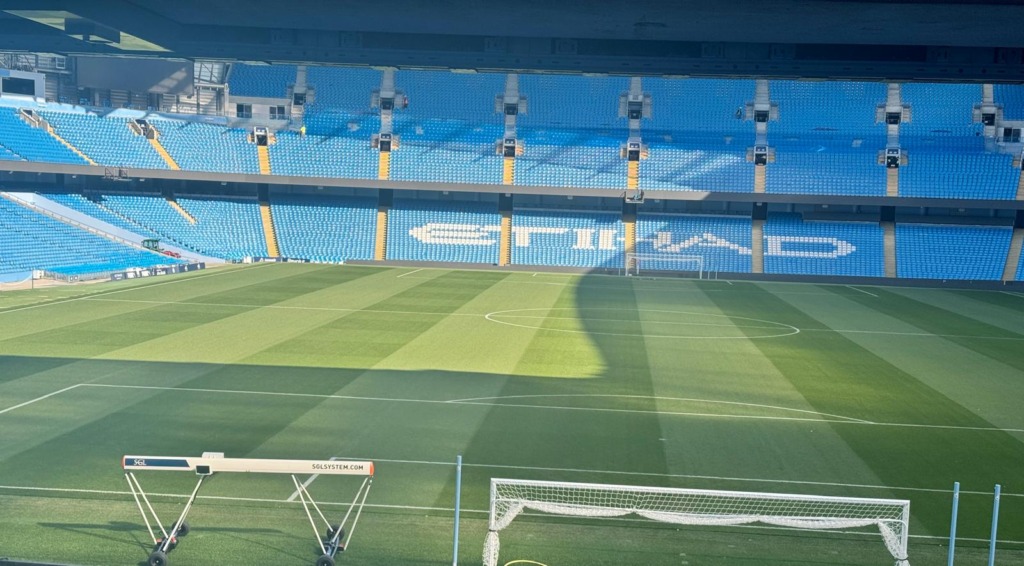
Visit to Etihad Stadium, illustrating the complexity of event-driven supply chains and the coordination required to manage peak demand operations.
A key challenge in this context is demand variability. Attendance levels, match significance, and external factors all influence consumption patterns across food, merchandise, and services. This requires careful planning to ensure availability without excessive overstock, particularly given limited storage and short consumption windows.
The stadium operates as a temporary but highly coordinated supply chain, where multiple flows such as inventory, people, and services must align within tight time frames. Preparation happens well in advance, but execution is compressed into a few critical hours, leaving little margin for error.
This environment illustrates the importance of flexibility and responsiveness over efficiency alone. While lean principles focus on eliminating waste, event-driven operations must prioritise readiness and service continuity under uncertainty. The visit demonstrated that effective supply chains are context-dependent, requiring different strategies when demand is intermittent, highly variable, and time-critical.
Mercedes-Benz: Service logistics and availability
Our visit to Mercedes-Benz logistics hub in Milton Keynes provided insight into aftersales and service supply chains, where the priority shifts from production efficiency to product availability. Unlike manufacturing environments, the focus here is on ensuring that spare parts are available when required to support vehicle maintenance and minimise downtime.
A key characteristic of this operation is the management of a wide range of spare parts with varying sizes and demand patterns. Demand is often unpredictable and time-sensitive, requiring inventory to be positioned strategically to meet service requirements. This creates a trade-off between holding costs and service levels, where availability is prioritised due to the high cost of delays in repairs.
The facility is also advancing its automation capabilities, including the implementation of a high-rack cube automated system. This has significantly improved operational efficiency, accuracy, and throughput in day-to-day activities, while reducing manual handling and errors. It reflects a broader trend towards automation in service logistics, where consistency and speed are critical.
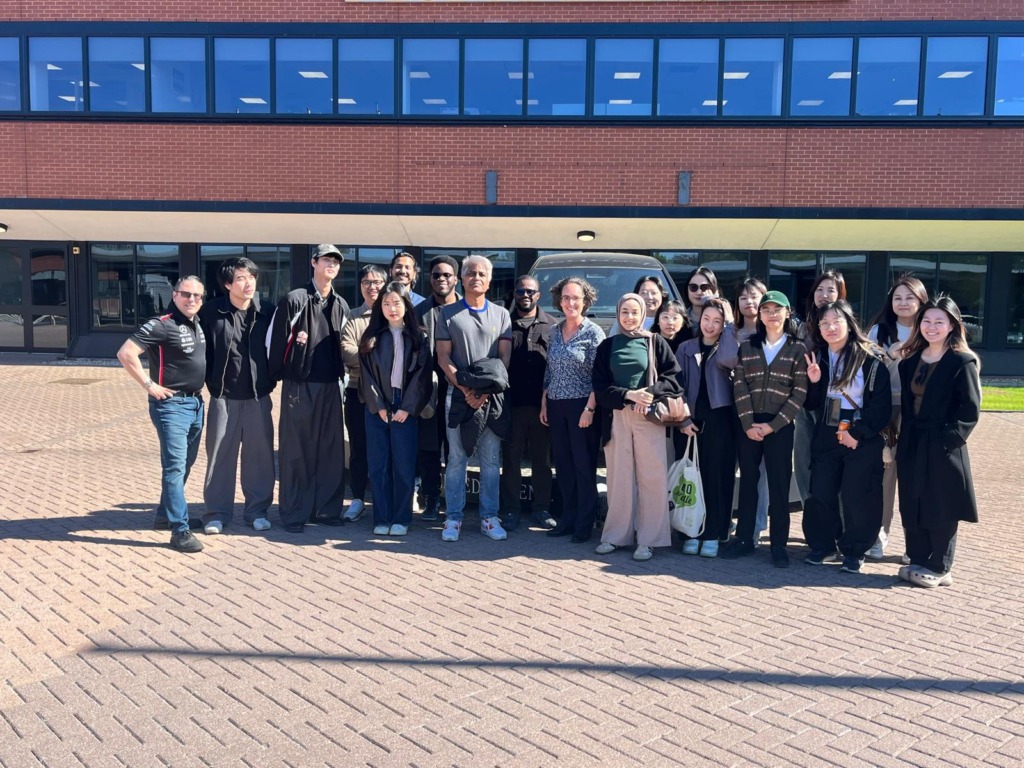
Visit to Mercedes-Benz logistics hub in Milton Keynes, showcasing service logistics operations, spare parts availability, and the role of high-rack automation in improving efficiency and accuracy.
Overall, the visit made clear that not all supply chains are driven by cost optimisation. In service-oriented environments, the ability to respond quickly and reliably to customer needs becomes the defining factor of performance, requiring a different balance between efficiency, inventory, and responsiveness.
Manchester experience and reflections
Beyond the site visits, spending time in Manchester city centre added an important social and cultural dimension to the experience. As a group, we explored key areas such as Deansgate and Spinningfields and visited landmarks like Manchester Cathedral and the Northern Quarter, known for its independent cafés and creative atmosphere. These moments outside the formal visits allowed us to reflect on the day’s learning in a more informal setting, exchange perspectives, and strengthen connections within the cohort. The group dinner in the city centre provided a valuable opportunity to step back from operational detail and appreciate the broader learning journey.
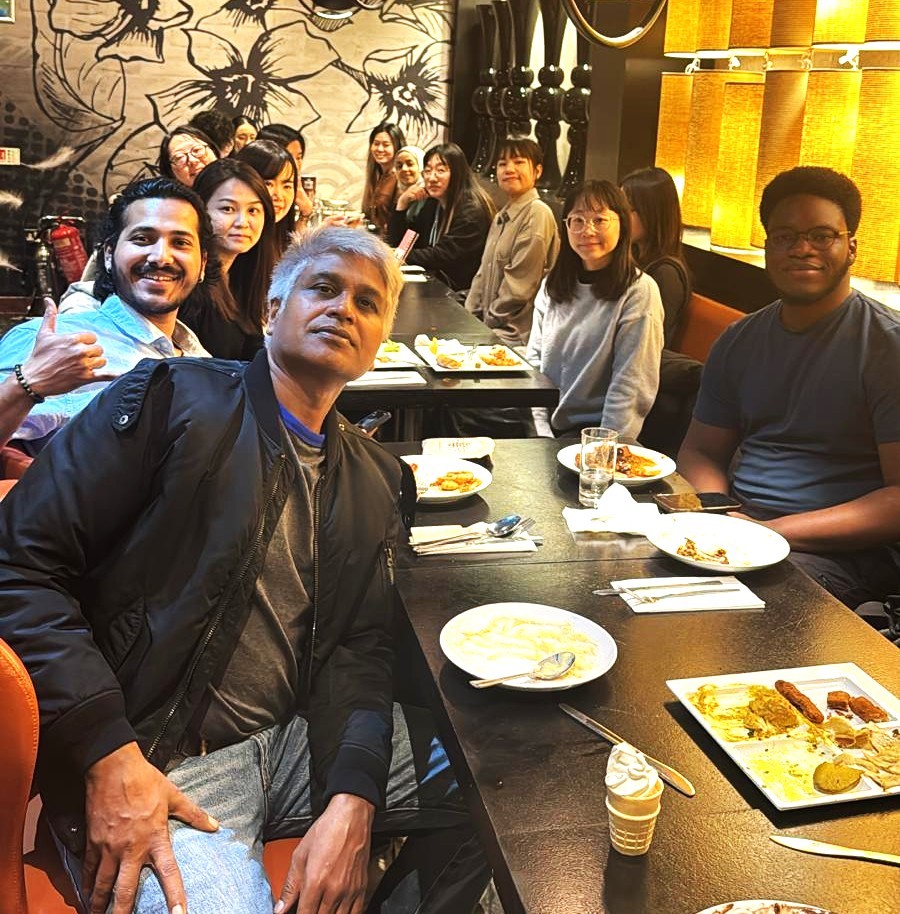
Manchester study tour group dinner, offering a space for reflection, discussion, and shared learning beyond the formal visits.
Conclusion
This study tour made one thing clear: supply chains are not one-size-fits-all. Across all four visits, a consistent theme emerged: the need to balance efficiency, responsiveness, and availability depending on context. Each environment we visited, cross-border fulfilment, lean manufacturing, event operations, and service logistics, operates under different priorities, constraints, and trade-offs. What works in one context may not apply in another.
What stood out most was not just the systems or technologies, but the people, discipline, and thinking behind them. Whether it was Toyota’s focus on continuous improvement, Joybuy’s responsiveness to customer demand, or Mercedes-Benz’s emphasis on availability, each organisation demonstrated that strong supply chains are built on clarity, coordination, and the ability to adapt.
Experiencing these operations first-hand has made the concepts we study more practical, more real, and far more meaningful. We are grateful to Cranfield University for organising this study tour, and to Dr Nicky Yates and Dana Idesian for their guidance and support throughout the visit, enabling a valuable connection between academic learning and industry practice.




Categories & Tags:
Leave a comment on this post:
You might also like…

Keen to develop your study skills?
Alongside the technical skills and academic knowledge that you will gain on your course, as a Cranfield student you have the opportunity to develop a range of other skills that can enhance your learning experience. ...

The V-conomy: powering the sixth wave of global economic growth
The world could be on the verge of a major surge in economic growth and development, driven by the convergence of AI and clean energy technology. Waiting to ride the K-wave The Russian ...

Need help using the Python programming language?
We know some of our students are currently trying to learn Python, so we wanted to make you aware of some great LinkedIn Learning videos that can help. But don't you have to pay for ...

What does it really take to become a Chevening Scholar?
Say “Turkmenistan” to most people and you’ll get a blank look. That was true when I left Ashgabat for the UK to study an MSc in Logistics and Supply Chain Management at Cranfield University ...

Get a head start on referencing and plagiarism
We offer a module on Referencing And Avoiding Plagiarism which you can find on your Canvas dashboard. It explains the role and importance of citing references and how to incorporate the work of other authors ...
How Cranfield shaped my journey as an Aerospace Engineer
If I'm being specific about the moment it clicked, it was reading a paper called "On the Role and Challenges of Computational Fluid Dynamics (CFD) in the Aerospace Industry" by two Boeing engineers, P. ...