


Bloomberg basics
16/10/2025

Accessible in Kings Norton Library from 11 dedicated terminals, Bloomberg provides access to the real world of finance through the same platform as used by the world’s leading banks, corporations and government agencies. Bloomberg provides real-time and historical pricing information from the world’s stock exchanges, as well as detailed information, news and financial data on global companies. The content includes information on equities, commodities, currencies, economic data and statistics, government bonds, hedge funds, credit default swaps, business news and analytics.
You can find the Bloomberg and Training Suite on the ground floor to the right of the main entrance to the Library. Access is by swipe card (your University ID card), with priority given to business and management staff and students.
There are three ways of finding your way around a Bloomberg terminal:
- Using the dedicated yellow function keys on the Bloomberg keyboard
- Using the command line’s predictive text function – start typing in what you’re looking for and Bloomberg will pull up a list of possible matches. The more you type, the more targeted Bloomberg’s suggestions will be.
- Using Bloomberg’s codes (or short-cuts) to access specific areas of data. The more you use Bloomberg, the more familiar you will become with some of the commonly used function codes. Codes can be easily identified in on-screen menus in white text.
The data you find can be exported and saved in a variety of formats – pdf and Excel being the two most common. Charts are also very easy to produce and export.
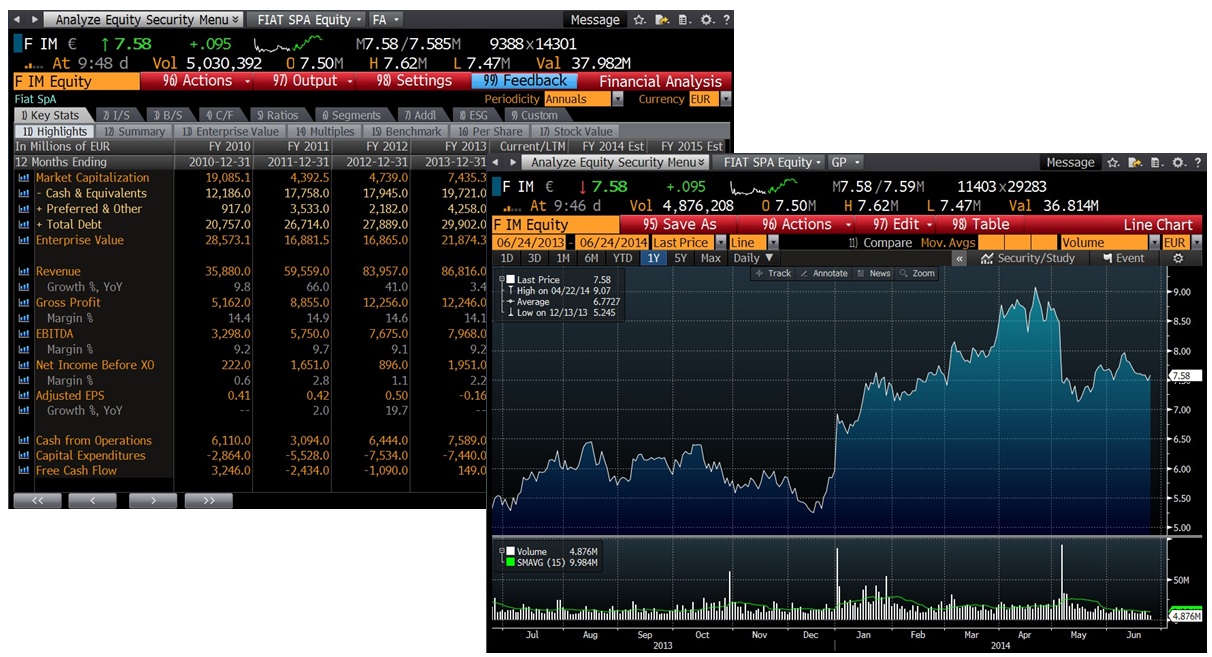
There are a number of ways to enhance your knowledge:
- Bloomberg University (<BU>) is an online resource centre providing access to seminars and events to help you develop your knowledge and skills.
- Bloomberg Certifications (<BCER>) provides access to a variety of e-learning courses which provide an excellent introduction to the world of finance via the Bloomberg terminal. these include:
- The Bloomberg Market Concepts (BMC), an e-learning certification course which provides a visual introduction to financial markets.
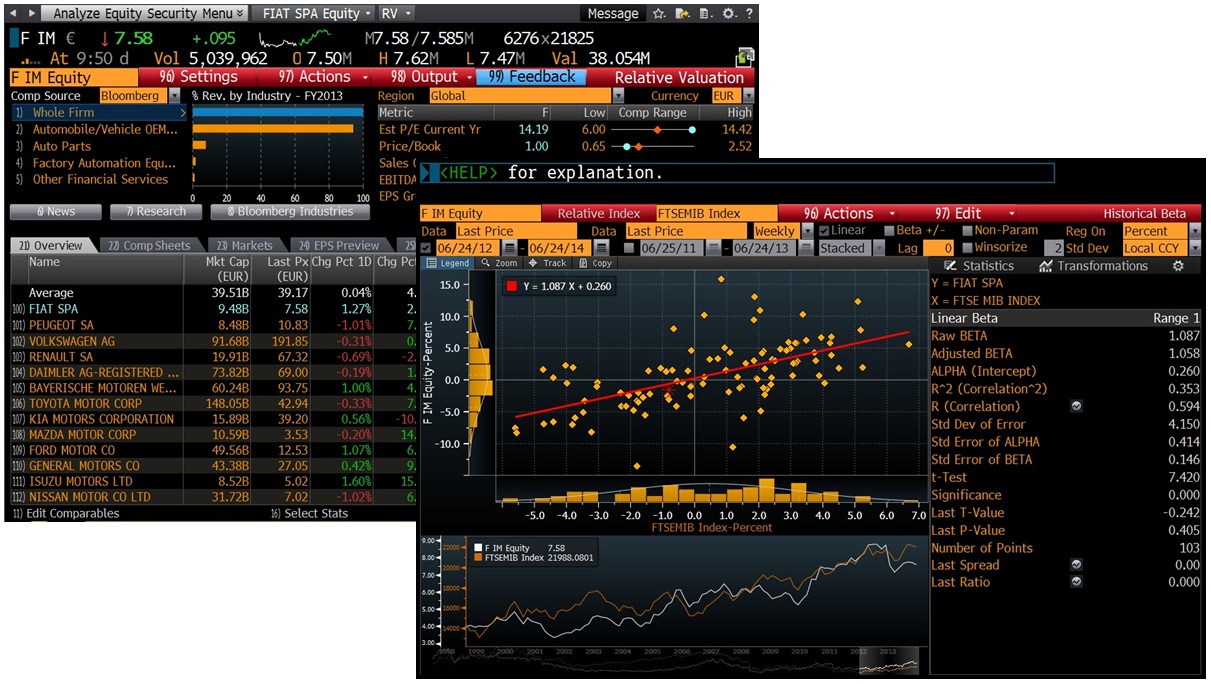
Bloomberg terminals should be booked in advance. Please see our booking page for further details where you will also find our Bloomberg basics guide.
Want to know more? Contact Library staff for a demonstration.

Categories & Tags:
Leave a comment on this post:
You might also like…

Keen to develop your study skills?
Alongside the technical skills and academic knowledge that you will gain on your course, as a Cranfield student you have the opportunity to develop a range of other skills that can enhance your learning experience. ...

The V-conomy: powering the sixth wave of global economic growth
The world could be on the verge of a major surge in economic growth and development, driven by the convergence of AI and clean energy technology. Waiting to ride the K-wave The Russian ...

Need help using the Python programming language?
We know some of our students are currently trying to learn Python, so we wanted to make you aware of some great LinkedIn Learning videos that can help. But don't you have to pay for ...

What does it really take to become a Chevening Scholar?
Say “Turkmenistan” to most people and you’ll get a blank look. That was true when I left Ashgabat for the UK to study an MSc in Logistics and Supply Chain Management at Cranfield University ...

Get a head start on referencing and plagiarism
We offer a module on Referencing And Avoiding Plagiarism which you can find on your Canvas dashboard. It explains the role and importance of citing references and how to incorporate the work of other authors ...

How Cranfield shaped my journey as an Aerospace Engineer
If I'm being specific about the moment it clicked, it was reading a paper called "On the Role and Challenges of Computational Fluid Dynamics (CFD) in the Aerospace Industry" by two Boeing engineers, P. ...
Comments are closed.