


My Cranfield experience so far – made possible by the IWA Excellence Scholarship
04/01/2023
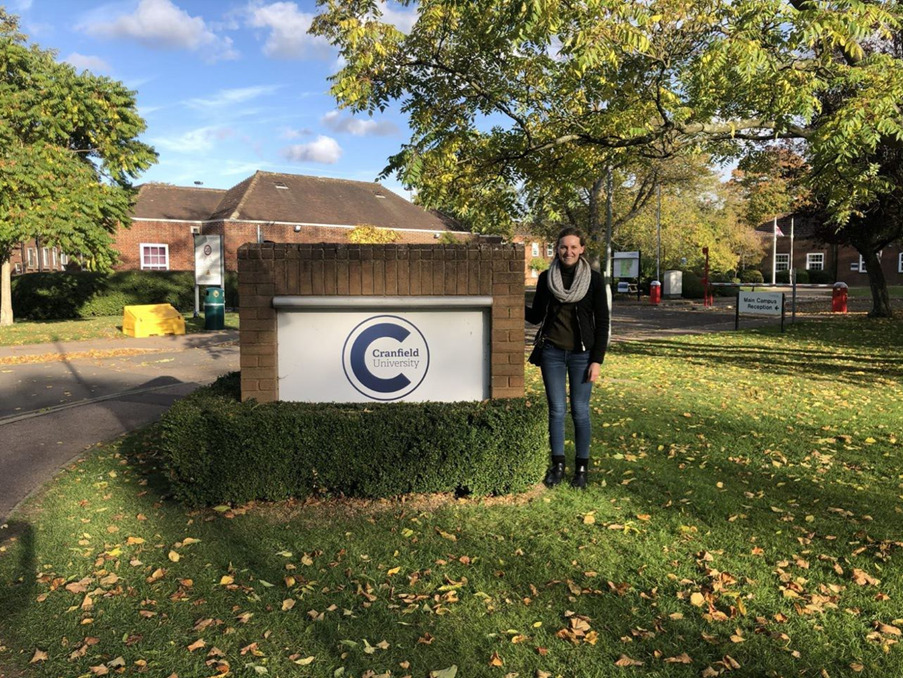
To study my MSc in Advanced Water Management at Cranfield University, it was made possible by the International Water Association’s Excellence Scholarship and a bursary from my employer, Zutari. For international students, funding is often the biggest challenge when it comes to overseas study. There are many scholarships and bursaries out there, but the competition is high, so one has to cast the net wide and put in a lot of time and effort to find funding. The IWA Excellence Scholarship is only awarded to Cranfield students on one of the three water MScs, which proved to me that Cranfield is committed to making it financially possible for students to study here. This was a major contributor towards my decision to study at Cranfield.
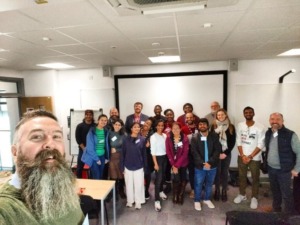 Here is a photo of our first IWA networking event (along with the Net Zero scholars), where we had the opportunity to meet one another and network with some members of staff.
As a South African, it is a requirement to obtain a student visa to study in the UK. Unfortunately for me, my visa process was a nightmare – everything that could have gone wrong, did! My first visa application was refused, my second visa application had to be withdrawn, and only on my third attempt was I successful. It was a big test of endurance and persistence, but the visa and immigration department at Cranfield thankfully offered guidance where they could along the way.
Since my visa application took so long, it meant that I only arrived at Cranfield after the first week of lectures. While this was far from ideal, the staff in my department were exceptionally accommodating of my situation and allowed me to join the lectures online. The IT services and facilities department assisting me in setting up all the IT requirements on my laptop while I was still in South Africa, and the accommodation department kept my room in the on-campus accommodation for me! This meant that by the time I arrived, I was able to settle in to life at Cranfield quickly and easily. Now that I am here, I am so grateful that everything eventually worked out.
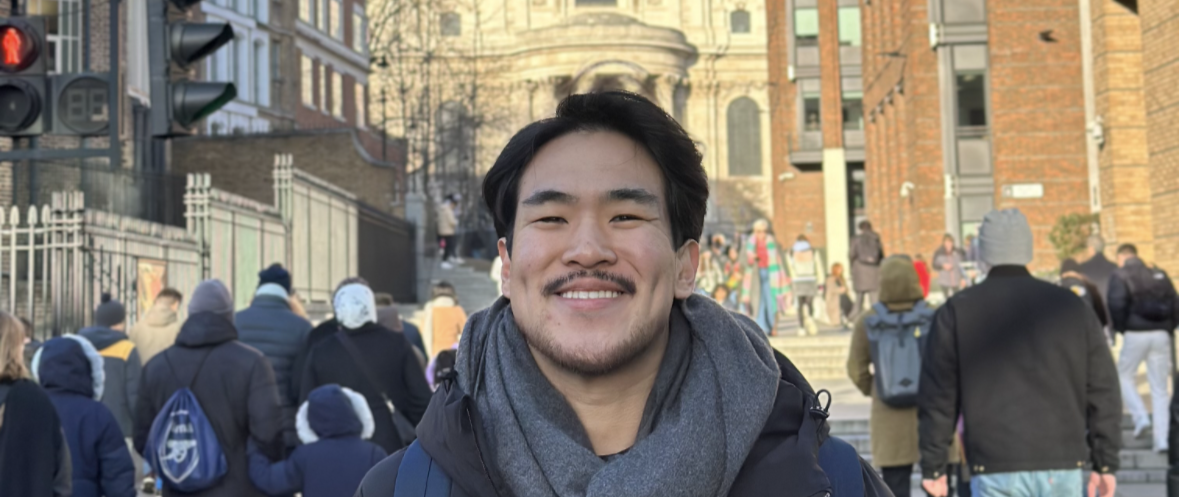
This is a photo of me shortly after arriving.
The MSc provides a good balance between theory and practical and I have enjoyed the many fields trips we have been on. Besides academics, I have joined circuit training and the astronomy society, which have been a great way to meet other students outside of my MSc and accommodation.
I have also enjoyed walks in the countryside, trips to nearby Milton Keynes, and various events at the Cranfield Students Association.
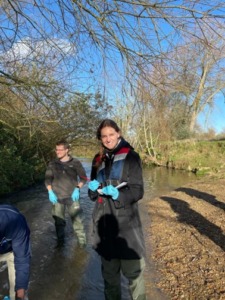
This photo is of me testing the water quality of the River Great Ouse in Milton Keynes on one of our field trips.
I am already in my third out of four modules, and while the course work is intense it is also incredibly interesting, and I can see how it will be directly useful to me as a civil engineer working in the water sector in South Africa.
I look forward to the group project and thesis next year, where we will gain new skillsets and have the opportunity to work with students from other MScs.

Categories & Tags:
Leave a comment on this post:
You might also like…
Engineering Tomorrow. Part two: Can we move around the world without emissions?
Moving people and goods around the world is essential to modern life. But every journey has an environmental cost, and reducing the emissions associated with transport is one of the major engineering challenges of ...
Following in the footsteps of aerospace pioneers
I came to Cranfield to understand how aircraft stay in the sky. Months later, I was measuring the performance of aircraft engines in flight aboard the National Flying Laboratory Centre's Saab 340B. My ...
From looking up at jet engines to powering the future of flight
From flying aboard Cranfield's Saab 340B flying classroom to rebuilding a gas turbine component by component, Jouni Kailouh's journey shows how specialist, hands-on experience can turn a fascination with propulsion into a future career ...
Engineering Tomorrow. Part one: Can we power the future without costing the Earth?
The world needs energy. To power homes, industries, transport and the technologies shaping our future. But as demand grows and the pressure to reduce emissions increases, how do we generate the energy we need ...
Looking ahead: Building foresight skills for a more sustainable future
As sustainability challenges become more complex and uncertain, organisations need people who can look beyond today's pressures and think strategically about the future. From changing regulations and emerging technologies to supply chain disruption and ...
Brazil to Cambridge: How Cranfield helped me build a career in data analytics
I was hungry for something bigger. Before Cranfield, I was living in São Paulo, Brazil, working as a Data and Market Intelligence Analyst in the trading division of Raízen. My background is actually ...
Comments are closed.