

Finding journals in full-text… using eJournals Finder
01/09/2023

Do you want to find out if the Library service has access to full-text for a particular journal? Maybe you would you like to read the latest issue, or browse the contents? One of the easiest ways to do this is to use eJournals Finder.
eJournals Finder allows you to type in a name of a journal and check if we have electronic access. It will tell you instantly which of our Library databases you will find the title in and, most importantly, will allow you to click straight through to the journal.
To get started, ensure that the dropdown menu option for ‘Journals only’ is selected beneath the search box. Type in the name of your journal in the search box at the top.
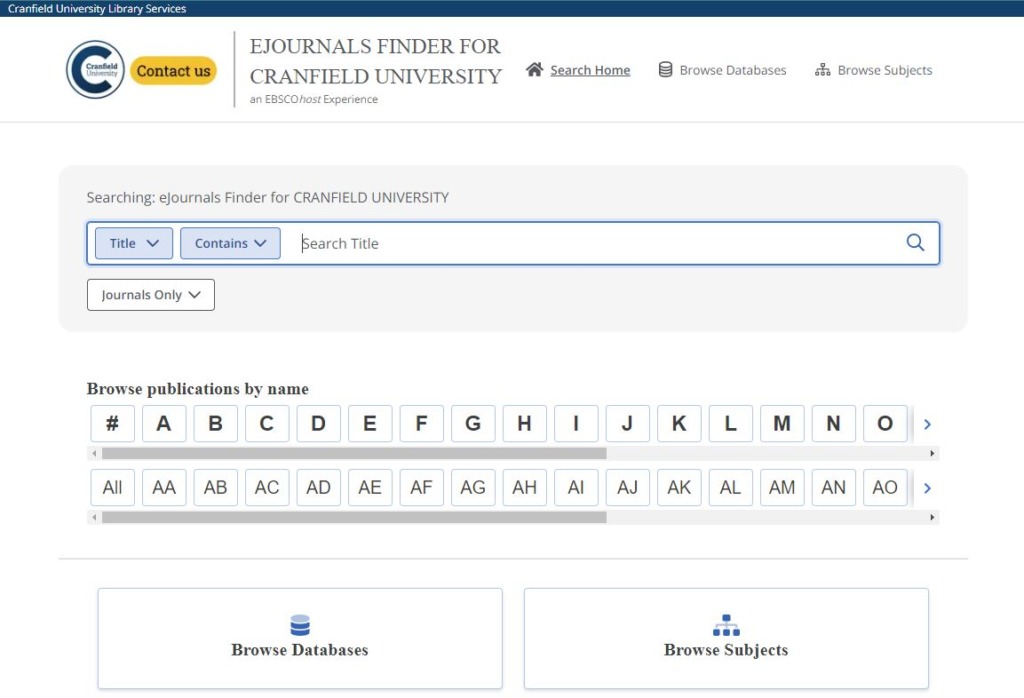
eJournals Finder – homepage
If you are unsure of the exact title, leave the blue dropdown options at ‘Title’ and ‘Contains’. If however you know exactly what you want or you have a journal with a very short – or common – title, you can change those dropdown options to ‘Exact Match’ which will allow you to search for titles like The Times or The Economist easily and quickly.
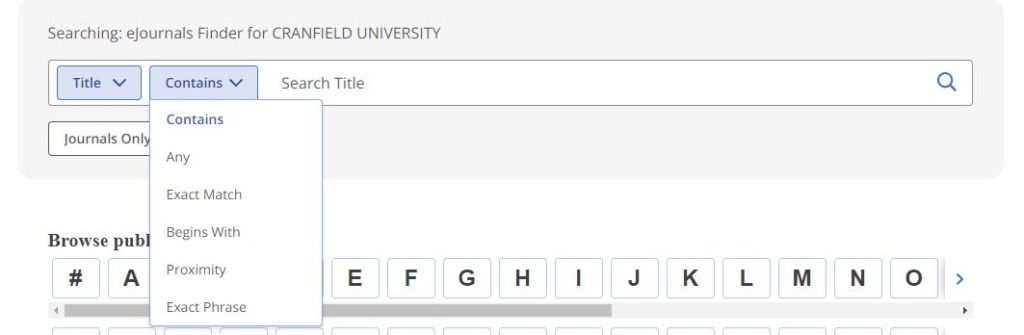
Use ‘Exact Match’ when you know the exact title
Once you find your journal, clicking on one of the blue database links (listed under ‘Full Text Access’) will take you directly to the journal homepage where you can browse or search to find the content you need.
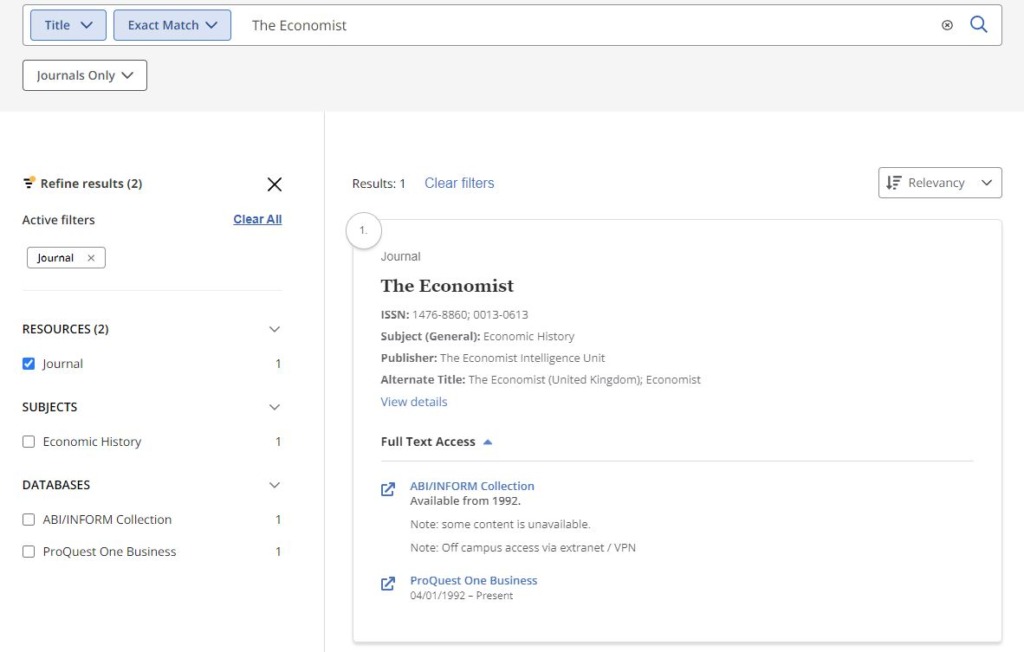
Accessing The Economist
You’ll find a link to eJournals Finder on all of the Library pages, on the right-hand menu.
Remember this service is best used when you want to find a single named journal title. If you want to search for articles on a topic, it is best to use one of our journal databases which will give you results from a variety of business journals. We hope this will keep our journal access simple, efficient and effective. As always, if you have any questions or comments, please contact the Library service.
Feature image from Pixabay. Available at: https://pixabay.com/photos/student-typing-keyboard-text-woman-849824/

Categories & Tags:
Leave a comment on this post:
You might also like…

Setting your research on the right course: Four questions every researcher should ask
Whether you are just beginning your doctoral journey or are already well into your research career, successful research rarely happens by accident. Like any successful mission, it depends on good planning, informed decisions, and getting ...

5 budgeting mistakes students make (and how to avoid them)
Good financial planning isn't about how much money you have. It's about the habits you build. We asked Dr Lakshmy Subramanian, Course Director for the Banking, Economics and Finance MSc, about the budgeting mistakes ...

Finding your reading materials
Use Library Search Library Search is the first place to start when you are trying to find academic sources for your work. This is the search box on the library website homepage. It allows you ...

Formula 1 was the dream and Cranfield was the conduit
I still remember the exact moment Formula 1 (F1) got its hooks into me. I was in my first year of an aerospace undergraduate engineering degree when I watched a video about the sport ...

Introducing Barrington Library
Welcome to all our new students! Barrington Library supports all the students and staff at Cranfield Defence and Security on the Shrivenham site. We are looking forward to meeting you all soon, in person or ...

About to start your journey at Cranfield? We’re here to help!
Congratulations on accepting your offer to study at Cranfield! If you’re keen to get a head start before your course begins, our Library Services team is here to support you every step of the way. ...