


Finding journals in full-text… using eJournals Finder
01/09/2023

Do you want to find out if the Library service has access to full-text for a particular journal? Maybe you would you like to read the latest issue, or browse the contents? One of the easiest ways to do this is to use eJournals Finder.
eJournals Finder allows you to type in a name of a journal and check if we have electronic access. It will tell you instantly which of our Library databases you will find the title in and, most importantly, will allow you to click straight through to the journal.
To get started, ensure that the dropdown menu option for ‘Journals only’ is selected beneath the search box. Type in the name of your journal in the search box at the top.
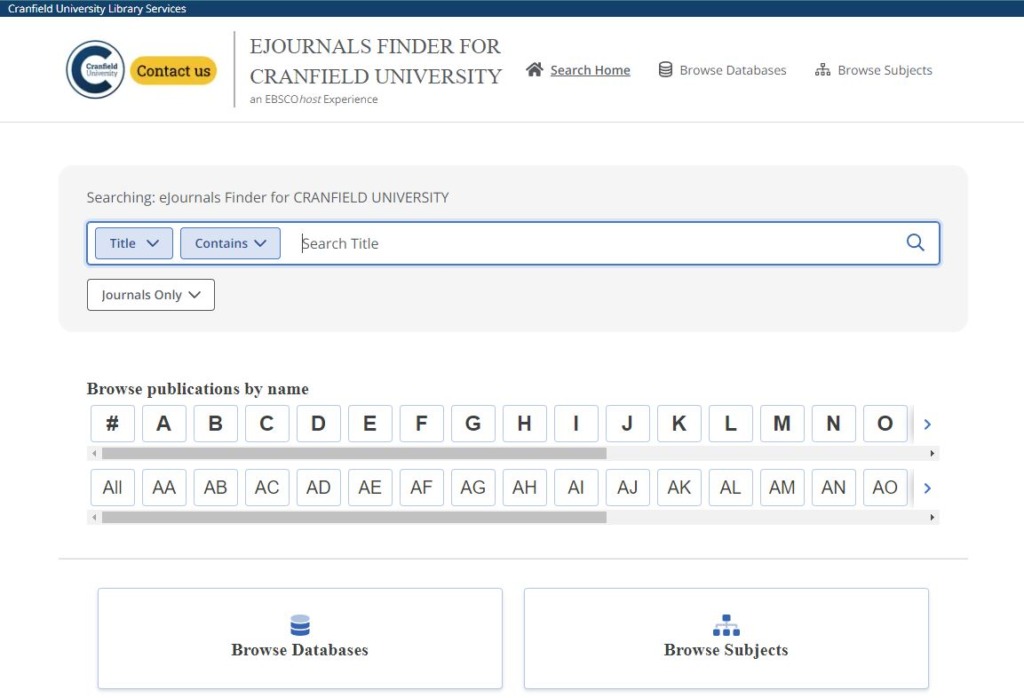
eJournals Finder – homepage
If you are unsure of the exact title, leave the blue dropdown options at ‘Title’ and ‘Contains’. If however you know exactly what you want or you have a journal with a very short – or common – title, you can change those dropdown options to ‘Exact Match’ which will allow you to search for titles like The Times or The Economist easily and quickly.
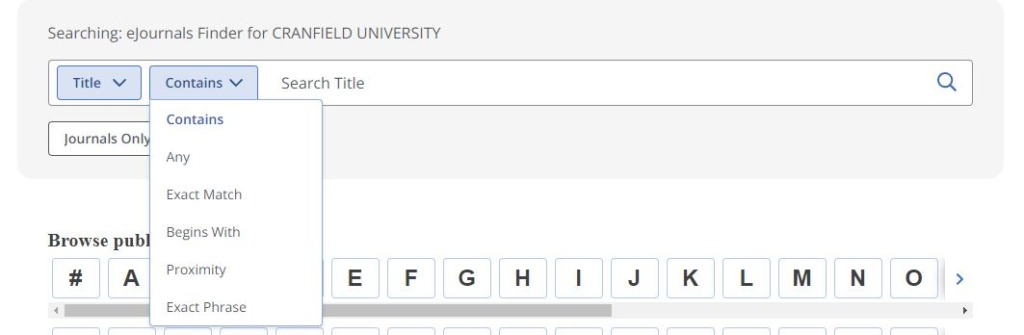
Use ‘Exact Match’ when you know the exact title
Once you find your journal, clicking on one of the blue database links (listed under ‘Full Text Access’) will take you directly to the journal homepage where you can browse or search to find the content you need.
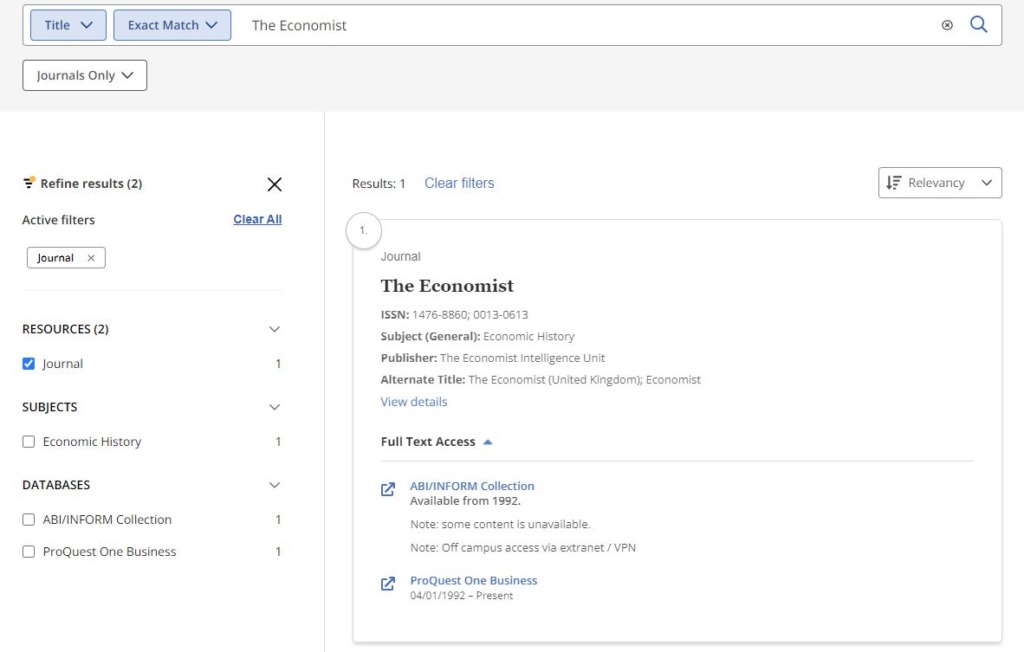
Accessing The Economist
You’ll find a link to eJournals Finder on all of the Library pages, on the right-hand menu.
Remember this service is best used when you want to find a single named journal title. If you want to search for articles on a topic, it is best to use one of our journal databases which will give you results from a variety of business journals. We hope this will keep our journal access simple, efficient and effective. As always, if you have any questions or comments, please contact the Library service.
Feature image from Pixabay. Available at: https://pixabay.com/photos/student-typing-keyboard-text-woman-849824/

Categories & Tags:
Leave a comment on this post:
You might also like…

Engineering Tomorrow. Part two: Can we move around the world without emissions?
Moving people and goods around the world is essential to modern life. But every journey has an environmental cost, and reducing the emissions associated with transport is one of the major engineering challenges of ...
Following in the footsteps of aerospace pioneers
I came to Cranfield to understand how aircraft stay in the sky. Months later, I was measuring the performance of aircraft engines in flight aboard the National Flying Laboratory Centre's Saab 340B. My ...
From looking up at jet engines to powering the future of flight
From flying aboard Cranfield's Saab 340B flying classroom to rebuilding a gas turbine component by component, Jouni Kailouh's journey shows how specialist, hands-on experience can turn a fascination with propulsion into a future career ...
Engineering Tomorrow. Part one: Can we power the future without costing the Earth?
The world needs energy. To power homes, industries, transport and the technologies shaping our future. But as demand grows and the pressure to reduce emissions increases, how do we generate the energy we need ...
Looking ahead: Building foresight skills for a more sustainable future
As sustainability challenges become more complex and uncertain, organisations need people who can look beyond today's pressures and think strategically about the future. From changing regulations and emerging technologies to supply chain disruption and ...

Brazil to Cambridge: How Cranfield helped me build a career in data analytics
I was hungry for something bigger. Before Cranfield, I was living in São Paulo, Brazil, working as a Data and Market Intelligence Analyst in the trading division of Raízen. My background is actually ...