


Life as a Food Chain Systems MSc student at Cranfield
20/02/2018
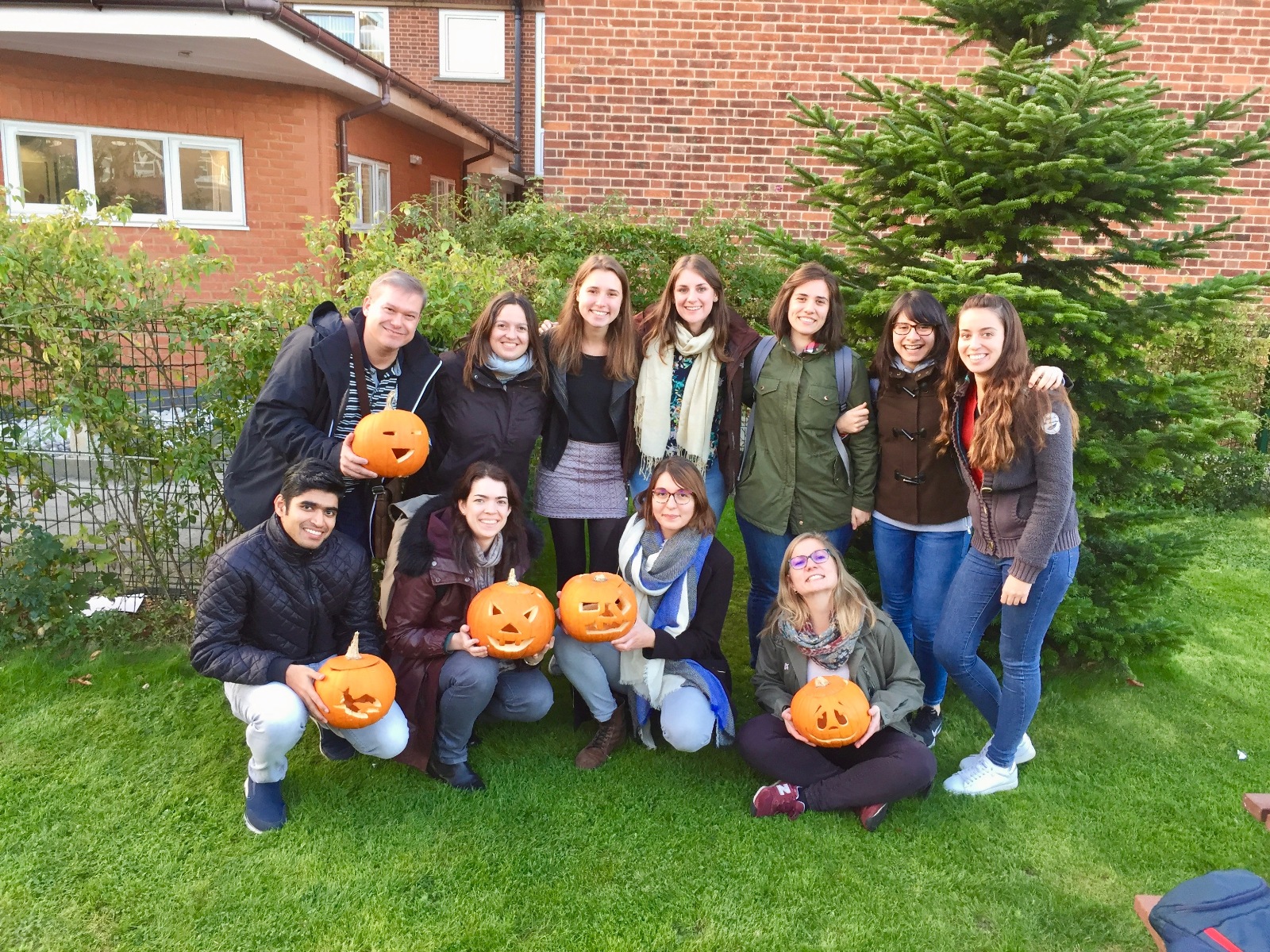
My name is Cecile and I’m currently a postgraduate student studying the Food Chain Systems MSc at Cranfield University.
I come from an engineering school in France called UniLaSalle Beauvais that specialises in food and health. In October 2016, a teacher presented to us the partnership between my school and Cranfield University. I searched further information concerning the MSc at Cranfield and found the Food Chain Systems MSc. I found this course very interesting, especially because of the number of industrial partners working with the University and also because I was going to discover a new method of studying. I soon applied for Cranfield, and a few weeks later I received the approval from my school to leave and in February I received an email from Cranfield University to accept my candidature.
At the end of September 2017 I arrived in Cranfield with a friend, we easily found our room and had a quick visit round the campus. The first week was like an integration week, we had to complete all the registration papers but we also had a lot of free time to meet plenty of new people. The School of Water, Energy and Environment had organised different activities including a BBQ and games. This really helped to meet the other students.
In October we had our first week of lectures and assignments. During the first four months of the Food Chain Systems MSc each module is composed of a week of lectures, finishing with an oral presentation on the Friday and followed by a week of assignments. We almost don’t have any exams. The modules are really organised, following the phrase from farm to fork. We started the year with some lectures about the characteristics of post harvest ingredient, then we learnt about food quality and safety, followed with a module concerning supply chain strategies and we ended with innovation methodology and management. During the different modules we had the opportunity to study with some people specialised in research and some working in industry. During these four months I discovered and learnt a lot.
I also had a lot of fun, as the student life in Cranfield is great. I met plenty of new people and made new friends from all around the world. We often meet during the evenings to watch a movie or to have a drink at the CSA (Cranfield Student Association). During the weekends we often went on short trips to explore England (London, Cambridge, Oxford, Bristol…)
Until now, my Cranfield experience has been great! I can’t wait to see how the group project and the individual thesis will go on.

Categories & Tags:
Leave a comment on this post:
You might also like…

Keen to develop your study skills?
Alongside the technical skills and academic knowledge that you will gain on your course, as a Cranfield student you have the opportunity to develop a range of other skills that can enhance your learning experience. ...

The V-conomy: powering the sixth wave of global economic growth
The world could be on the verge of a major surge in economic growth and development, driven by the convergence of AI and clean energy technology. Waiting to ride the K-wave The Russian ...

Need help using the Python programming language?
We know some of our students are currently trying to learn Python, so we wanted to make you aware of some great LinkedIn Learning videos that can help. But don't you have to pay for ...
What does it really take to become a Chevening Scholar?
Say “Turkmenistan” to most people and you’ll get a blank look. That was true when I left Ashgabat for the UK to study an MSc in Logistics and Supply Chain Management at Cranfield University ...

Get a head start on referencing and plagiarism
We offer a module on Referencing And Avoiding Plagiarism which you can find on your Canvas dashboard. It explains the role and importance of citing references and how to incorporate the work of other authors ...
How Cranfield shaped my journey as an Aerospace Engineer
If I'm being specific about the moment it clicked, it was reading a paper called "On the Role and Challenges of Computational Fluid Dynamics (CFD) in the Aerospace Industry" by two Boeing engineers, P. ...