


The V-conomy: powering the sixth wave of global economic growth
11/10/2026
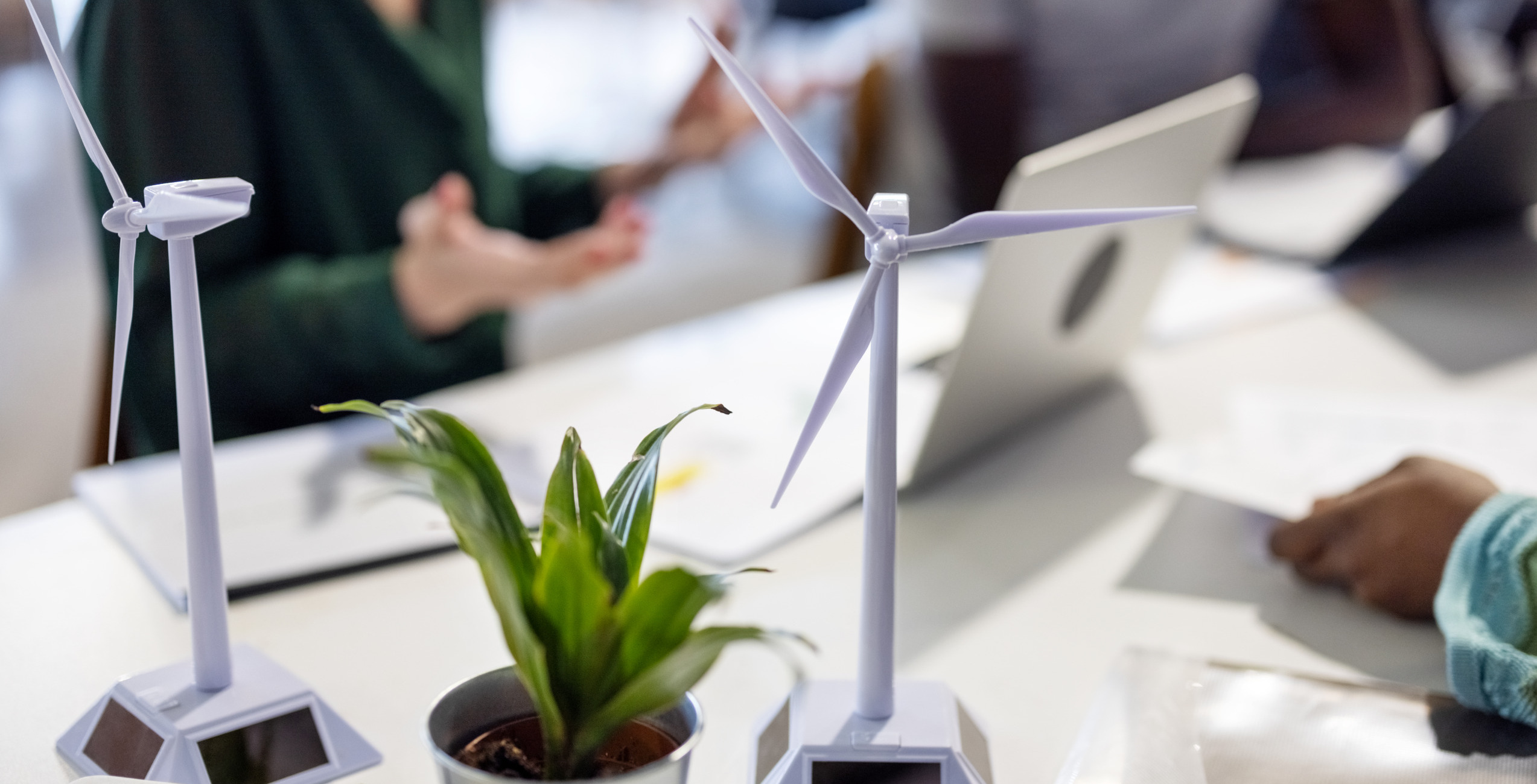
The world could be on the verge of a major surge in economic growth and development, driven by the convergence of AI and clean energy technology.
Waiting to ride the K-wave
The Russian economist Nikolai Kondratieff suggested that economic growth occurs in long-range economic cycles, driven by socio-technical innovations. According to this theory, we have had 5 so-called Kondratieff waves, each driven by the development of different innovations:
- The steam engine
- Railways and steel
- Electrification and chemicals
- Automobiles and petrochemicals
- Information technology
AI is popularly viewed as the socio-technological breakthrough that will power the sixth K-wave (K6) 1.
The energy supply problem
Energy supply is critical if the full potential of AI is to be realised. Currently this is problematic. The International Energy Agency predicts that by 2030, the demand for electricity from AI will be approximately 945 terawatt-hours (TWh), more than Japan’s energy use today 2. The financial markets are already signalling this connection, where AI-driven innovation is directly influencing the share prices of key electricity companies 3.
Creating infrastructure to supply this energy will be challenging. Achieving this, while staying within planetary limits and meeting net zero commitments, is arguably unfeasible with current technology.
Yet there is hope. The emergence of Nuclear Fusion Technology (NFT), if achieved at commercial scale, could unleash the full potential of the K6. The first prototypes of NFT power plants are already being built, and experts expect the technology to reach commercialisation stage in the next decades 4. The arrival of NFT will facilitate a significant increase in electricity production, while meeting net zero ambitions.
Each K-wave has seen the confluence of an innovation and an unlocking of more energy. The confluence of AI and NFT is an exciting prospect and this article imagines what the world may look like at the crest of the K6 powered by AI and NFT, introducing the concept of a V-conomy. Many of the pillars of the V-conomy are already being formed. The emergence of Electrostates and Electrotech 5 are beginning to change comparative and competitive advantages. With or without NFT, the future will be dependent on electricity, something that is also explored in this article.
The electrification of the economy
Nearly every economic activity will be powered by electricity. We have seen the electrification of mobility (Electric Vehicles), home heating (heat pumps), industry (automation and robots), food (agricultural water supply through desalinated water), communication (online meeting platforms), and now AI is electrifying thinking (office work). Electricity demand is rising relative to other energy sources 6. The importance of this revolution has not been unnoticed, Forbes included electrification in their “trillion-dollar industries of the future” list 7. This increasing demand for electricity means that alongside labour and capital, electricity will constitute a fundamental input to economic production and thus will be a key driver of economic growth 8.
However, alongside these opportunities, the growing dependence on electricity brings risks. Even in a world of alternative energy sources, the impact of electricity failures is catastrophic. Last year’s grid failure in Spain, Portugal and France impacted millions of people 9. The economic damage caused by the 12-hour power cut was estimated at $1.8 billion in Spain alone 10. As key factories closed and ATMs stopped working, today’s dependency on electricity and the lack of preparedness for failure became apparent. What happened in Spain could happen in other countries too.
The rise of the electrostate
The convergence of electrification, digitalisation, AI and energy innovation is already reconfiguring the global economy. Nations are evolving into electrostates, whose economic and geopolitical power stems from advanced electrotech ecosystems that deliver a clean and secure energy supply. China is positioning itself as the world’s first major electrostate 5, promoting clean electricity through industries such as wind, solar and battery production. It will rapidly be followed by others.
The rise of electrostates will increasingly dominate global economic activity, leveraging abundant, reliable supply and intelligent electricity infrastructures as a source of competitive advantage. As more economies adopt this model, their integration will form a globally networked electricity system, where value creation will be dependent on the generation, storage, transmission, and exchange of electricity.
The development of NFT will accelerate the transition from state to electrostates and the economics of NFT will ensure that developing electrotech is the most cost-effective way for a nation to function and compete, while also achieving net zero.
An interdependent world of electrostates: the V-conomy
Imagine a world of interconnected electrostates, a volt-based economic system: welcome to the V‑conomy, where electricity forms the basis of the competitive advantage of companies, countries and technological advancements.
The aggregation of multiple electrostates will trigger a redistribution of global power. Traditional comparative advantages, historically rooted in fossil fuel endowments or low-cost labour, will diminish in relevance. Instead, leadership will shift toward countries and regions capable of orchestrating resilient electricity systems, scaling clean generation, and embedding intelligence into cost competitive energy flows, unlocking the full potential of AI. As interdependencies between electrostates deepen, network effects will accelerate the transition. The result will be a new global equilibrium in which electricity is no longer a supporting input, but the foundational infrastructure of economic power.
If fully realised, kWh will be the dominant energy carrier as key sectors are completely electrified, simply because it is less expensive, more abundant and clean because of NFT. Power will be delivered by smart, interconnected, local and global electricity networks, where kWh will be transacted in huge volumes, with potential to be immediately used to buy other goods and services11. In this way, kWh could become part of the money supply. It will also be defined by local electricity networks that are fully globally connected, supported by a re‑regulated market structure and an innovative ecosystem for kWh‑based transactions that increasingly resembles today’s banking systems. Within the V-conomy, the traditional roles in the electricity sector will be fundamentally redefined, with generation, storage, infrastructure, and trading becoming part of a new, distributed, profit‑oriented ecosystem. Advancements in central and decentralised energy storage will enable the accumulation and management of value, effectively positioning electricity as a store of wealth. At the same time, distributed renewable energy assets will be widely deployed as a form of insurance capacity, enhancing system reliability and mitigating outages.
Economic performance will increasingly be measured through metrics such as Gross Domestic Electricity Production (GDEP), reflecting the central role of electricity in economic productivity. Emerging markets are likely to bypass fossil fuel‑based development pathways altogether, accelerating improvements in living standards. Finally, the overall system will be characterized by significantly enhanced resilience, designed to withstand and mitigate large‑scale disruptions arising from both internal failures and external shocks. The table below draws out some key characteristics of the V-conomy.
| Dimension | Today’s electricity system | V‑conomy |
| Network structure | Fragmented, regionally constrained grids | Fully connected, globally integrated electricity network |
| Market design | Largely national markets, energy traded as a commodity | Re‑regulated system with dynamic, kWh-based transactions resembling financial markets |
| Key players | Vertically segmented (generation, grid, retail) | Distributed, profit-driven ecosystem integrating generation, storage, infrastructure, and trading |
| Value creation | Energy as an input cost to production | Electricity as a core driver of value creation and economic activity |
| Storage role | Limited, mostly grid-balancing function | Central, local, and virtual storage enabling accumulation and preservation of value (wealth) |
| Energy security | Centralised generation with system-level backup | Distributed renewable assets acting as decentralised “insurance capacity” |
| Economic metric | GDP as primary indicator | GDEP (Gross Domestic Electricity Production) as key proxy for productivity |
| Development pathways | Fossil-fuel-led industrialisation | Transitioning to electrified systems, especially in emerging markets |
| System resilience | Increasing stress, vulnerability to large-scale outages | Enhanced resilience by design, mitigating internal and external disruptions |
Back to reality
A functioning V-conomy is a distant dream. It will require a substantial expansion of clean electricity generation, drawing on diverse and innovative sources, and supported by increasingly interconnected grids, ultimately enabling total electrification. That said, the world is creeping closer to the V-conomy each day, as we increase our dependence on electricity as a source of energy.
How can businesses prepare for the V-conomy?
To create long-term value in the emerging V-conomy, boards must begin preparing now by defining a clear value proposition that remains relevant in a fully electrified, AI-enabled economy. This requires four actions: (1) developing a vision of the company’s future role by reassessing its purpose, customer needs, operating footprint, workforce requirements, and strategic access to electricity through partnerships and energy resilience measures; (2) building scenarios for the transition to the V-conomy, reflecting different adoption pathways and leveraging insights from external experts, academia, and industry networks; (3) applying backward planning to identify the decisions that must be taken today (such as workforce upskilling, innovation initiatives, supplier diversification, and energy storage investments) to improve both short-term performance and long-term competitiveness; and (4) establishing appropriate governance by embedding electrification and digitalisation into board oversight, ensuring an integrated approach to AI, cybersecurity, data privacy, and energy security, potentially supported by a dedicated Digitalisation & Electrification Committee to guide this transformation.
The V‑conomy represents a new wave of long-term economic growth, creating a strategic inflection point where both countries and companies must decide the role they want to play in this emerging paradigm. As the pace of this cycle remains uncertain, the question that remains is ‘who will lead this transition and who will follow?’.
This article was co-authored by Professor Andy Angus, Professor of Environmental and Natural Resource Economics, and Jan Willem Zwarteveen, visiting professor at Cranfield and Head of Corporate Strategy for Wind Power at Siemens Energy.
References
- Tyulin, Andrey E., Alexander A. Chursin, Julia V. Ragulina, Victoria V. Akberdina, and Alexander V. Yudin. “The Development of Kondratieff’s Theory of Long Waves: The Place of the AI Economy Humanization in the ‘Competencies-Innovations-Markets’ Model.” Humanities and Social Sciences Communications 10, no. 1 (February 2023): 54. https://doi.org/10.1057/s41599-022-01434-8.
- “AI Is Set to Drive Surging Electricity Demand from Data Centres While Offering the Potential to Transform How the Energy Sector Works.” Energy and AI, International Energy Agency, October 4, 2025. https://www.iea.org/news/ai-is-set-to-drive-surging-electricity-demand-from-data-centres-while-offering-the-potential-to-transform-how-the-energy-sector-works.
- Lee, Andrew. “Siemens Energy and GE Vernova Hammered in DeepSeek AI Shares Rout.” Rechargenews.Com, January 27, 2025. https://www.rechargenews.com/wind/siemens-energy-and-ge-vernova-hammered-in-deepseek-ai-shares-rout/2-1-1770577
- McKenzie, Lindsay. “After Latest ITER Delay, Senators Quiz Fusion Experts over Commercial Reactor Timelines.” AIP, September 20, 2024. https://www.aip.org/fyi/after-latest-iter-delay-senators-quiz-fusion-experts-over-commercial-reactor-timelines.
- Tauschinkski, Jana, and Nassos Stylianou. “How We Made It: Will China Be the First Electrostate?” Financial Times, May 20, 2025. Financial Times https://www.ft.com/content/e1a232c7-52a0-44dd-a13b-c4af54e74282?syn-25a6b1a6=1#:~:text=China-could-be-on-its,per-cent-in-recent-years.
- Global Energy Review 2025. Paris: International Energy Agency, 2025. https://www.iea.org/reports/global-energy-review-2025.
- Singh, Sarwant. “$35 Trillion Dollar Industries Of The Future.” Innovation, Forbes.com, December 19, 2024. https://www.forbes.com/sites/sarwantsingh/2024/12/19/35-trillion-dollar-industries-of-the-future/.
- Costantini, Valeria, and Chiara Martini. “The Causality between Energy Consumption and Economic Growth: A Multi-Sectoral Analysis Using Non-Stationary Cointegrated Panel Data.” Energy Economics 32, no. 3 (May 2010): 591–603. https://doi.org/10.1016/j.eneco.2009.09.013.
- Pomeroy, Gabriela. “Spain and Portugal Power Outage: Scramble as Officials Chase Cause.” April 28, 2025. https://www.bbc.com/news/articles/cd6jenl581vo.
- Faus, Joan. “Post-Blackout in Spain and Portugal, Companies Count the Cost.” com, April 29, 2025. https://www.reuters.com/business/energy/post-blackout-spain-portugal-companies-count-cost-2025-04-29/.
- Gautschi, David A., Heidi C. Gautschi, and Christopher L. Tucci. “What If? Electricity as Money.” Journal of Risk and Financial Management 15, no. 4 (April 2022): 168. https://doi.org/10.3390/jrfm15040168.




Categories & Tags:
Leave a comment on this post:
You might also like…
Moving to the UK to study? How to plan for banking, exchange rates and transfers
Currency and banking are two of the most practical parts of financial planning for international students. They are also often the most overlooked. We asked Dr Lakshmy Subramanian, Course Director for Cranfield University's Banking, ...

Cranfield: an environment where innovation thrives
The latest Knowledge Exchange Framework rankings from UK Research and Innovation (UKRI) gives an insight into the real and meaningful impact that UK universities have. The seven categories that make up KEF6 cover everything ...
How Cranfield accelerated my career in Logistics and Supply Chain Management
After graduating from the MSc in Logistics and Supply Chain Management at Cranfield University, I've been reflecting on the experiences that made my journey so valuable and the impact it has had on my ...

Mendeley: a powerful tool to organise and manage your references
Are you looking for a way to manage your references, create in-text citations and reference lists for your assignments or thesis? If so, you may wish to consider using Mendeley. What is it? Mendeley is ...

Keen to develop your study skills?
Alongside the technical skills and academic knowledge that you will gain on your course, as a Cranfield student you have the opportunity to develop a range of other skills that can enhance your learning experience. ...
The V-conomy: powering the sixth wave of global economic growth
The world could be on the verge of a major surge in economic growth and development, driven by the convergence of AI and clean energy technology. Waiting to ride the K-wave The Russian ...