


What does it really take to become a Chevening Scholar?
08/10/2026

Say “Turkmenistan” to most people and you’ll get a blank look. That was true when I left Ashgabat for the UK to study an MSc in Logistics and Supply Chain Management at Cranfield University as a Chevening Scholar, and for most people it still is.
As a logistics professional with a background spanning sales, marketing, procurement and export development, and as a Certified Customs Specialist, my career has given me a particular interest in Central Asian trade and regional connectivity along the Middle Corridor.
What’s changed is the region around it. Central Asia used to be a footnote in global trade conversations; lately it’s the subject of them – new transit corridors, rerouted supply chains, governments courting the countries sitting between China and Europe. Turkmenistan is still barely on the map for most people, but the infrastructure running through it increasingly is. That’s roughly the position I found myself explaining, over and over, throughout my Chevening year, and it taught me more about what this scholarship actually asks of you than any prep guide could.
Know yourself before you write the essay
I didn’t apply to Chevening straight out of university. I applied seven years after my bachelors degree after three years in freight forwarding and customs work, after enough late nights over shipping documents to know exactly what I was good at and exactly where the gaps were. Chevening doesn’t have an age limit, but it does have a mind minimum. What it’s actually screening for isn’t how young or polished you are on paper it’s whether you’ve sat with yourself long enough to know your own abilities, your own blind spots, and what you’d actually do with a year like this. Before you touch the application form, sit with that question properly.
Chevening is looking for people ready to make a change not only in their own lives, but in their community, their country, and eventually further than that.
The essay is not the point – living it is
Here’s the part I wish someone had told me plainly: writing a good essay about your leadership potential is the easy bit. The scholarship is looking for people who are already, quietly, living the things they’re writing about and not people performing a version of themselves that sounds good on a form. By the time I applied, I wasn’t guessing at what “leadership” meant to me; I’d already spent years coordinating customs liaison for major operators, negotiating Incoterms (International Commercial Terms), holding shipments together when a single missing document threatened to stall everything. The essay didn’t invent that story. It just had to describe it honestly. If the version of yourself in your personal statement doesn’t match the version of yourself in your actual week-to-week life, that’s worth noticing before you submit, not after.
Choosing a university that actually fits
Once you’re through, the next decision that matters just as much as the scholarship itself is which university and course you pick and it’s easy to get this wrong by chasing prestige over fit. I chose an MSc in Logistics and Supply Chain Management at Cranfield University because it built directly on work I’d already done, rather than starting me over from zero. That mattered more than the name on the building. Ask yourself honestly what your experience, your worldview, and your actual future plans point toward, and let that and not a rankings table make the decision.
You become an ambassador, whether you’re ready or not
For a lot of the people I met that year, I wasn’t just the first Central Asian they’d spoken to, I was the first Turkmen, full stop. I got used to being the answer to “wait, where is that?” That’s a real weight, and nobody warns you about it properly: you stop being just a student and start being, whether you asked for the job or not, the only reference point some of your classmates will ever have for your entire country. It’s also a genuine privilege. Central Asia’s economic and logistics profile has risen fast in the last few years – corridor politics, customs modernisation, the Middle Corridor connecting China to Europe through the Caspian are mainstream conversations now in a way they weren’t when I applied. Representing a country few people could place on a map, at exactly the moment the region around it became impossible to ignore, turned out to be an education in itself.
Networking is a survival skill, not a soft skill
Networking gets talked about like a nice-to-have, a LinkedIn buzzword. In practice it’s closer to a survival skill, and it matters at every stage and not just to get through the final rounds of selection, but for the entire time you’re actually in the UK. The people who point you to the right supervisor, the right opportunity, the right introduction when you’re stuck, are rarely the people you meet on day one. They’re the ones you find by showing up, consistently, to the events you don’t feel like attending. Years later, that network is still the part that pays off hardest: a “Chevener” is recognised on sight, in almost any country, by other Cheveners and that’s not sentimentality, it’s a genuinely functional professional network most people spend a career trying to build.
The hard part, and why it’s worth it
None of this is easy. Studying in the UK, however good the scholarship, means real distance from your family, a different academic culture, and the ordinary grind of assignments and deadlines with no safety net nearby. There were plenty of weeks that year that were simply hard, not inspiring. But the payoff isn’t really the degree, or even the year itself, it’s what happens when you come home. I came back to Ashgabat and went straight into trade and logistics, and this year alone I’ve been invited onto panels and forums I wouldn’t have had a seat at before Cranfield, sitting alongside experts from across the region and the UK. It feels like the beginning of something, not the end of it. Realising those dreams, back on home ground, is worth every hard week it took to get there, worth hundreds of them, honestly.
Coming home to build the room for the next generation
It’s also why I said yes almost immediately when a few fellow alumni suggested we build something more permanent for our own region. Chevening Connect Silk Road is live now, you can find us on LinkedIn – and I’m one of the coordinators helping build it out across Turkmenistan, Kazakhstan, Kyrgyzstan, Tajikistan and Uzbekistan: webinars, mentorship pairings, a shared resource library, and a regional conference planned for later this year. If Chevening gave so many of us that first push toward confidence, the least we can do is build a room where the next generation of Central Asian scholars can find each other before they even land in the UK.
If you’re reading this with your own application half-finished on a laptop somewhere: know yourself first, write the essay honestly rather than impressively, and choose your university for fit, not prestige. The path is genuinely hard. The end of it, including the version of you that gets to come home and build something is definitely worth it.



Categories & Tags:
Leave a comment on this post:
You might also like…
What does it really take to become a Chevening Scholar?
Say “Turkmenistan” to most people and you’ll get a blank look. That was true when I left Ashgabat for the UK to study an MSc in Logistics and Supply Chain Management at Cranfield University ...

The V-conomy: powering the sixth wave of global economic growth
The world could be on the verge of a major surge in economic growth and development, driven by the convergence of AI and clean energy technology. Waiting to ride the K-wave The Russian ...

Get a head start on referencing and plagiarism
We offer a module on Referencing And Avoiding Plagiarism which you can find on your Canvas dashboard. It explains the role and importance of citing references and how to incorporate the work of other authors ...
How Cranfield shaped my journey as an Aerospace Engineer
If I'm being specific about the moment it clicked, it was reading a paper called "On the Role and Challenges of Computational Fluid Dynamics (CFD) in the Aerospace Industry" by two Boeing engineers, P. ...
Introducing Kings Norton Library
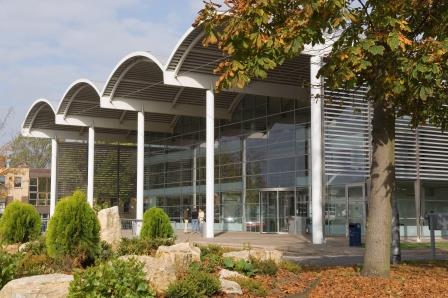
Welcome to all our new students! We are looking forward to meeting you soon. You will find Kings Norton Library in the centre of the Cranfield campus, and it is open 24/7 to all staff ...

Setting your research on the right course: Four questions every researcher should ask
Whether you are just beginning your doctoral journey or are already well into your research career, successful research rarely happens by accident. Like any successful mission, it depends on good planning, informed decisions, and getting ...