


How Cranfield shaped my journey as an Aerospace Engineer
02/10/2026
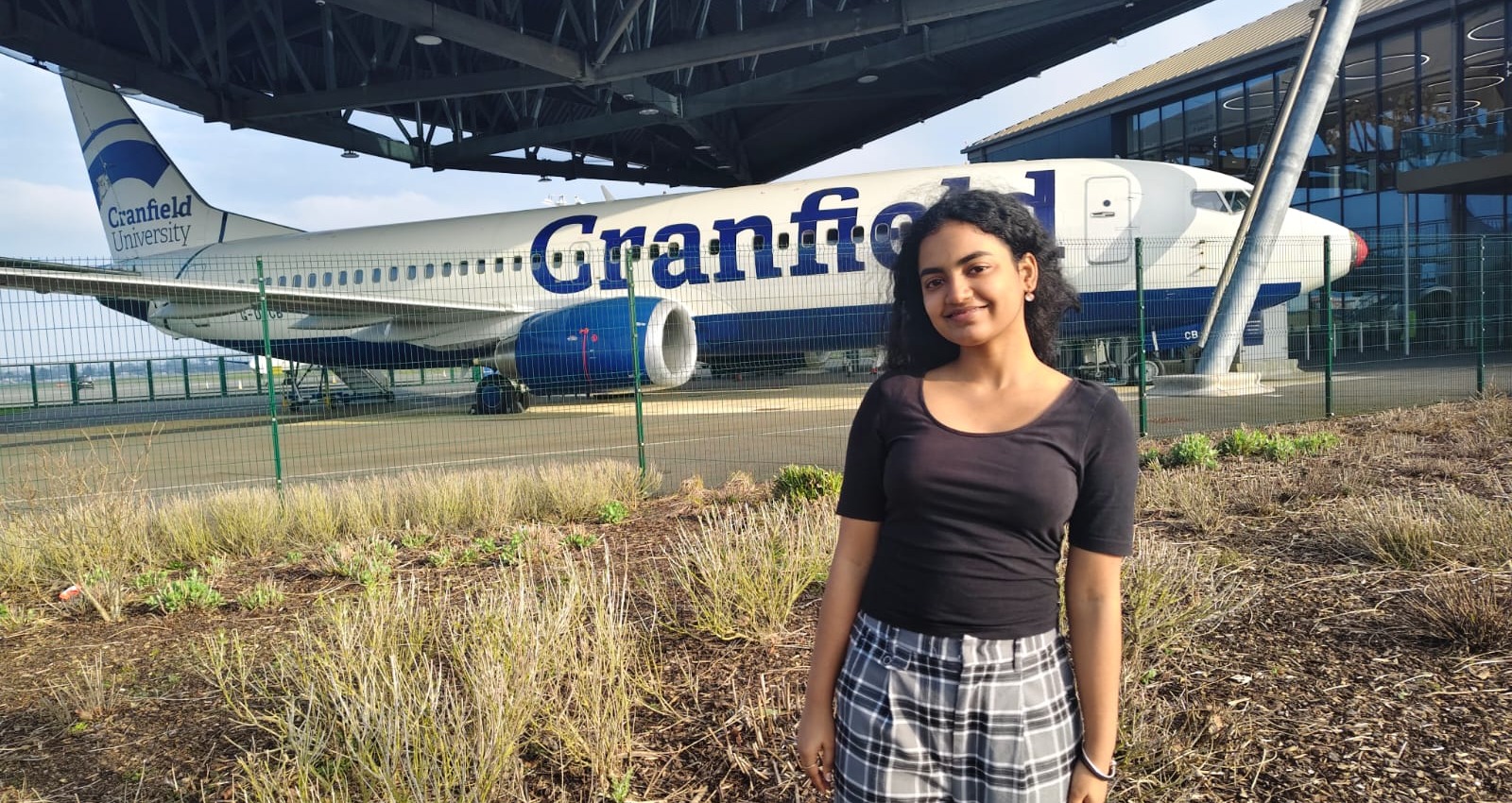
If I’m being specific about the moment it clicked, it was reading a paper called “On the Role and Challenges of Computational Fluid Dynamics (CFD) in the Aerospace Industry” by two Boeing engineers, P. R. Spalart and V. Venkatakrishnan.
It was written from the perspective of engineers working in the aerospace industry, and I found their discussion of how far CFD had come and how much was still unsolved interesting. Turbulence modelling, computing power, grid accuracy, all of it. I remember finishing it and just thinking, okay, this is what I want to spend my time on. Add Cranfield’s name in CFD circles into the mix and the decision made itself. I had the first international flight of my life coming to Cranfield, mind you I stood in the wrong immigration line at first.
Once I got here, the course covered far more than I expected: computational methods, programming, CFD, structural analysis, CAD, the whole spread. My favourite by far was the CAD Airframe module. There’s something quite satisfying about actually building an aircraft’s geometry instead of just simulating one someone else made, it finally connected the design side and the analysis side for me in a way lectures alone hadn’t.
The C++ and Computational Methods assignment, on the other hand, nearly broke me a couple of times, but it’s the one I learned the most from. You stop taking the software for granted once you’ve written the numerical methods underneath it yourself.
Then there’s my thesis, which has quietly taken most of my year. I’m modelling fuel sloshing and pressure behaviour in aircraft wing tanks, the idea being to inform where fuel level sensors should actually sit. I built an automated Python based CFD workflow for it and spent a lot of time picking apart multiphase flow under different conditions. It’s the one project where CFD, coding and proper aerospace engineering all had to come together at once, which is exactly the kind of problem I came here for. I owe a lot of my learning here to Dr. Tom Teschner, from his first mail to me with the offer letter attached to it to his lectures and supervision of my thesis really shaped me into a better engineer.
Outside of coursework, I had the opportunity to fly in a Saab aircraft as part of my course, and my stomach absolutely dropped when it pitched down. Small moment, but it’s stuck with me.
If I’m honest, though, what I’ll remember most isn’t just academics at all. It’s the people here. Cranfield pulls in students from everywhere, and some of the best friends I’ve made here are from countries I’d barely visited before. I also experienced my first snowfall here that was a magical moment for me. Got to represent the university in the IMechE UAS Challenge 2026, working on an unmanned aircraft project with a small team, which was a good reminder that engineering rarely happens alone in a room.
Looking further ahead, I want to do a PhD in materials science, focused on composites. It wasn’t the plan when I arrived, it grew out of how much I enjoyed the composite airframe side of things here. I had worked with balsa and carbon fiber before coming here but after learning the advanced modelling and manufacturing techniques, I want to dive in to find more about it.
So, if you’re weighing up whether to come to Cranfield, my honest advice is: don’t wait until you feel ready. You won’t, not fully, and that’s fine. Ask the obvious questions, give yourself room to catch up on the bits you don’t know yet, and say yes to things outside your course whenever you can. A lot of what I’ll actually remember didn’t happen in a lecture hall.
Find out more about the Computational Fluid Dynamics MSc at Cranfield University.


Categories & Tags:
Leave a comment on this post:
You might also like…
Engineering Tomorrow. Part two: Can we move around the world without emissions?
Moving people and goods around the world is essential to modern life. But every journey has an environmental cost, and reducing the emissions associated with transport is one of the major engineering challenges of ...
Following in the footsteps of aerospace pioneers
I came to Cranfield to understand how aircraft stay in the sky. Months later, I was measuring the performance of aircraft engines in flight aboard the National Flying Laboratory Centre's Saab 340B. My ...
From looking up at jet engines to powering the future of flight
From flying aboard Cranfield's Saab 340B flying classroom to rebuilding a gas turbine component by component, Jouni Kailouh's journey shows how specialist, hands-on experience can turn a fascination with propulsion into a future career ...
Engineering Tomorrow. Part one: Can we power the future without costing the Earth?
The world needs energy. To power homes, industries, transport and the technologies shaping our future. But as demand grows and the pressure to reduce emissions increases, how do we generate the energy we need ...
Looking ahead: Building foresight skills for a more sustainable future
As sustainability challenges become more complex and uncertain, organisations need people who can look beyond today's pressures and think strategically about the future. From changing regulations and emerging technologies to supply chain disruption and ...
Brazil to Cambridge: How Cranfield helped me build a career in data analytics
I was hungry for something bigger. Before Cranfield, I was living in São Paulo, Brazil, working as a Data and Market Intelligence Analyst in the trading division of Raízen. My background is actually ...