


A woman’s experience in environmental science within defence
09/02/2026
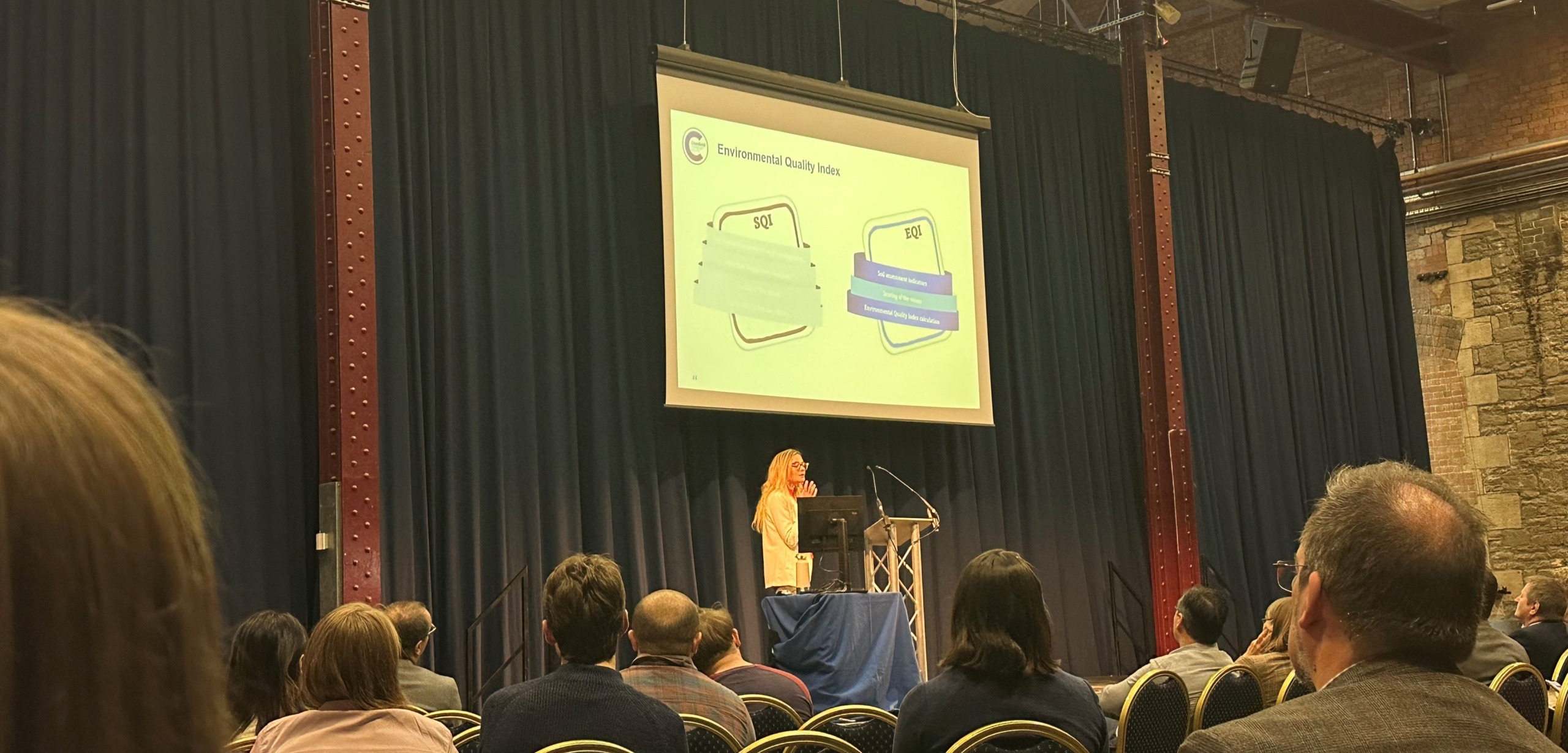
When I stepped into the gates of the Defence Academy it was the 30th September 2019. I did not know at the time that this would be the beginning of a long journey as a research scientist in defence.
When I started my PhD, I came to Defence Academy with more questions than answers. The first thing that surprised me was that most of the academics around me were women. This challenged my first belief that Defence was an all-male environment, although I started thinking that this was because my work was closer to environmental science. Was it true? We`ll never know. What I do know is that from that day until later on when I transitioned into a staff role, I developed a strong sense of responsibility to make sure that my voice was heard.
This was not always easy. Firstly, English is not my first language and learning how to convey a message is already hard in itself; secondly, expressing environmentally friendly ideas in a defence context can be challenging.
So, I was faced with two main challenges:
1. Teaching and translating environmental science into something meaningful, relevant, and applicable within a defence context;
2. Learning to speak with confidence and clarity, particularly in classrooms where the majority of students are male.
Moreover, I was an Environmental Scientist just entering the field and it seemed to me that environmental protection and national defence were rarely discussed in the same sentence. However, as I later learned, they are deeply connected. Military training is essential, but it can also have environmental impacts, including land degradation and contamination.
Even though there are many women around me, in the classroom that is different as the majority of students are male. As I mentioned before, having your voice heard can be even tough as I had more challenges to face, I was a woman, younger than some students and working in a second language.
There were moments when, often unintentionally, students would turn to my male colleagues for questions or mentorship, sometimes assuming that I was in a support role rather than leading the course they were attending. These experiences have affected my confidence, and at times I hesitated to speak up, even if I was the knowledgeable person in the room as I was worried that my voice would not be heard.
I was lucky that I had and have supportive colleagues, mentors, and a line manager who helped build my confidence overtime. I clearly remember being challenged on climate change by a small number of students who did not believe it existed, despite attending an environmental course.
The first time this happened, I had an opinion but felt unsure about expressing it. Someone in the room noticed and helped bring me into the conversation by just stating what they thought and then adding “Isn’t that true, Fed?” That moment gave me the confidence to speak, and since then, I have not stopped. It seems like a small thing, but that helped me in so many ways.
Over the years, this has led to meaningful and insightful conversations with students about balancing environmental protection with operational urgency, conversations that are more relevant now than ever. These discussions have led to collaborations, projects, and deeper engagement, reinforcing my belief that communication is one of the most powerful tools we have.
The main question became: how do we find the right balance between environment and defence? And why is this balance so important? The environment around us is changing with rising temperatures, water scarcity, and soil degradation which could affect food security, infrastructure, and stability within countries. These changes can lead to future instability and potentially affect national security. For example, if land degrades to the point where it can no longer support training, operational readiness is compromised. There are also several examples where this has already happened: changes in temperature and humidity have affected equipment resilience and the ability to train personnel safely and effectively. Protecting the environment, therefore, is not separate from defence, it is essential to it.
So, if you are a woman considering a career in environmental science in defence: we need you. We need more women to be part of this conversation, to bring environmental perspectives into defence, and to help shape the future of operational readiness and sustainability.




Categories & Tags:
Leave a comment on this post:
You might also like…
Mendeley: a powerful tool to organise and manage your references
Are you looking for a way to manage your references, create in-text citations and reference lists for your assignments or thesis? If so, you may wish to consider using Mendeley. What is it? Mendeley is ...

Keen to develop your study skills?
Alongside the technical skills and academic knowledge that you will gain on your course, as a Cranfield student you have the opportunity to develop a range of other skills that can enhance your learning experience. ...
The V-conomy: powering the sixth wave of global economic growth
The world could be on the verge of a major surge in economic growth and development, driven by the convergence of AI and clean energy technology. Waiting to ride the K-wave The Russian ...

Need help using the Python programming language?
We know some of our students are currently trying to learn Python, so we wanted to make you aware of some great LinkedIn Learning videos that can help. But don't you have to pay for ...
What does it really take to become a Chevening Scholar?
Say “Turkmenistan” to most people and you’ll get a blank look. That was true when I left Ashgabat for the UK to study an MSc in Logistics and Supply Chain Management at Cranfield University ...

Get a head start on referencing and plagiarism
We offer a module on Referencing And Avoiding Plagiarism which you can find on your Canvas dashboard. It explains the role and importance of citing references and how to incorporate the work of other authors ...
Comments are closed.