


Zotero: a powerful free tool for managing your references
19/06/2025
Are you working on an assignment, research paper, thesis, or group project and need a way to stay on top of your references? Maybe you have tried using Mendeley to manage your references, but it wasn’t for you. If so, Zotero might be the right tool for you..
What is it?
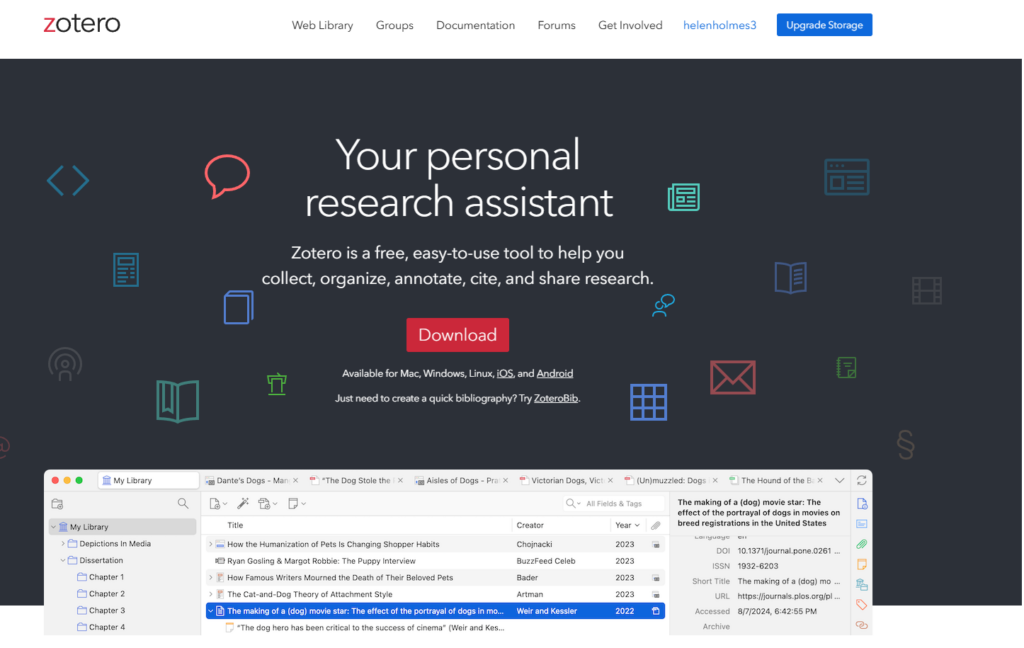
Zotero is a free, open-source reference manager that helps you collect, organise, and cite your sources. It can work with your browser to capture citation details from websites, databases, and library catalogues. Zotero also integrates with Word (though not Word 365), Google Docs, and LibreOffice to help you create in-text citations and formatted reference lists quickly and easily.
How can it help me?
Zotero can support your academic work in many ways:
- Collect references with one click from your browser using the Zotero Connector
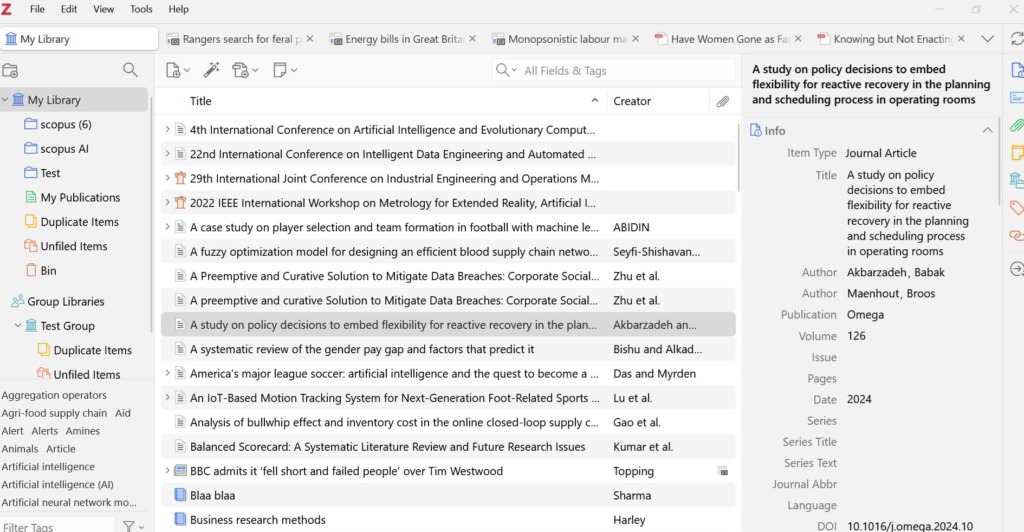
- Organise your sources into folders, or add tags and notes for easy retrieval
- Store PDFs, which you can then highlight and annotate within the Zotero PDF reader
- Cite as you write using the Zotero plug-in for Word or Google Docs
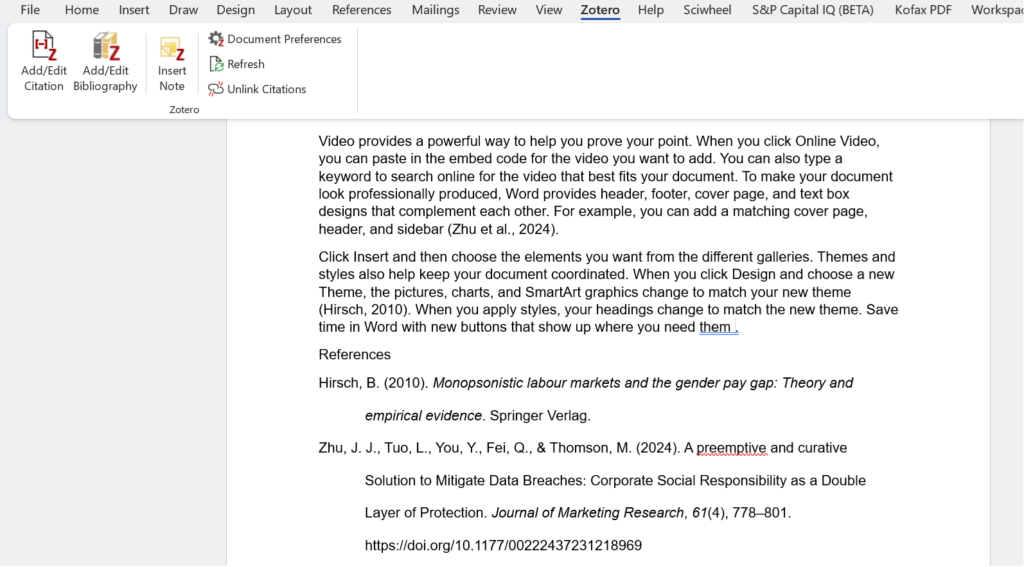
- Automatically generate reference lists in styles like APA7 author-date style and NLM numbered referencing style.
- Collaborate with others by creating shared libraries (perfect for group projects!)
What makes it stand out?
Zotero is especially valued for its flexibility and transparency:
- Save PDFs, snapshots, and notes alongside your references
- Automatically extract metadata from PDFs
- Import and export citations in a wide range of formats
- Seamlessly sync your library across multiple devices
- Work offline and sync later – no internet needed to get started
- Strong user community – active forums
It’s ideal for students, researchers, and academics who want more control over their referencing workflow.
Good to know
Zotero makes referencing easier, but it won’t catch every error. Always review your references to ensure they match the requirements of your course or publication. You’ll also benefit from understanding the citation style you’re using – tools like Zotero are most powerful when paired with good referencing knowledge. Further information about referencing and avoiding plagiarism can be found on the library website and if you are a current student, look for your Referencing and Avoiding Plagiarism course on Canvas.
Want to learn more and get started?
- Visit https://www.zotero.org to download Zotero.
- Check out our Zotero Workbook for tips to get you started.
- Check DATES to see when the next Getting started with Zotero webinar is. You can always ‘Register interest’ if there’s nothing scheduled at the moment.
- Still not sure? Contact us with any queries at library@cranfield.ac.uk
Feature images courtesy of Zotero.

Categories & Tags:
Leave a comment on this post:
You might also like…

Engineering Tomorrow. Part two: Can we move around the world without emissions?
Moving people and goods around the world is essential to modern life. But every journey has an environmental cost, and reducing the emissions associated with transport is one of the major engineering challenges of ...
Following in the footsteps of aerospace pioneers
I came to Cranfield to understand how aircraft stay in the sky. Months later, I was measuring the performance of aircraft engines in flight aboard the National Flying Laboratory Centre's Saab 340B. My ...
From looking up at jet engines to powering the future of flight
From flying aboard Cranfield's Saab 340B flying classroom to rebuilding a gas turbine component by component, Jouni Kailouh's journey shows how specialist, hands-on experience can turn a fascination with propulsion into a future career ...
Engineering Tomorrow. Part one: Can we power the future without costing the Earth?
The world needs energy. To power homes, industries, transport and the technologies shaping our future. But as demand grows and the pressure to reduce emissions increases, how do we generate the energy we need ...
Looking ahead: Building foresight skills for a more sustainable future
As sustainability challenges become more complex and uncertain, organisations need people who can look beyond today's pressures and think strategically about the future. From changing regulations and emerging technologies to supply chain disruption and ...

Brazil to Cambridge: How Cranfield helped me build a career in data analytics
I was hungry for something bigger. Before Cranfield, I was living in São Paulo, Brazil, working as a Data and Market Intelligence Analyst in the trading division of Raízen. My background is actually ...
Comments are closed.