


How do I reference… a table of data from multiple sources?
24/04/2025

If you have read our previous APA7 post on Referencing … tables, you will know how to cite a table of data taken from another source, but when you are creating a new table which incorporates data gathered from different sources, you must cite all the sources used. You can do this by following one of the approaches below:
- The table caption appears above the table e.g. Table 1: Title of table
- The source information appears underneath the table e.g. (Source: British Airways Plc, 2019; 2023)
- If you want to indicate precisely what data has been taken from where, you can add superscript lowercase letters to the cells of the table and then provide a corresponding note beneath the table, as per the following example, Table 1:
Table 1: Title of Table
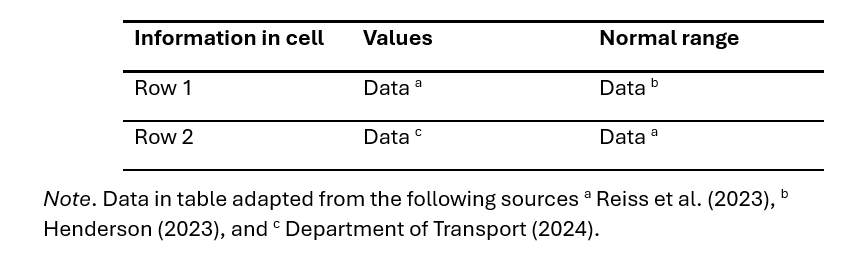
The above example is for the APA7 referencing style. If you are using NLM referencing, add a corresponding note and use the citation numbers as cited in your main text:
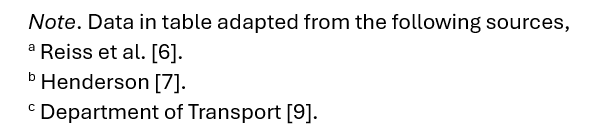
References which are only cited in the table and not in your main text should be numbered according to the physical location of the table in relation to the text.
If your supervisor or lecturer advises you to include in-text citations into the table itself or if the inclusion of lowercase letters could cause confusion (for instance if using mathematical equations) these can be placed within a separate column or row with an appropriate heading, as per the example, Table 2.
Table 2: Title of Table
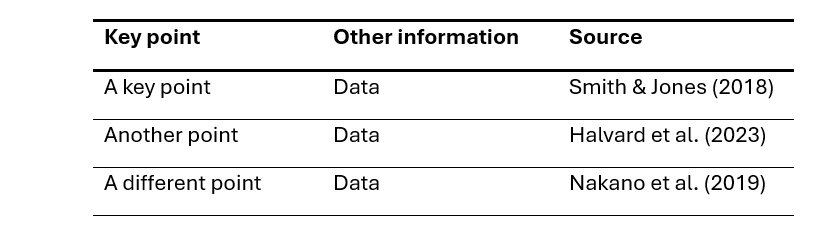
In each case you should also include the full bibliographic details of each source in your reference list at the end of your work in the referencing style you are using. You do not need to include any superscript letters as these are only relevant within the table.
Please note: Cranfield supports two different referencing styles – APA7 (Author-date) and Numbered (NLM). Please make sure you use the style preferred by your supervisor or lecturer. If you have any questions about referencing, please contact the Library.
Feature image from Pixabay. Available at: https://pixabay.com/photos/student-typing-keyboard-text-woman-849822/

Categories & Tags:
Leave a comment on this post:
You might also like…

How do I access the full-text of Harvard Business Review (HBR)?
This is a frequently asked question, and it's worth knowing how to access this key management journal. So, how do you access HBR in full-text? The short answer is via our eJournals finder. You can find ...

Engineering problem to solve? Let Knovel help you find a solution
Did you know that Knovel provides you with more than just eBooks? Knovel is a key database for many engineering, mechanical and materials courses here at Cranfield University, and contains content from an extensive range ...
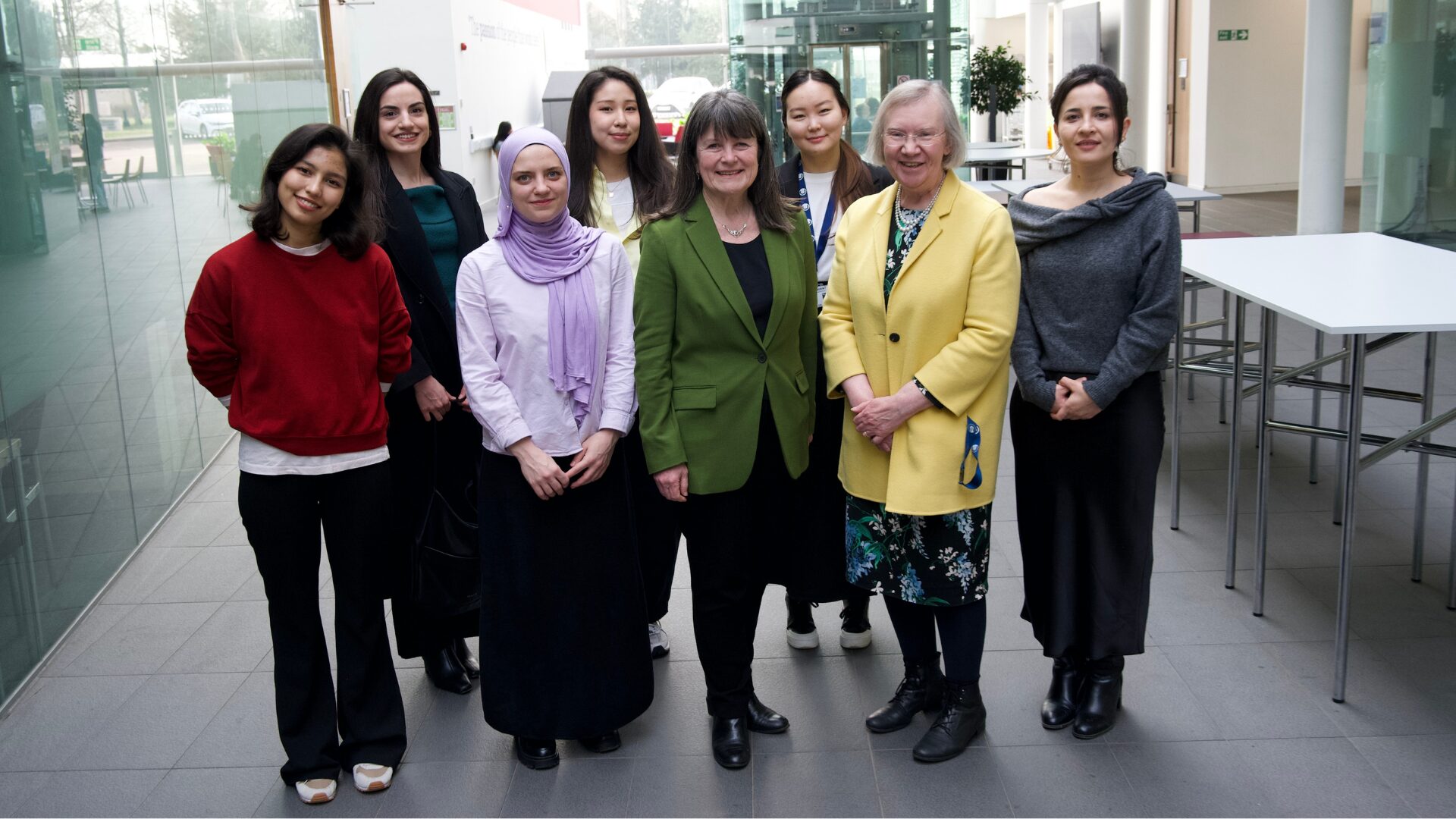
What happens when female scholars meet influential leaders?
On the 5 March 2026, our British Council Women in STEM Scholars had the privilege of sitting down with two excellent role models of industry and academia: Professor Dame Karen Holford, ...

From MSc to CEO: Igniting a research revolution
For many, a master’s degree is achieving a big milestone. Kilyan Ocampo, Computational Fluid Dynamics alumni shares how studying at Cranfield helped launch his career in the energy sector. Today, Kilyan ...
Commuting, collaborating and growing: My first term experience at Cranfield
My first term at Cranfield University has been an extremely positive and rewarding experience. While the course has been intense at times, it has pushed me in the best possible way and allowed me ...

Sourcing country analysis – a guide to Library sources
For those researching a country, you will find that country information tends to take two forms: Analysis - country reports are descriptive reports covering most areas of interest on a country. They contain an analysis ...
Comments are closed.