


Creating a mailing list in FAME
02/03/2020

Did you know that FAME, one of our finance resources, also has the functionality to create mailing lists for British and Irish companies? This can be particularly useful if you need to produce a list of company contacts for research purposes. Read on to find out how.
In order to define the companies you wish to contact in your mailing list you first need to build a search strategy within FAME. Companies can be selected using a number of criteria including location, industry sector, business description, financial data and even by number of employees.
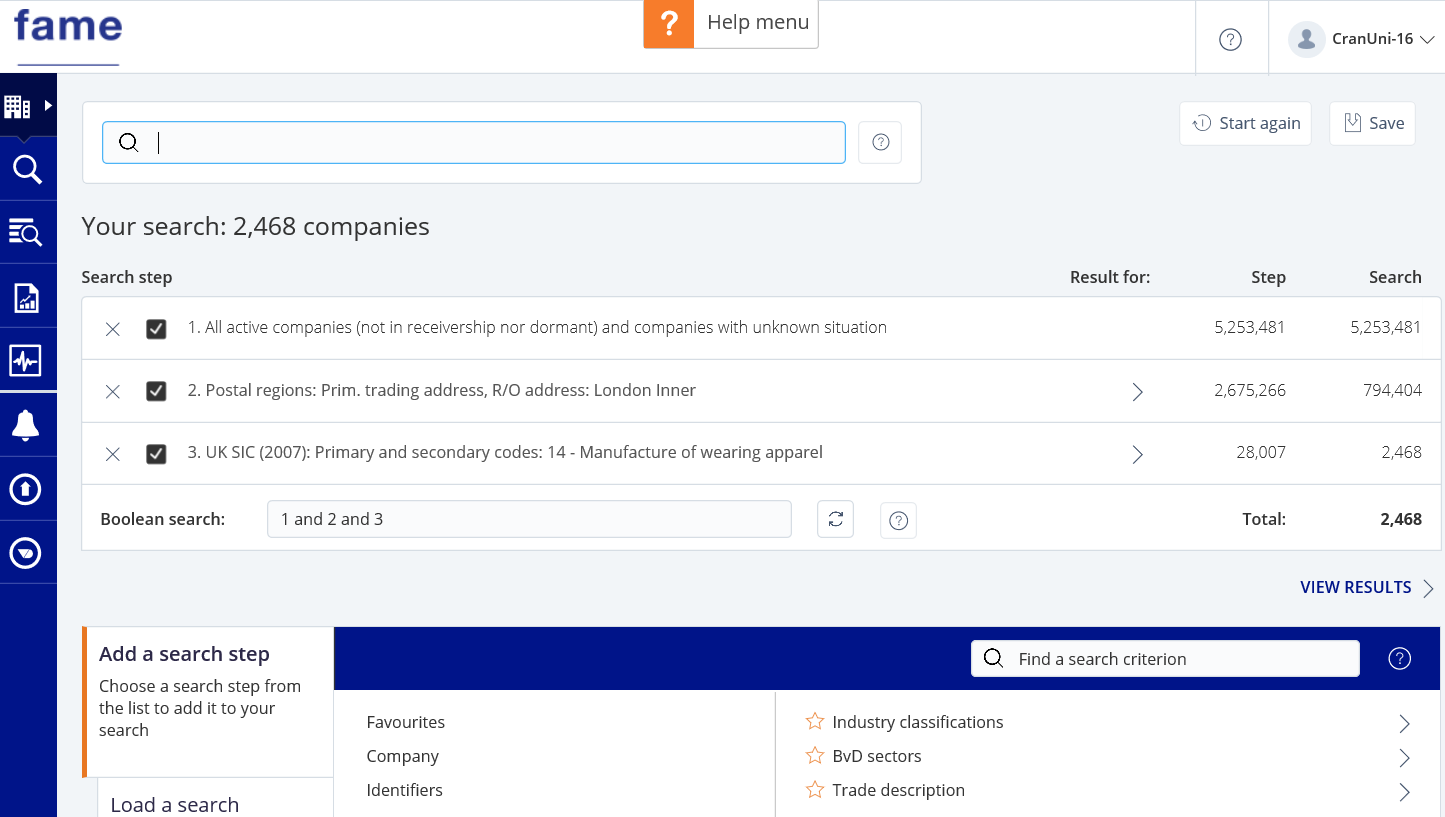
View the companies in your results first to check that you have chosen the correct criteria and amend as necessary. See our earlier blog post introducing FAME if you need more information.
 Once you have finalised your set of companies, select the ‘Tools’ icon on the left hand side menu and choose the Contact tool.
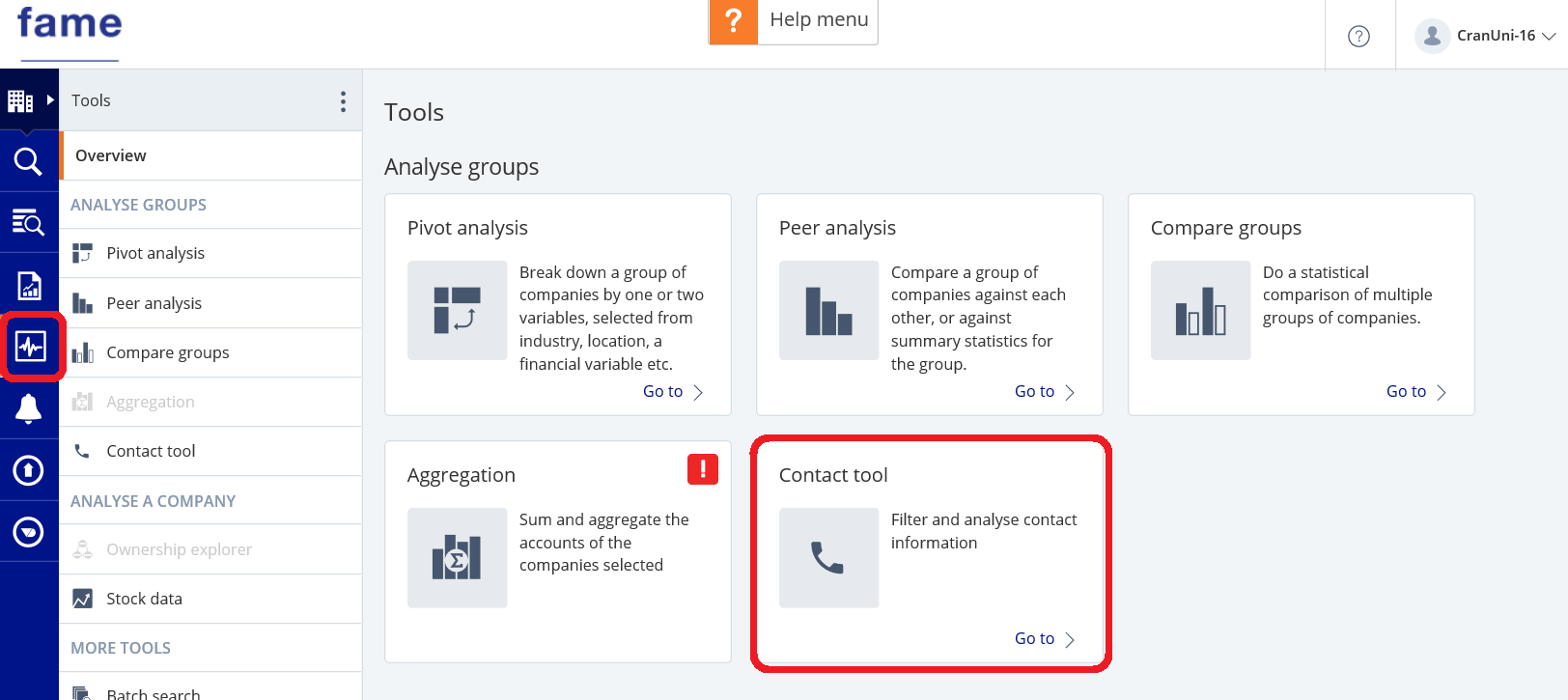
Start creating your new ‘Contact Selection’ and you will be taken step by step through the process of creating a mailing list. You can choose who you wish to contact (i.e. their company role), the contact information you require (e.g. email, telephone, etc.) and any exclusions you may wish to apply.
The mailing list will be generated and displayed on-screen. If required, columns can be added or removed before exporting. Once complete, the components of the mailing list can be exported to Excel.
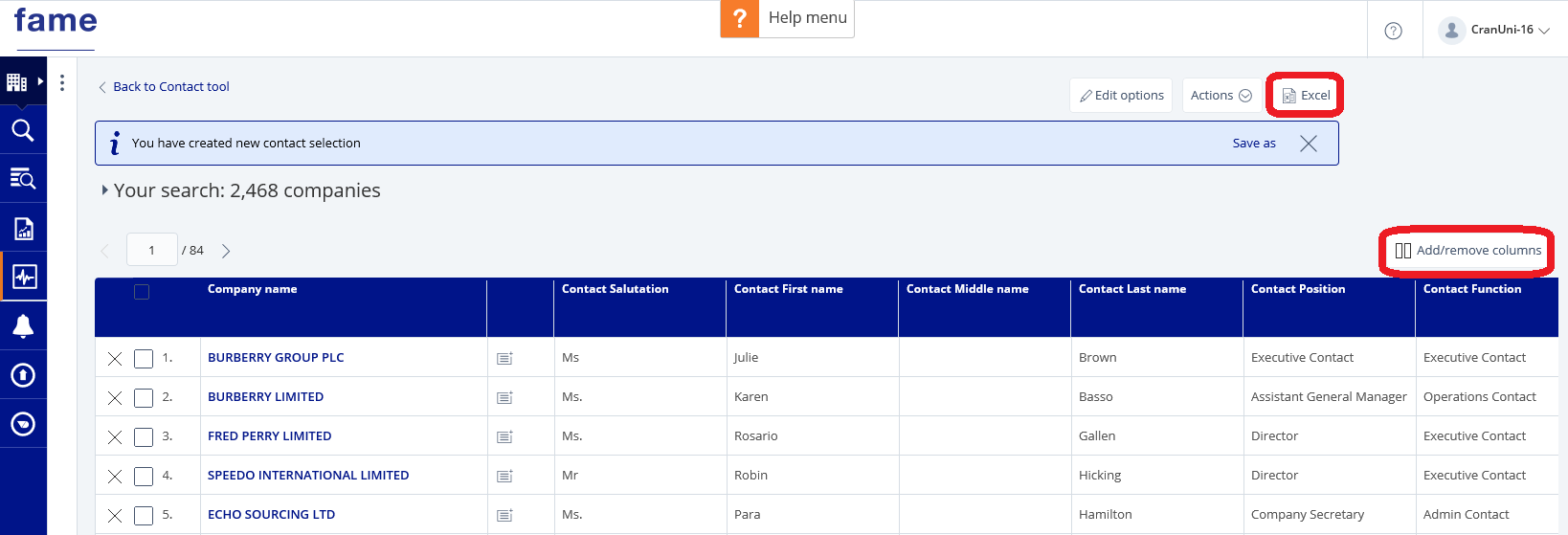
Exporting your mailing list
Please note that before you use your mailing list to contact any of the companies you must comply with GDPR rules. All files must be first run against the University’s bulk mailer to exclude University contacts who have opted out of receiving emails.
For any questions on Fame or other Library resources, please contact the Library.
For further advice and guidance on data protection, please contact your Data Protection Coordinator. More information can be found on the University’s General Data Protection Regulation intranet site or contact them by email onGDPR@cranfield.ac.uk.

Categories & Tags:
Leave a comment on this post:
You might also like…

Moving to the UK to study? How to plan for banking, exchange rates and transfers
Currency and banking are two of the most practical parts of financial planning for international students. They are also often the most overlooked. We asked Dr Lakshmy Subramanian, Course Director for Cranfield University's Banking, ...

Cranfield: an environment where innovation thrives
The latest Knowledge Exchange Framework rankings from UK Research and Innovation (UKRI) gives an insight into the real and meaningful impact that UK universities have. The seven categories that make up KEF6 cover everything ...

How Cranfield accelerated my career in Logistics and Supply Chain Management
After graduating from the MSc in Logistics and Supply Chain Management at Cranfield University, I've been reflecting on the experiences that made my journey so valuable and the impact it has had on my ...

Mendeley: a powerful tool to organise and manage your references
Are you looking for a way to manage your references, create in-text citations and reference lists for your assignments or thesis? If so, you may wish to consider using Mendeley. What is it? Mendeley is ...

Keen to develop your study skills?
Alongside the technical skills and academic knowledge that you will gain on your course, as a Cranfield student you have the opportunity to develop a range of other skills that can enhance your learning experience. ...

The V-conomy: powering the sixth wave of global economic growth
The world could be on the verge of a major surge in economic growth and development, driven by the convergence of AI and clean energy technology. Waiting to ride the K-wave The Russian ...
Comments are closed.