

Finding Financial Times articles in Factiva
20/12/2024

If you are looking for Financial Times articles, look no further than Factiva! But be aware, there is a one-month embargo on content which means the most recent month is unavailable online.
If you really need an FT article from the past month, do check with the library. We might suggest you look at a trial subscription to the FT, but might have other options too.
You have 2 main ways of accessing FT articles in Factiva:
- searching for particular articles/subjects
- browsing
Want to search for a particular FT article, or FT articles on a particular subject?
The first thing you need to do is limit your source to the Financial Times.
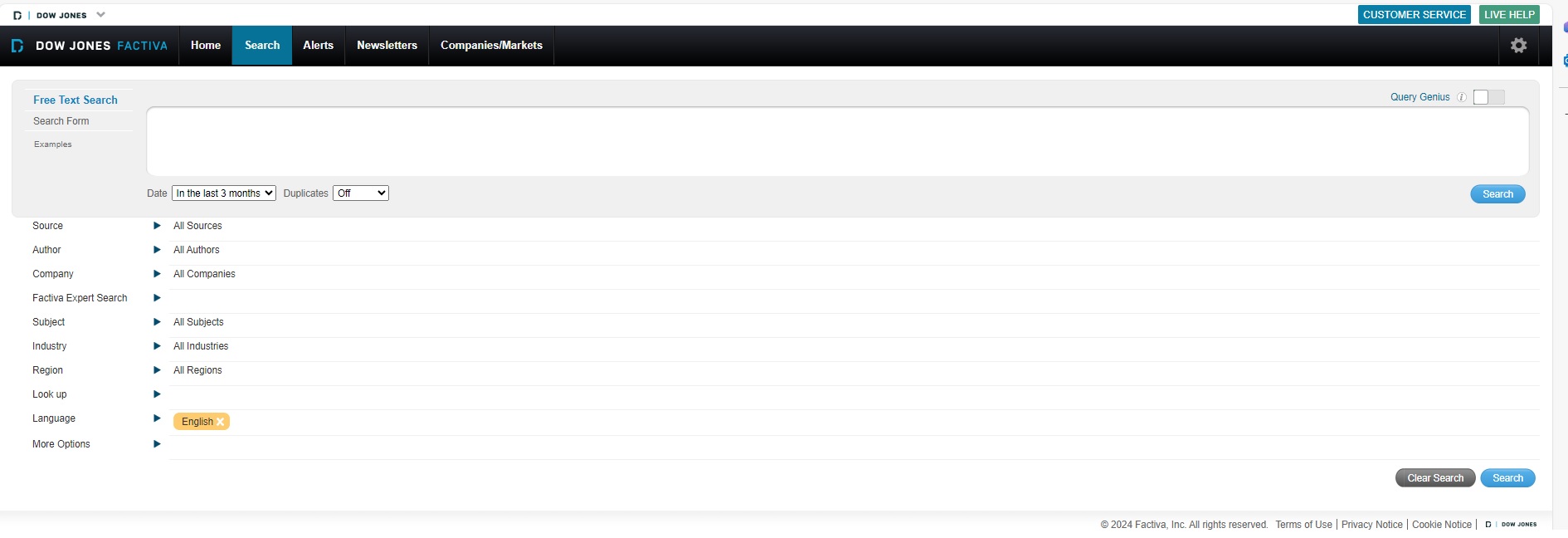
Search form in Factiva
On the search screen, click on the arrow next to ‘All Sources’.
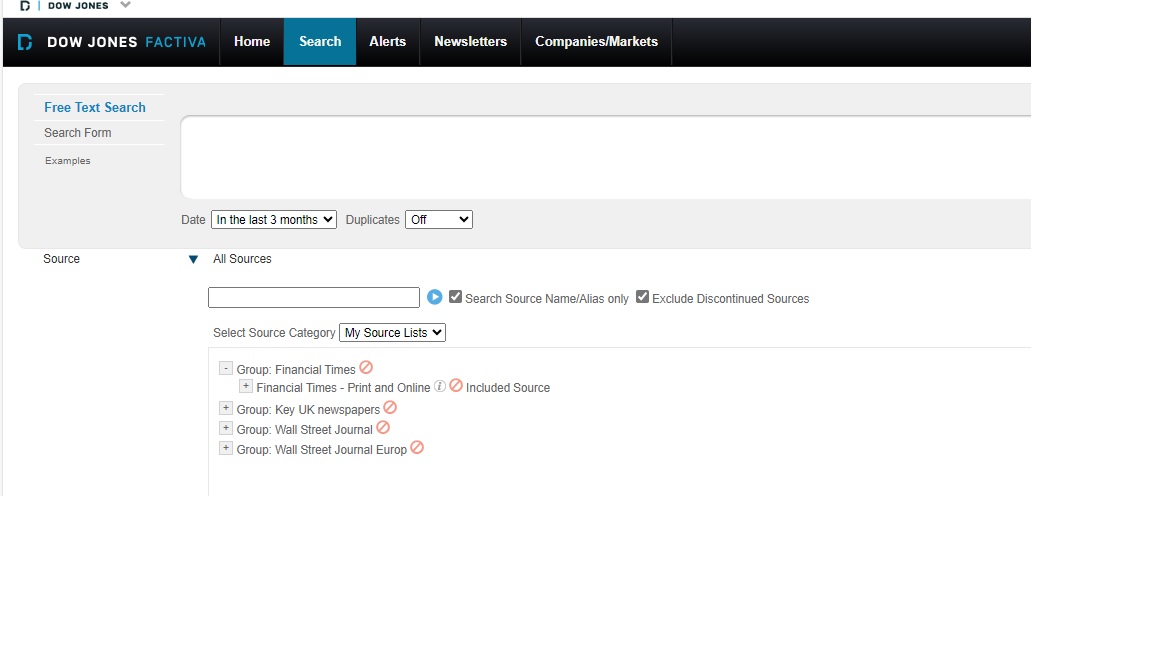
Source menu
Next, click the plus (+) icon next to ‘Group: Financial Times’. Then select ‘Financial Times Print and Online’ by clicking on it once – the text will turn blue and you will see it added in yellow to your search.
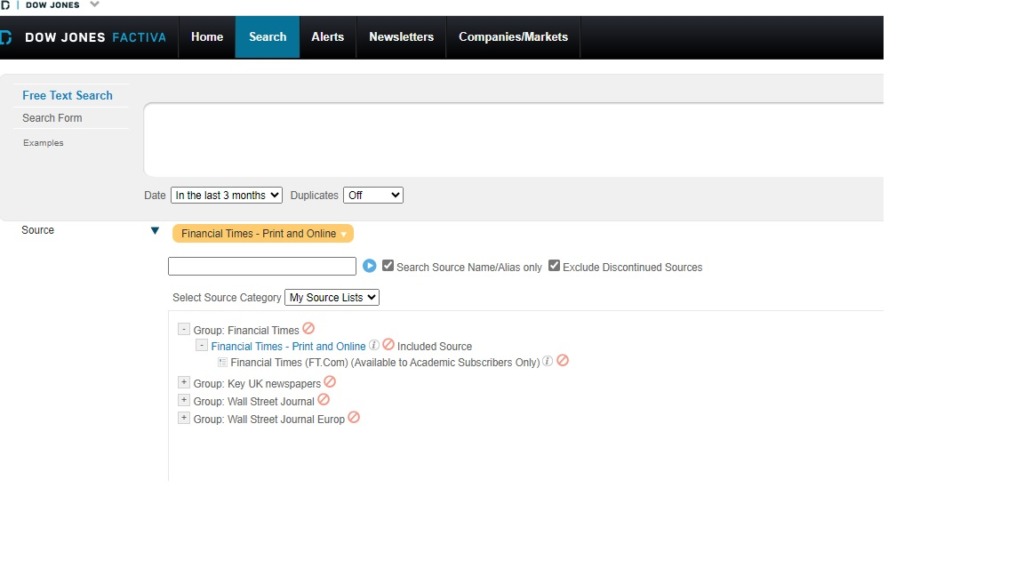
FT added to search
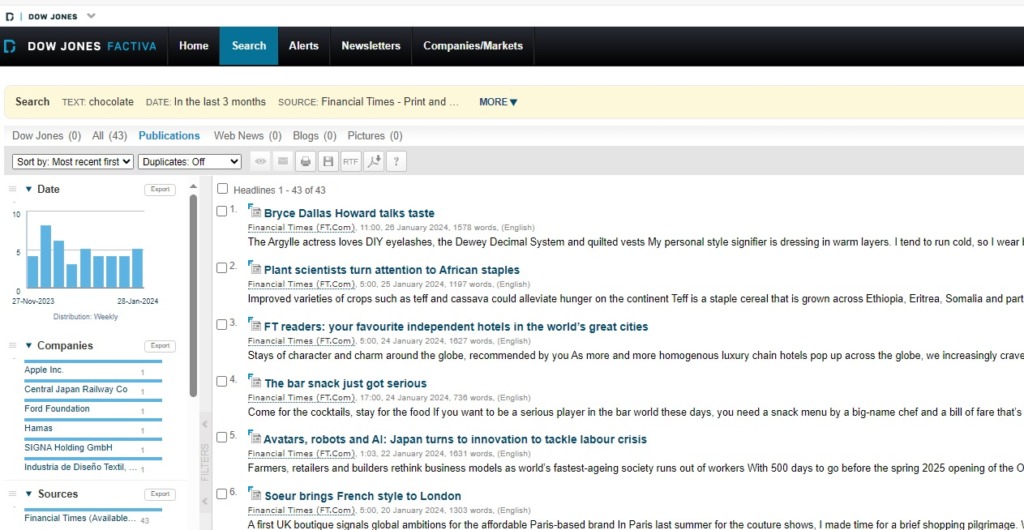
Search results from FT
You can see that my search results are all FT articles. To double-check the parameters of your search, look at the pale yellow header box.
To open an article, click on its title. You can read in the browser or use the options in the grey menu bar to download and save it.
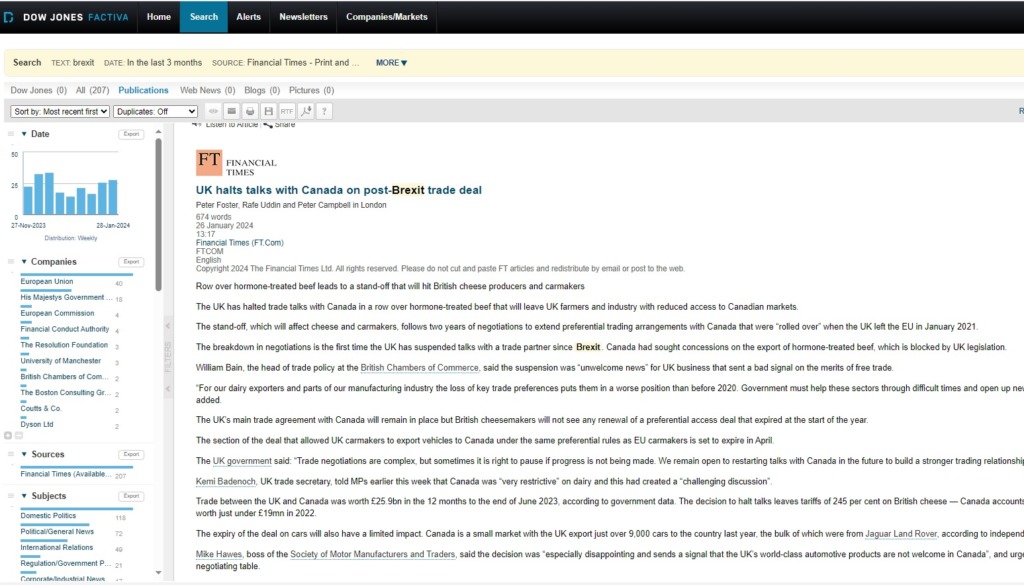
Full text FT article
You can download multiple articles at once by selecting them in the results list (using the checkboxes) and then clicking on the PDF icon. Always select an option including ‘Article’ if you want to download full-text.
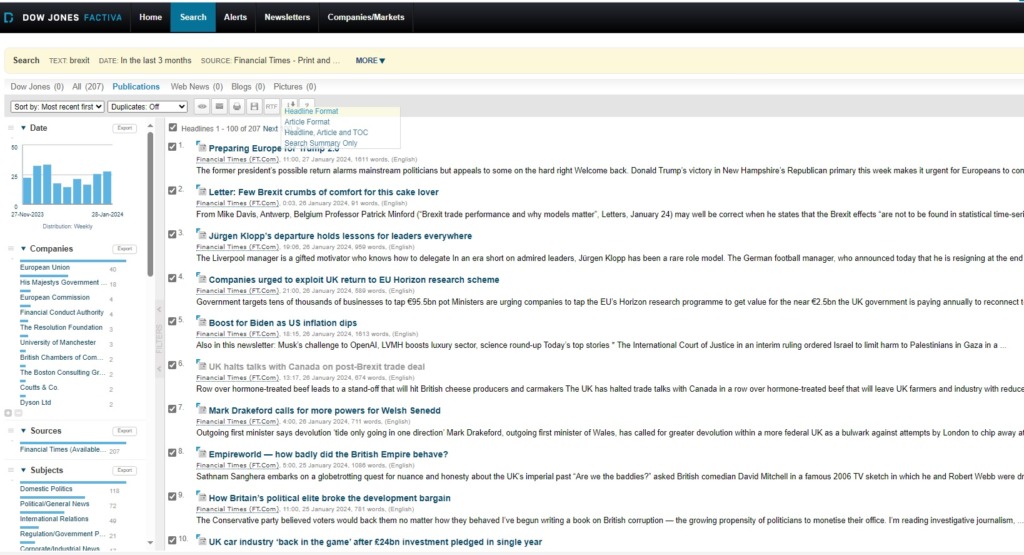
Downloading multiple articles
Want to browse articles from the Financial Times?
You need to start in our eJournals section.
Start typing Financial Times into the search box and you will see the journal name in the dropdown list – click on it.
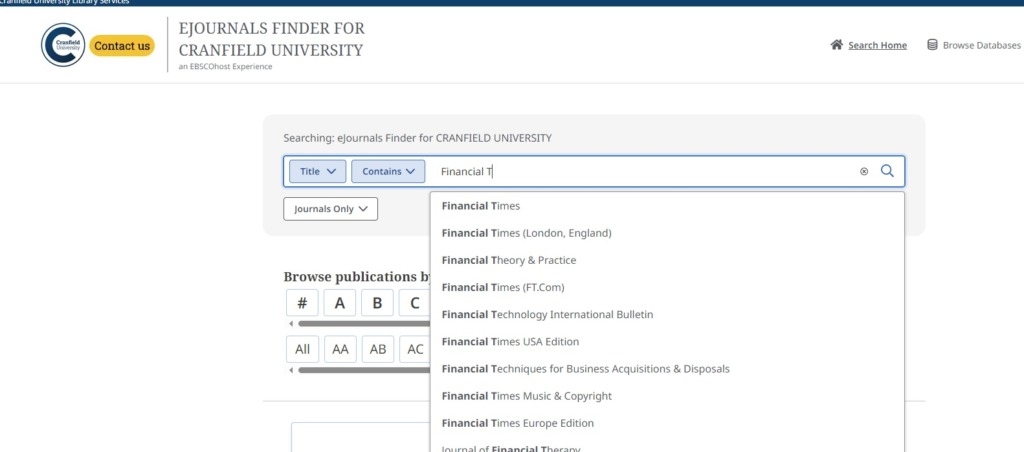
Searching for FT in the Library ejournals finder
In the record for Financial Times, click on Factiva Academic.
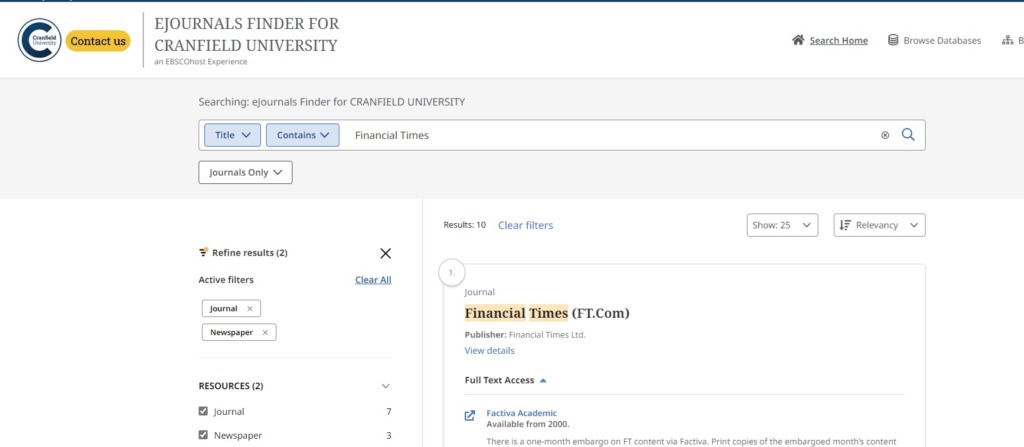
FT record in eJournals finder
This will take you directly to the Factiva webpage listing Financial Times article titles from the last 3 months, in order of most recent first. Remember, you won’t see articles from the last month because of the embargo.
You can change the date range by clicking on the ‘Modify search’ button in the pale yellow header box near the top of the page and then choosing from the dropdown list in the ‘Date’ field.
To open or download an article you can use the instructions at the end of the previous section.
You can find more information about searching Factiva here.
If you have any questions about the Financial Times or Factiva, then please contact the Library.
Featured image by USA-Reiseblogger from Pixabay

Categories & Tags:
Leave a comment on this post:
You might also like…
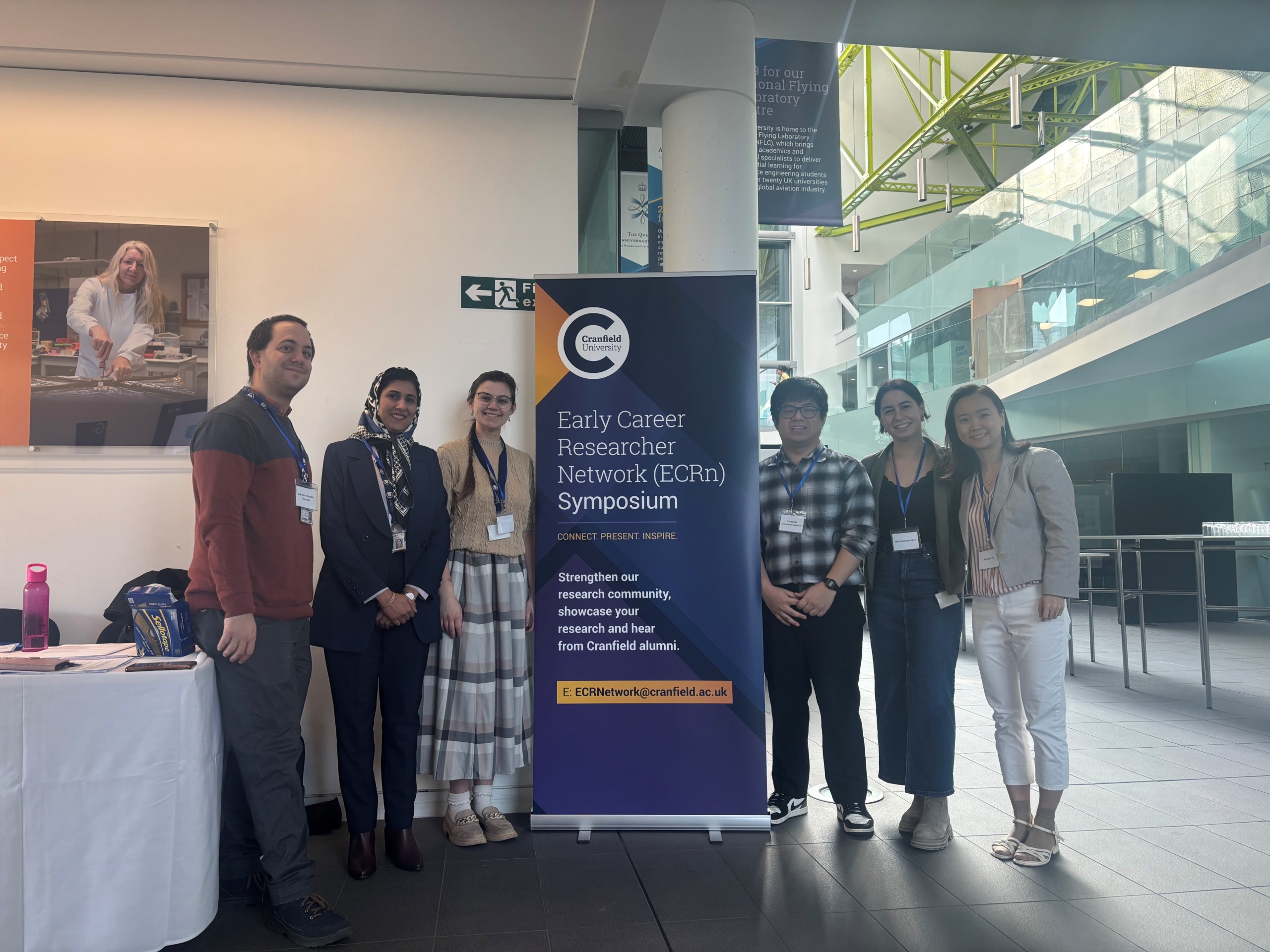
Building more than research: Reflections from the ECRn Symposium 2026
There’s something quietly powerful about a room full of early career researchers. Not just the ideas, although there were plenty of those—but the conversations, the curiosity, and the sense that everyone is figuring things ...

Library services over Easter, 3-6 April
Kings Norton Library will remain open for study 24/7. You will need your University ID card to enter the building and can use the self-service machines to borrow and return items as usual. Barrington Library ...

How do I access the full-text of Harvard Business Review (HBR)?
This is a frequently asked question, and it's worth knowing how to access this key management journal. So, how do you access HBR in full-text? The short answer is via our eJournals finder. You can find ...

Engineering problem to solve? Let Knovel help you find a solution
Did you know that Knovel provides you with more than just eBooks? Knovel is a key database for many engineering, mechanical and materials courses here at Cranfield University, and contains content from an extensive range ...
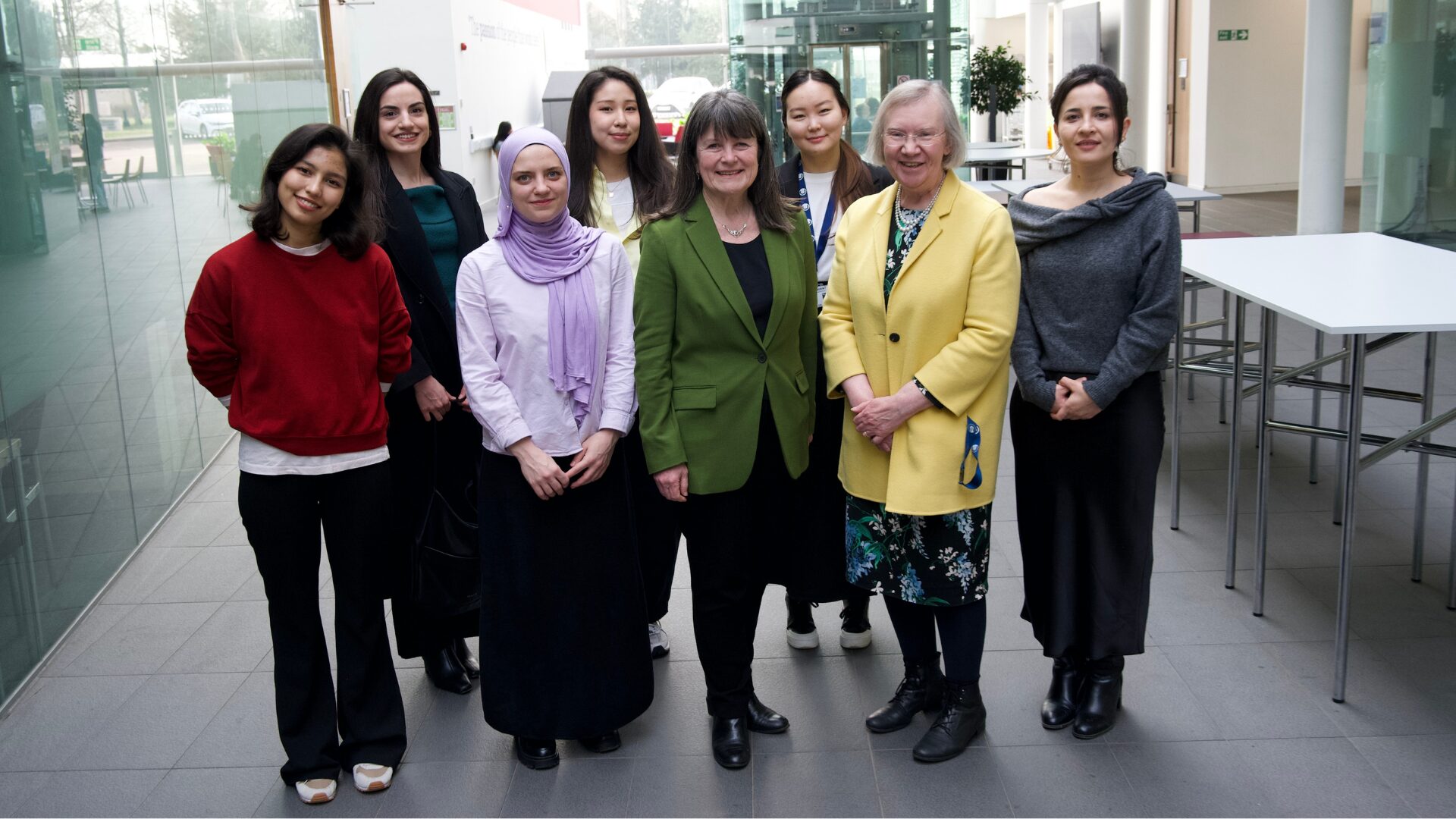
What happens when female scholars meet influential leaders?
On the 5 March 2026, our British Council Women in STEM Scholars had the privilege of sitting down with two excellent role models of industry and academia: Professor Dame Karen Holford, ...
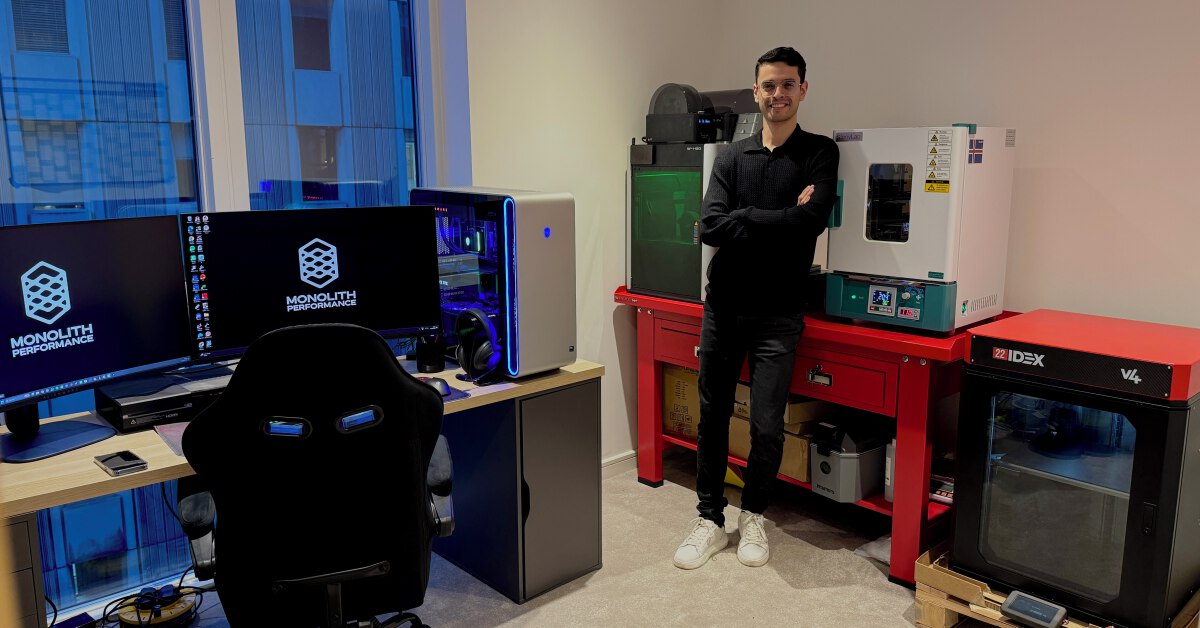
From MSc to CEO: Igniting a research revolution
For many, a master’s degree is achieving a big milestone. Kilyan Ocampo, Computational Fluid Dynamics alumni shares how studying at Cranfield helped launch his career in the energy sector. Today, Kilyan ...