


Finding credit ratings for companies
07/08/2025

A credit rating (or score) is a measure of a company or corporation’s ability to meet their financial commitments based on their previous dealings. It can also be viewed as a measure of a company’s credit worthiness when issuing bonds. Scores are calculated by reference to various items, for example cash flow, profits, equity and financial ratios.
Credit ratings are issued by three main agencies:
- Standard & Poor’s (S&P)
- Fitch
- Moody’s.
The rating system and calculations vary between each however generally they range from AAA+ [Good] to CCC [Poor].
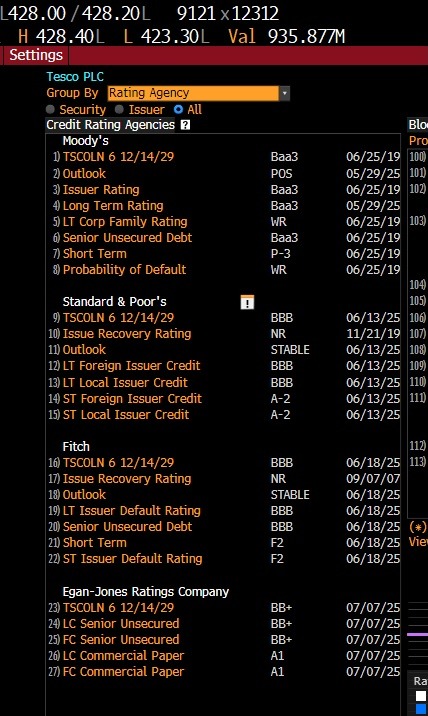
On Bloomberg you can get to a company (equity) credit rating by entering the code <CRPR> which will give you the credit rating profile. An example is shown below.
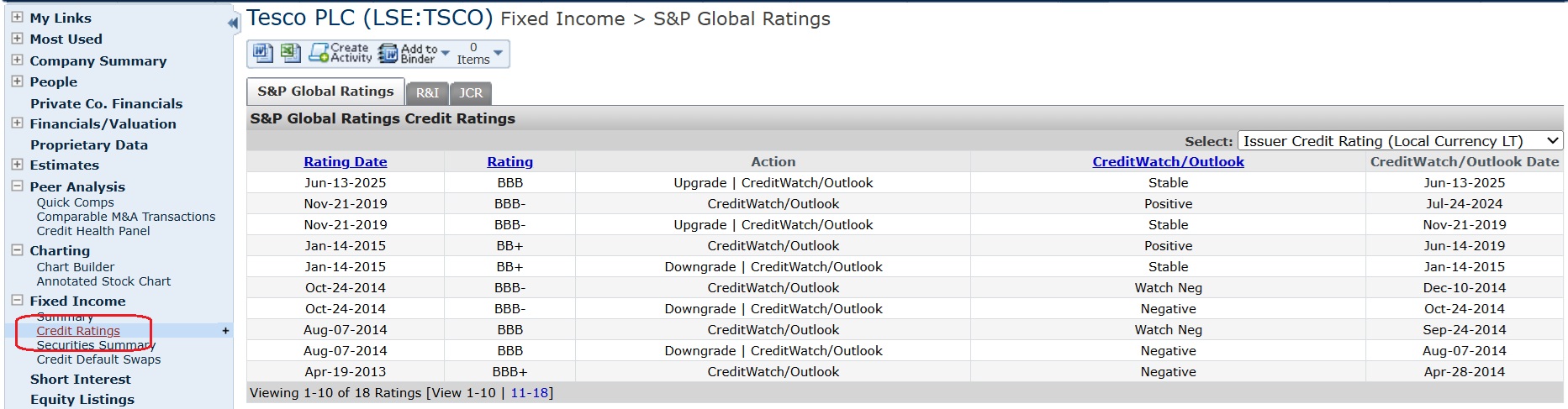
You will also find S&P Credit ratings on their Capital IQ platform. Simply select credit ratings from the ‘Fixed Income’ menu that can be found at the left hand side of the company profile. Remember to create an account if you wish to use Capital IQ. This blog post explains how to register.
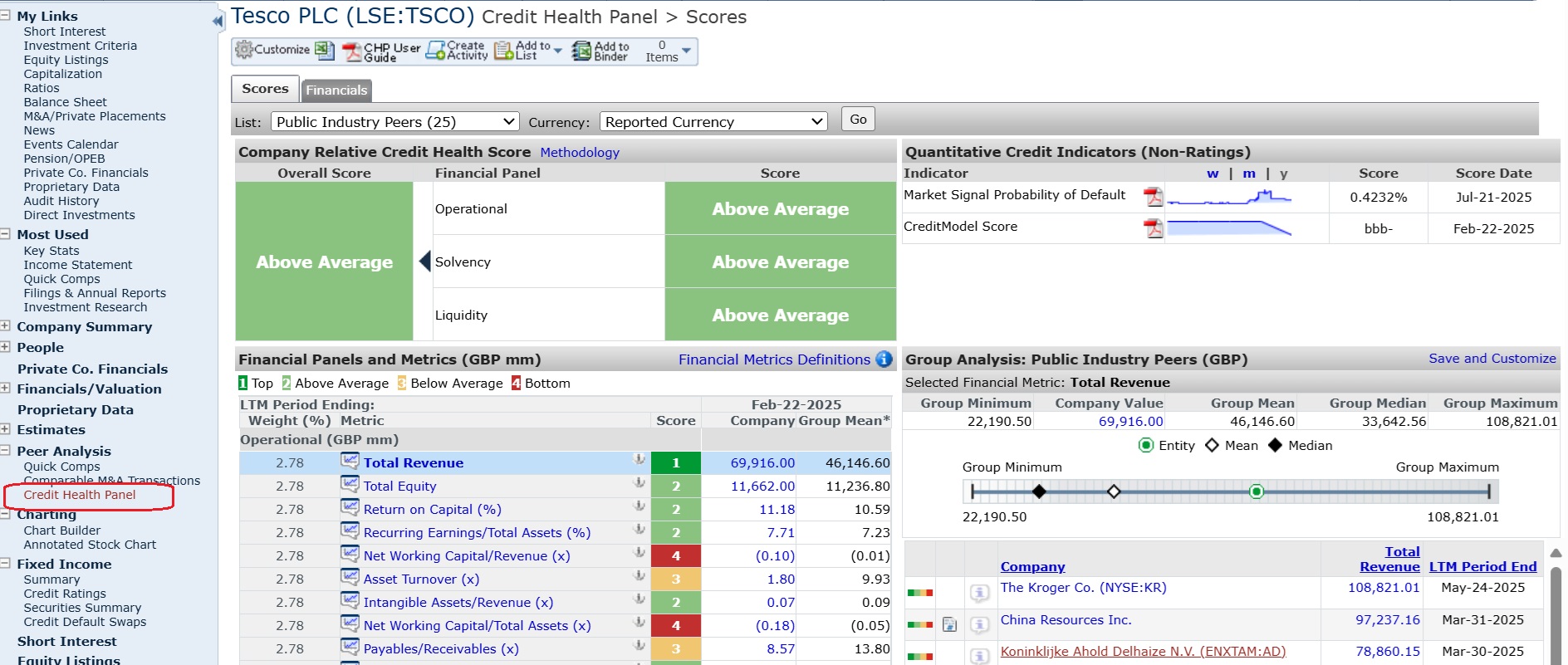
A Credit Health Panel for the company is listed in the ‘Peer Analysis’ menu which compares a company’s credit rating with others in its peer group.
Fame has a credit rating system for UK and Irish companies, developed by CRIF Decision Solutions in collaboration with Jordan’s. It provides a numerical score and the likelihood of a company becoming insolvent. To view the credit rating for a company, open the ‘Company profile’ section of the left-hand report menu and select ‘Credit & CCJs’.
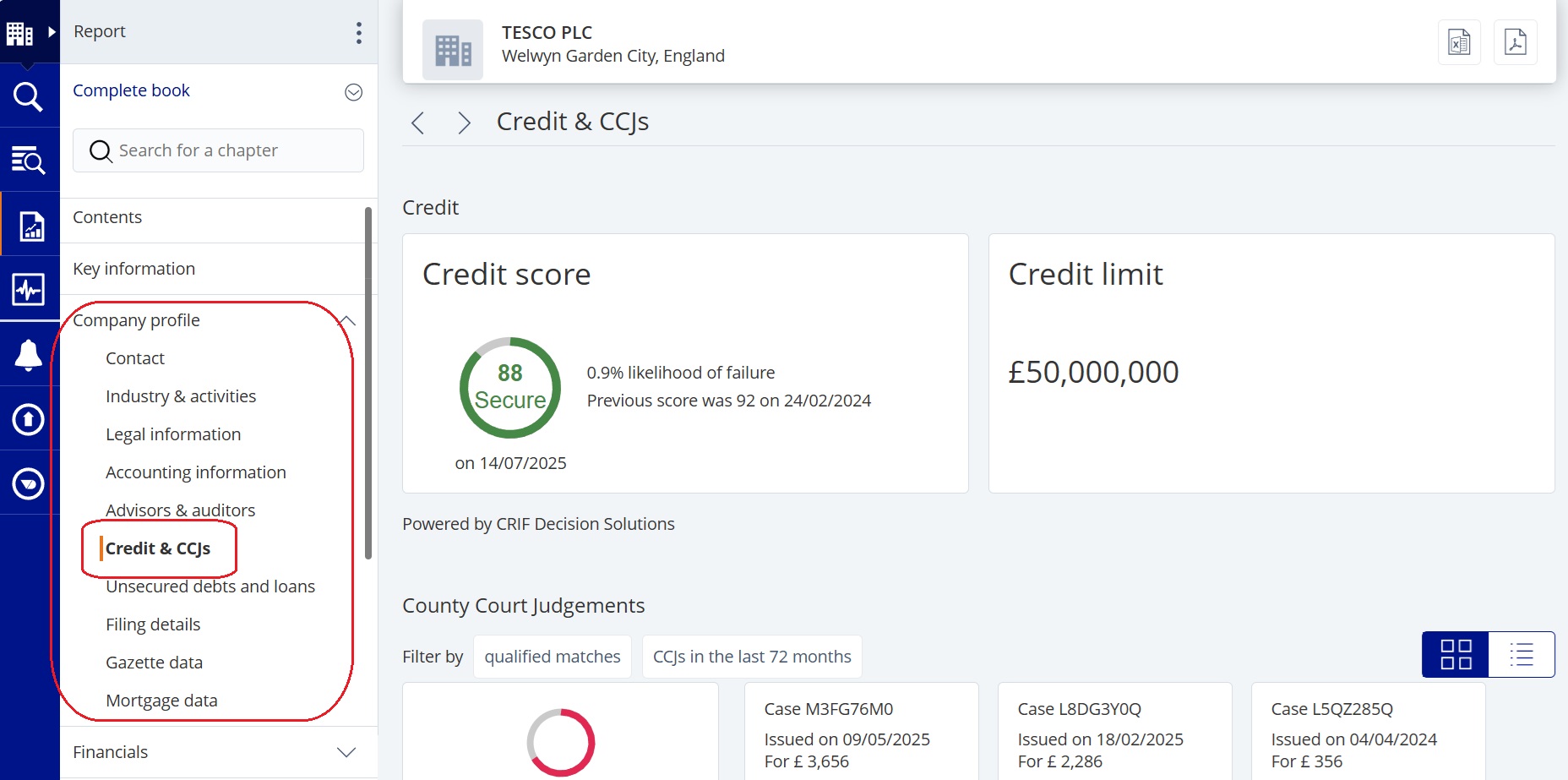
FAME credit ratings
BankFocus, our global financial accounts database for banks and financial institutions, has Moody’s ratings listed for companies. These appear under the ‘Agency ratings and credit scores’ heading on the left hand menu of a bank’s report screen.
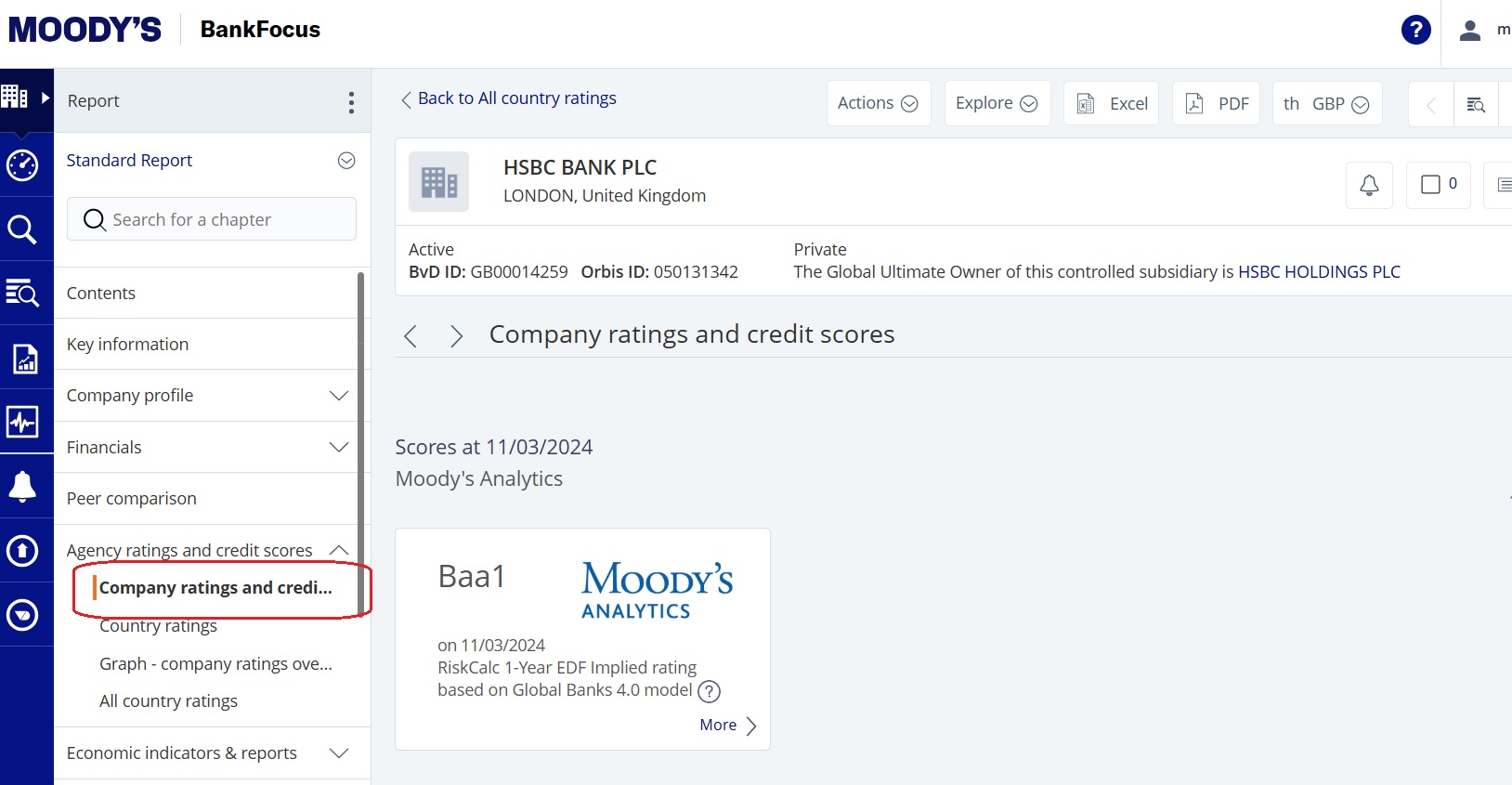
BankFocus credit rating
Any questions, please contact the Library.
Feature image from Pixabay. Available at: https://pixabay.com/photos/savings-budget-investment-money-2789112/

Categories & Tags:
Leave a comment on this post:
You might also like…

Building more than research: Reflections from the ECRn Symposium 2026
There’s something quietly powerful about a room full of early career researchers. Not just the ideas, although there were plenty of those—but the conversations, the curiosity, and the sense that everyone is figuring things ...

Library services over Easter, 3-6 April
Kings Norton Library will remain open for study 24/7. You will need your University ID card to enter the building and can use the self-service machines to borrow and return items as usual. Barrington Library ...

How do I access the full-text of Harvard Business Review (HBR)?
This is a frequently asked question, and it's worth knowing how to access this key management journal. So, how do you access HBR in full-text? The short answer is via our eJournals finder. You can find ...

Engineering problem to solve? Let Knovel help you find a solution
Did you know that Knovel provides you with more than just eBooks? Knovel is a key database for many engineering, mechanical and materials courses here at Cranfield University, and contains content from an extensive range ...

What happens when female scholars meet influential leaders?
On the 5 March 2026, our British Council Women in STEM Scholars had the privilege of sitting down with two excellent role models of industry and academia: Professor Dame Karen Holford, ...

From MSc to CEO: Igniting a research revolution
For many, a master’s degree is achieving a big milestone. Kilyan Ocampo, Computational Fluid Dynamics alumni shares how studying at Cranfield helped launch his career in the energy sector. Today, Kilyan ...