


Finding credit ratings for companies
07/08/2025

A credit rating (or score) is a measure of a company or corporation’s ability to meet their financial commitments based on their previous dealings. It can also be viewed as a measure of a company’s credit worthiness when issuing bonds. Scores are calculated by reference to various items, for example cash flow, profits, equity and financial ratios.
Credit ratings are issued by three main agencies:
- Standard & Poor’s (S&P)
- Fitch
- Moody’s.
The rating system and calculations vary between each however generally they range from AAA+ [Good] to CCC [Poor].
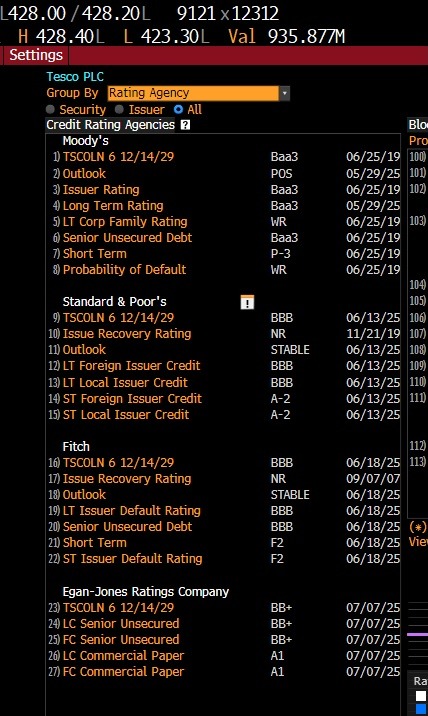
On Bloomberg you can get to a company (equity) credit rating by entering the code <CRPR> which will give you the credit rating profile. An example is shown below.
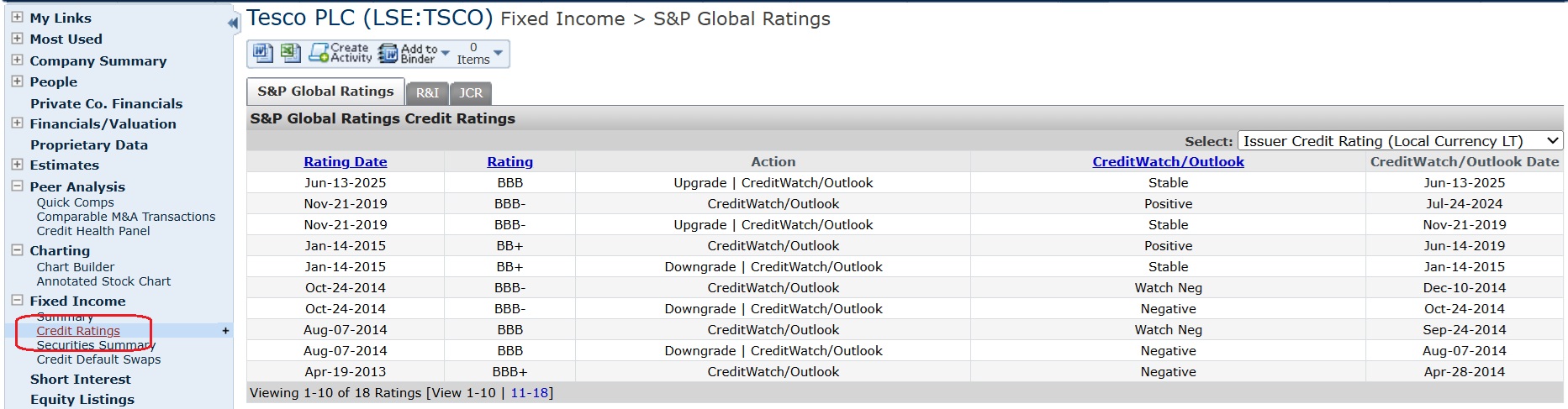
You will also find S&P Credit ratings on their Capital IQ platform. Simply select credit ratings from the ‘Fixed Income’ menu that can be found at the left hand side of the company profile. Remember to create an account if you wish to use Capital IQ. This blog post explains how to register.
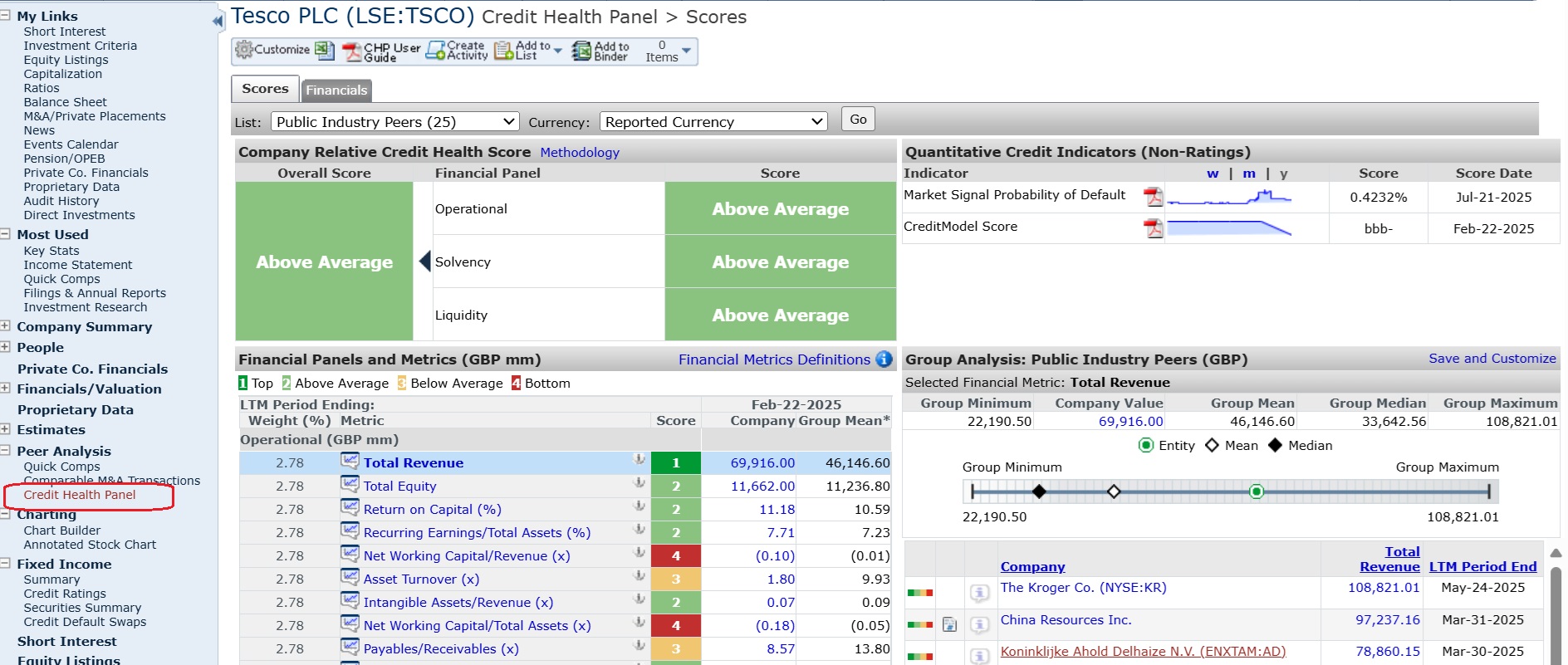
A Credit Health Panel for the company is listed in the ‘Peer Analysis’ menu which compares a company’s credit rating with others in its peer group.
Fame has a credit rating system for UK and Irish companies, developed by CRIF Decision Solutions in collaboration with Jordan’s. It provides a numerical score and the likelihood of a company becoming insolvent. To view the credit rating for a company, open the ‘Company profile’ section of the left-hand report menu and select ‘Credit & CCJs’.
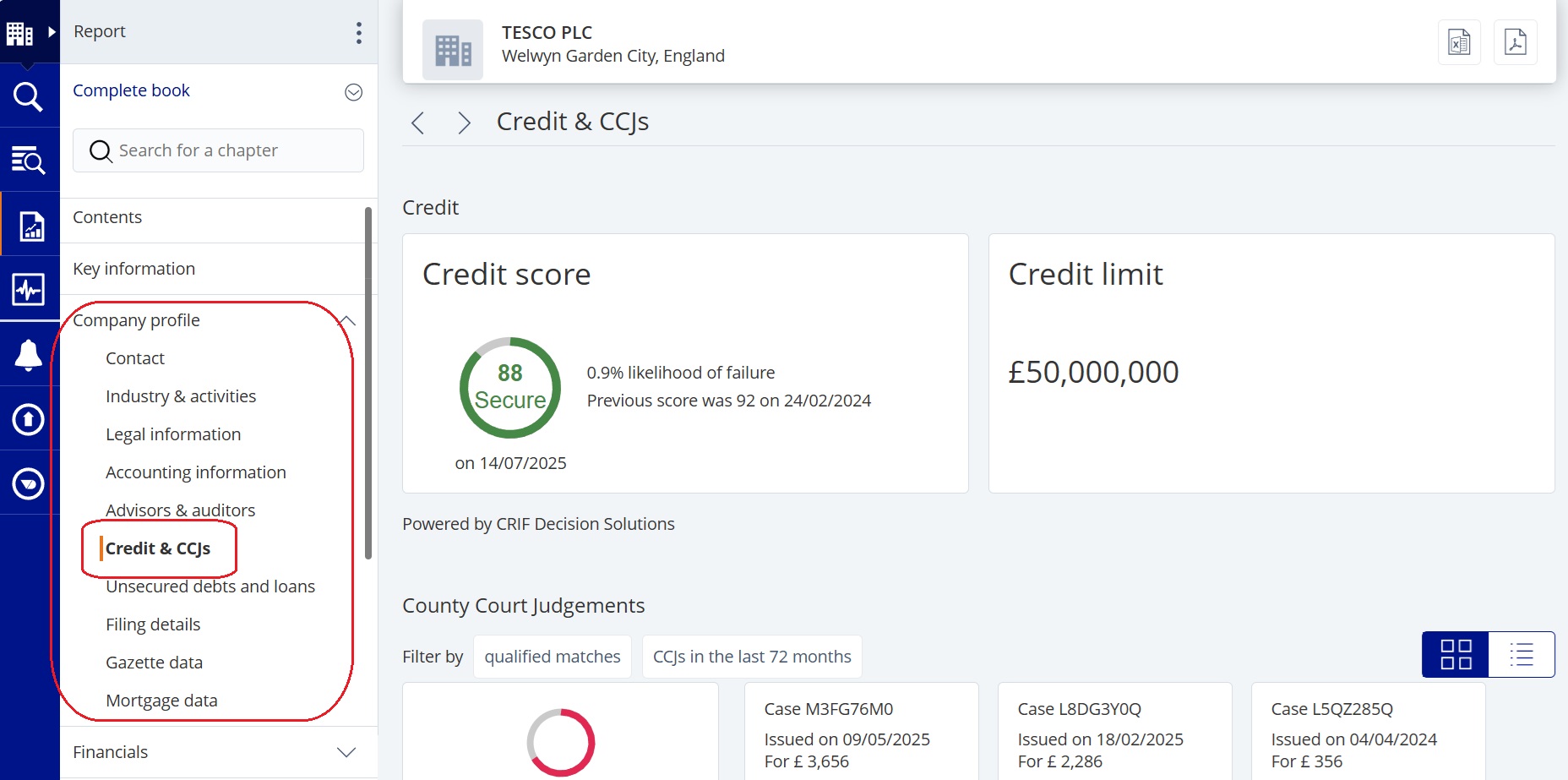
FAME credit ratings
BankFocus, our global financial accounts database for banks and financial institutions, has Moody’s ratings listed for companies. These appear under the ‘Agency ratings and credit scores’ heading on the left hand menu of a bank’s report screen.
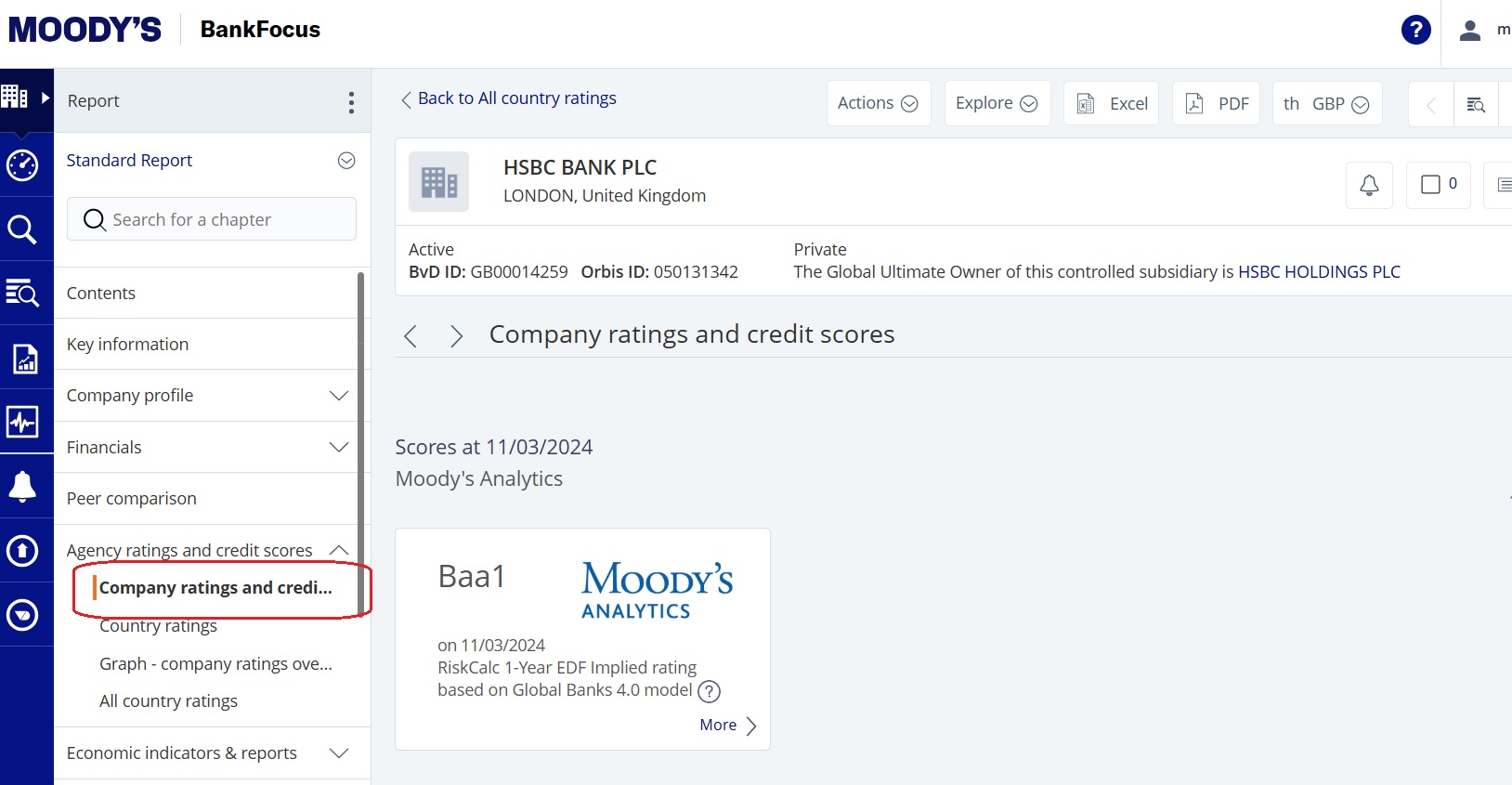
BankFocus credit rating
Any questions, please contact the Library.
Feature image from Pixabay. Available at: https://pixabay.com/photos/savings-budget-investment-money-2789112/

Categories & Tags:
Leave a comment on this post:
You might also like…

Moving to the UK to study? How to plan for banking, exchange rates and transfers
Currency and banking are two of the most practical parts of financial planning for international students. They are also often the most overlooked. We asked Dr Lakshmy Subramanian, Course Director for Cranfield University's Banking, ...

Cranfield: an environment where innovation thrives
The latest Knowledge Exchange Framework rankings from UK Research and Innovation (UKRI) gives an insight into the real and meaningful impact that UK universities have. The seven categories that make up KEF6 cover everything ...

How Cranfield accelerated my career in Logistics and Supply Chain Management
After graduating from the MSc in Logistics and Supply Chain Management at Cranfield University, I've been reflecting on the experiences that made my journey so valuable and the impact it has had on my ...

Mendeley: a powerful tool to organise and manage your references
Are you looking for a way to manage your references, create in-text citations and reference lists for your assignments or thesis? If so, you may wish to consider using Mendeley. What is it? Mendeley is ...

Keen to develop your study skills?
Alongside the technical skills and academic knowledge that you will gain on your course, as a Cranfield student you have the opportunity to develop a range of other skills that can enhance your learning experience. ...

The V-conomy: powering the sixth wave of global economic growth
The world could be on the verge of a major surge in economic growth and development, driven by the convergence of AI and clean energy technology. Waiting to ride the K-wave The Russian ...
Comments are closed.