


The Induction Week – A great start of the year
14/11/2019
It was the second week of October and I, Muriel, had just arrived at Cranfield University for my MSc in Future Food Sustainability. Before the first module started, there was an Induction Week planned for us with the students of Food Systems and Management.
Okay, I thought, time to get to know my fellow classmates! Which was exactly what happened during this intense week, filled with brainstorm sessions, group presentations, informative lectures and much more. The short breaks in between enabled us to chat and exchange thoughts regarding Agrifood, our arrival at Cranfield and our life back home.
For me there were two highlights this week: First of all, I won a Cranfield notebook when doing a Kahoot quiz. You might wonder why this is so special… Well, I always keep a diary of my daily activities and what better notebook to capture my year in than in a Cranfield notebook?

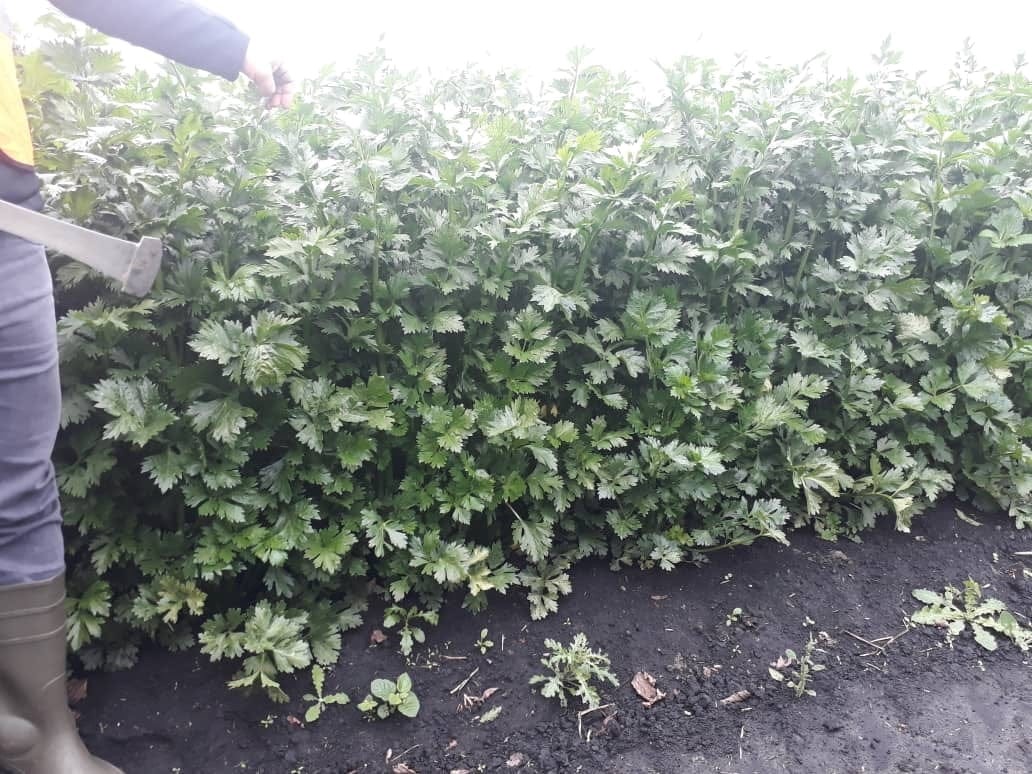
The other highlight of the week was the field trip on Friday. We had to rise and shine early, but it was worth it: at G´s we got to see how mushrooms and celery are grown. Before we could enter the celery field, we had to wear fluorescent vests to make sure we were visible and disinfect the soles of our shoes. This was necessary in order to prevent us from bringing unwanted contaminants onto the field. Once we were on the field, our faces were full of disbelief. Did you know a celery plant is 1 meter high?!
To see the different growth stages of mushrooms we had to enter a special facility, since mushrooms are grown inside. This is because the room temperature, humidity and many other factors must be controlled to be able to grow the mushrooms in a safe and efficient way. The manipulation of the mushroom´s environment is the key to make spores connect to each other and grow into a mushroom: when the environment is unsuitable for the spores, they will think they are going to die. They will form a mushroom together that will release a new generation of spores from the top to secure reproduction. As soon as the mushrooms are formed, the environment will be manipulated again to make sure the mushrooms grow further. Altogether a very fascinating system that I didn´t know of!
Before we left G´s we got a sneak peak in the packaging facility where their produce was being packed and prepped for retail. We all received a pack of fresh radishes to bring home. A great ending of an amazing week! I can´t wait to start with the modules 😊

Categories & Tags:
Leave a comment on this post:
You might also like…
From Nigeria to Cranfield: My journey into Future Food Sustainability
My name is Jolaosho Eniola, and I’m studying the MSc in Future Food Sustainability. I’m originally from Nigeria, and I’m passionate about food systems, food sustainability, food supply chain and creating solutions that improve ...

How to present well as a group
You will have put a lot of work into your research or group project and want to show everyone what you have achieved or discovered, so you need to impart this knowledge as clearly as ...
Building more than research: Reflections from the ECRn Symposium 2026
There’s something quietly powerful about a room full of early career researchers. Not just the ideas, although there were plenty of those—but the conversations, the curiosity, and the sense that everyone is figuring things ...
Library services over Easter, 3-6 April
Kings Norton Library will remain open for study 24/7. You will need your University ID card to enter the building and can use the self-service machines to borrow and return items as usual. Barrington Library ...

How do I access the full-text of Harvard Business Review (HBR)?
This is a frequently asked question, and it's worth knowing how to access this key management journal. So, how do you access HBR in full-text? The short answer is via our eJournals finder. You can find ...

Engineering problem to solve? Let Knovel help you find a solution
Did you know that Knovel provides you with more than just eBooks? Knovel is a key database for many engineering, mechanical and materials courses here at Cranfield University, and contains content from an extensive range ...