


The Induction Week – A great start of the year
14/11/2019
It was the second week of October and I, Muriel, had just arrived at Cranfield University for my MSc in Future Food Sustainability. Before the first module started, there was an Induction Week planned for us with the students of Food Systems and Management.
Okay, I thought, time to get to know my fellow classmates! Which was exactly what happened during this intense week, filled with brainstorm sessions, group presentations, informative lectures and much more. The short breaks in between enabled us to chat and exchange thoughts regarding Agrifood, our arrival at Cranfield and our life back home.
For me there were two highlights this week: First of all, I won a Cranfield notebook when doing a Kahoot quiz. You might wonder why this is so special… Well, I always keep a diary of my daily activities and what better notebook to capture my year in than in a Cranfield notebook?

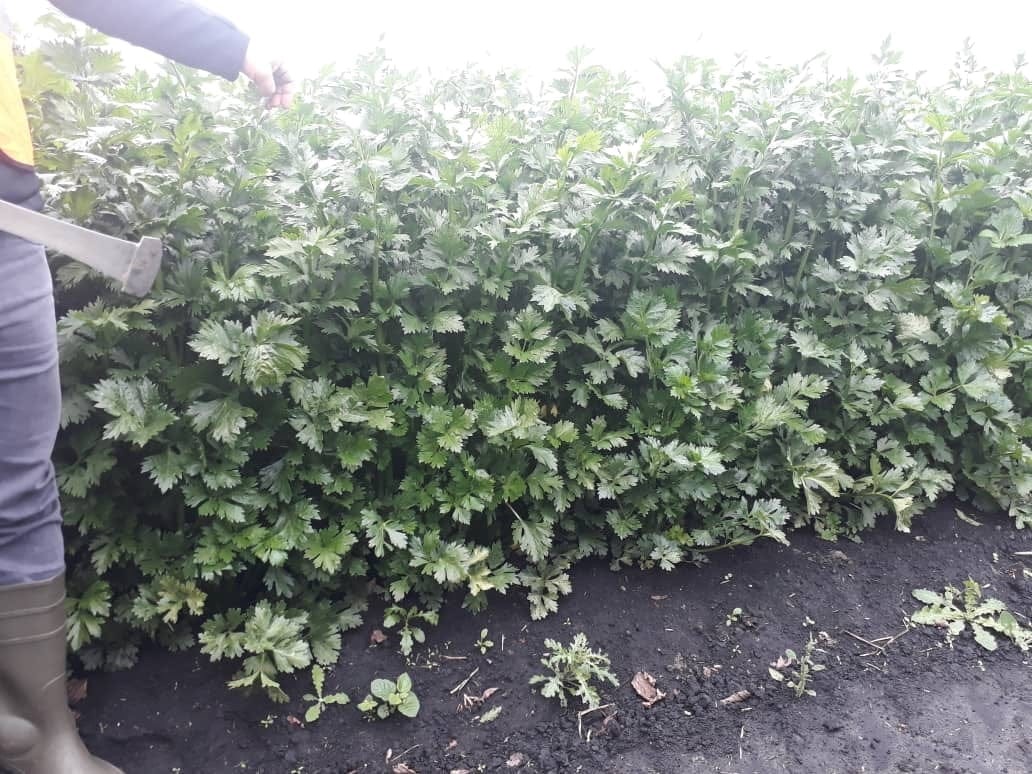
The other highlight of the week was the field trip on Friday. We had to rise and shine early, but it was worth it: at G´s we got to see how mushrooms and celery are grown. Before we could enter the celery field, we had to wear fluorescent vests to make sure we were visible and disinfect the soles of our shoes. This was necessary in order to prevent us from bringing unwanted contaminants onto the field. Once we were on the field, our faces were full of disbelief. Did you know a celery plant is 1 meter high?!
To see the different growth stages of mushrooms we had to enter a special facility, since mushrooms are grown inside. This is because the room temperature, humidity and many other factors must be controlled to be able to grow the mushrooms in a safe and efficient way. The manipulation of the mushroom´s environment is the key to make spores connect to each other and grow into a mushroom: when the environment is unsuitable for the spores, they will think they are going to die. They will form a mushroom together that will release a new generation of spores from the top to secure reproduction. As soon as the mushrooms are formed, the environment will be manipulated again to make sure the mushrooms grow further. Altogether a very fascinating system that I didn´t know of!
Before we left G´s we got a sneak peak in the packaging facility where their produce was being packed and prepped for retail. We all received a pack of fresh radishes to bring home. A great ending of an amazing week! I can´t wait to start with the modules 😊

Categories & Tags:
Leave a comment on this post:
You might also like…

Moving to the UK to study? How to plan for banking, exchange rates and transfers
Currency and banking are two of the most practical parts of financial planning for international students. They are also often the most overlooked. We asked Dr Lakshmy Subramanian, Course Director for Cranfield University's Banking, ...
Cranfield: an environment where innovation thrives
The latest Knowledge Exchange Framework rankings from UK Research and Innovation (UKRI) gives an insight into the real and meaningful impact that UK universities have. The seven categories that make up KEF6 cover everything ...
How Cranfield accelerated my career in Logistics and Supply Chain Management
After graduating from the MSc in Logistics and Supply Chain Management at Cranfield University, I've been reflecting on the experiences that made my journey so valuable and the impact it has had on my ...
Mendeley: a powerful tool to organise and manage your references
Are you looking for a way to manage your references, create in-text citations and reference lists for your assignments or thesis? If so, you may wish to consider using Mendeley. What is it? Mendeley is ...
Keen to develop your study skills?
Alongside the technical skills and academic knowledge that you will gain on your course, as a Cranfield student you have the opportunity to develop a range of other skills that can enhance your learning experience. ...

The V-conomy: powering the sixth wave of global economic growth
The world could be on the verge of a major surge in economic growth and development, driven by the convergence of AI and clean energy technology. Waiting to ride the K-wave The Russian ...