


A day in the life of a researcher on the Antarctic Circumpolar Expedition
05/04/2017
After the first few days on board the Akademik Treshnikov (a research vessel that has just completed it’s circumnavigation of the Antarctic Continent), and once the maze of stairwells and heavy doors have been explored, one finds a new rhythm of life. A rhythm uninterrupted by emails, internet, or phone calls, where there is time to get to know the more than 50 fellow scientists on the first leg of the Antarctic Circumpolar Expedition.
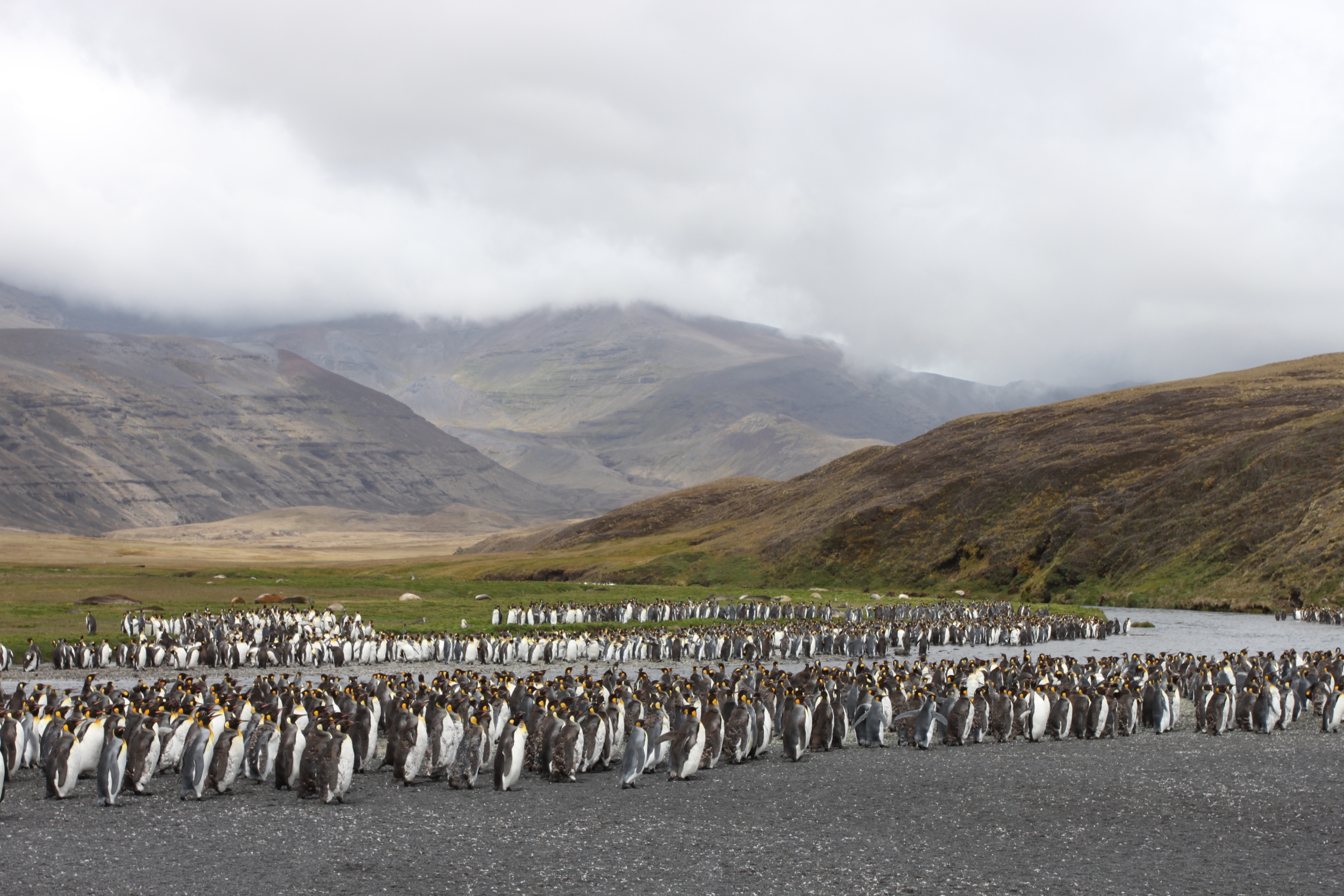
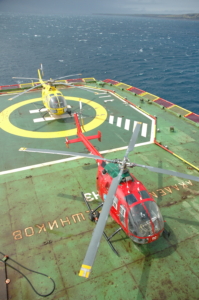
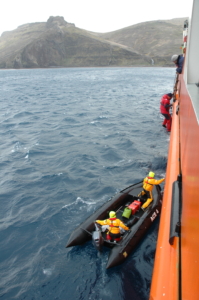
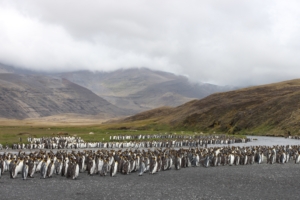
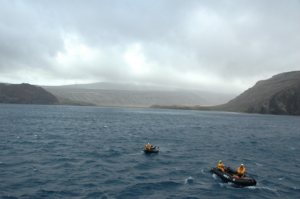
The morning of 31 December and there is excitement abounding – we have arrived at a remote group of French islands we are to stop over at, the Crozet Islands. The view from our cabin porthole is of icy sparkling blue waters and steep volcanic slopes. Those lucky enough to have land-based science projects are supposed to use the helicopters, but the gossip that flies around the ship (like wild fire when you find yourself without messaging apps!) is that it’s too windy to fly – those to go onshore are to wait. An hour passes, more news and it seems it’s possible to take the dinghies. Just a few minutes later and supposedly the helicopters will fly. There is chaos on board with some teams in survival suits all ready to jump into the dinghies and others ready to take off with the helicopters. In the end it all worked out and everyone who needed to get to the island managed to find a way there (and back!)
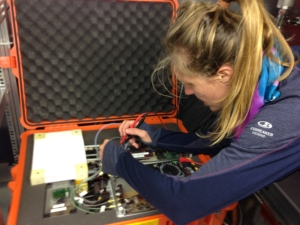
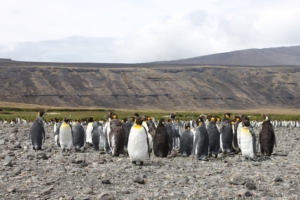
While some of the teams are on the island collecting samples (and saying hello to the penguins too!), the rest of us remain on board. This morning I’ve got plenty to do – some data analysis as well as some tests on the instrument I’m looking after, the iDIRAC developed at Cambridge and Cranfield University. So far the instrument has been running well, measuring isoprene, which we think is emitted by the phytoplankton blooms that abound in the Southern Ocean. These measurements are part of one of the 22 projects on board – projects that span disciplines from ornithology to chemical oceanography. Our project is trying to understand how aerosols form and interact with clouds in the clean Antarctic atmosphere. We hope our results will help us understand what the pre-industrial atmosphere looked like, and to provide a baseline from which we can better estimate the anthropogenic influence on climate.
A busy day was had by all and there are many relieved scientists happy to have made it back on board after some hair-raising helicopter flights back. There is also another reason to celebrate – New Year’s Eve – and the kitchen crew put together a spectacular buffet dinner that was served with some French champagne specially brought for the occasion. And yes, a little later there was even some dancing! Certainly a spectacular way to bring in the New Year, one with plenty more adventures that were had before we arrived in Hobart, Tasmania, and the end of the first leg of the Antarctic Circumpolar Expedition.
-
- Maria Lund Paulsen
-
- Fiona Tummon
-
- Fiona Tummon
-
- Fiona Tummon
-
- Fiona Tummon
-
- Maria Lund Paulsen
-
- Florian Brucker, Parafilms/EPFL
-
- Maria Lund Paulsen
-
- Maria Lund Paulsen
-
- Fiona Tummon
Further reading
Learn more about the technology here: https://www.cranfield.ac.uk/research-projects/ace
Find the official ACE blog: http://spi-ace-expedition.ch/
More information about the ACE-SPACE project can be found here: www.psi.ch/lac/ace-space

Categories & Tags:
Leave a comment on this post:
You might also like…

Setting your research on the right course: Four questions every researcher should ask
Whether you are just beginning your doctoral journey or are already well into your research career, successful research rarely happens by accident. Like any successful mission, it depends on good planning, informed decisions, and getting ...

5 budgeting mistakes students make (and how to avoid them)
Good financial planning isn't about how much money you have. It's about the habits you build. We asked Dr Lakshmy Subramanian, Course Director for the Banking, Economics and Finance MSc, about the budgeting mistakes ...

Finding your reading materials
Use Library Search Library Search is the first place to start when you are trying to find academic sources for your work. This is the search box on the library website homepage. It allows you ...

Formula 1 was the dream and Cranfield was the conduit
I still remember the exact moment Formula 1 (F1) got its hooks into me. I was in my first year of an aerospace undergraduate engineering degree when I watched a video about the sport ...
Introducing Barrington Library
Welcome to all our new students! Barrington Library supports all the students and staff at Cranfield Defence and Security on the Shrivenham site. We are looking forward to meeting you all soon, in person or ...

About to start your journey at Cranfield? We’re here to help!
Congratulations on accepting your offer to study at Cranfield! If you’re keen to get a head start before your course begins, our Library Services team is here to support you every step of the way. ...