

The hidden cost of politicising education – we overlook the value of international students at our peril
19/11/2025
There’s no doubt that higher education has become increasingly intertwined with UK political discourse, often used as a pawn in debates around immigration and funding. My concern, as someone who’s worked with international students for over 25 years, is that the latest negativity is coming at a significant cost – one that could seriously impact the global exchange of knowledge, innovation, and collaboration.
At the heart of it is the undervaluing of international students, who bring far more to the table than just academic credentials. But their positive contributions are at risk of being lost in a political narrative that overlooks the wider benefits, in favour of a short-term boost to approval ratings.
The positive influence of international students
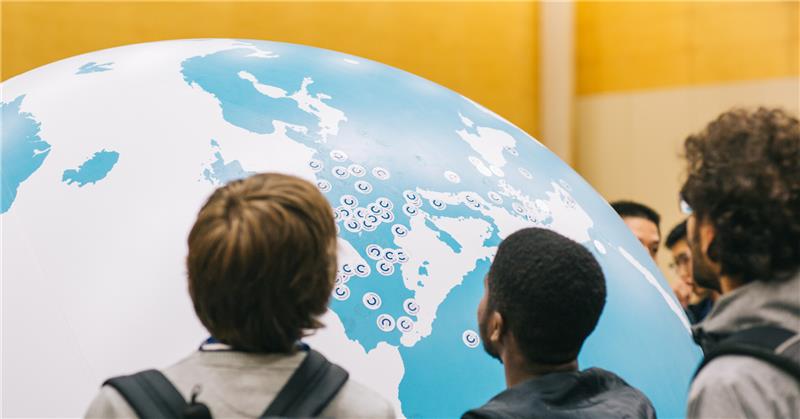
International students are often seen merely as visitors who are passive consumers of UK higher education, but this view overlooks the transformative role they play in shaping our academic environments. Students from over 100 countries come to Cranfield each year, so that’s something we can talk about with authority.
These students do much more than just attend classes – they enrich the entire learning ecosystem for everyone.
The diverse perspectives we get from international students challenge assumptions, spark creativity, and promote critical thinking. Their input takes us out of our usual frames of reference and it’s this that really makes the difference. Particularly at postgraduate level where our students are deepening their understanding and taking on big and complex global challenges, it’s highly valuable to have international students in our classrooms.
At Cranfield we’ve seen the impact of international students resonate beyond graduation. People form meaningful networks, and global collaborations and business ideas have been sparked by chats on campus or taken beyond group projects. With the ambition our students have, there is huge potential to make advances in many fields through international connections that last.
The #BrainGain – an overlooked asset
We’ve heard a lot about ‘brain drain’ as countries lose top talent overseas – but what about the ‘brain gain’ that we get from international students? The influx of talent, skills, and knowledge that international students bring to their host countries is just as important – if not more so – than their tuition fee.
This is especially crucial for countries like the UK, as we face the twin challenges of an ageing population and a rapidly changing labour market with new skills in huge demand.
International students can help fill key skill shortages, particularly in sectors such as engineering, technology, management, healthcare, and many more. Beyond that, their talent fuels innovation and growth – which means the UK can maintain its economic competitiveness and deliver on the ambitions in the UK’s Modern Industrial Strategy.
But instead of recognising these students as an asset, they are sometimes unfairly depicted as burdens on the public purse and taking jobs and resources. In reality, they are an integral part of our future workforce, helping to build a knowledge economy, drive growth and address global challenges.
Let’s reframe the conversation
It’s time to rethink the way we talk about international students and the role they play in our societies.
Education should not be reduced to a political tool used to further short-term agendas. It should be recognised for what it truly is: a platform for global co-operation, skills development, growth and shared understanding.
We need to have frameworks that celebrate the diversity and experience that international students bring to our universities and workplaces. It’s not just about delivering education as a product – it’s about creating an environment where these students feel welcomed, supported, and valued.
International students are the future leaders, innovators, and problem-solvers that we need to tackle the issues of tomorrow. From addressing skills gaps to fostering partnerships, these students are a key part of building a more resilient, sustainable and inclusive world.
The next generation of global citizens is already here, wanting to contribute, collaborate, and drive positive change. I see that at Cranfield, and it gives me great hope for the future. It’s time we stop treating international students as political bargaining chips and start recognising them for the invaluable people they truly are.


Categories & Tags:
Leave a comment on this post:
You might also like…

Keen to develop your study skills?
Alongside the technical skills and academic knowledge that you will gain on your course, as a Cranfield student you have the opportunity to develop a range of other skills that can enhance your learning experience. ...

The V-conomy: powering the sixth wave of global economic growth
The world could be on the verge of a major surge in economic growth and development, driven by the convergence of AI and clean energy technology. Waiting to ride the K-wave The Russian ...

Need help using the Python programming language?
We know some of our students are currently trying to learn Python, so we wanted to make you aware of some great LinkedIn Learning videos that can help. But don't you have to pay for ...

What does it really take to become a Chevening Scholar?
Say “Turkmenistan” to most people and you’ll get a blank look. That was true when I left Ashgabat for the UK to study an MSc in Logistics and Supply Chain Management at Cranfield University ...

Get a head start on referencing and plagiarism
We offer a module on Referencing And Avoiding Plagiarism which you can find on your Canvas dashboard. It explains the role and importance of citing references and how to incorporate the work of other authors ...

How Cranfield shaped my journey as an Aerospace Engineer
If I'm being specific about the moment it clicked, it was reading a paper called "On the Role and Challenges of Computational Fluid Dynamics (CFD) in the Aerospace Industry" by two Boeing engineers, P. ...
Comments are closed.