

From Forensic Science…to Digital Forensics
23/10/2023
Digital Investigation
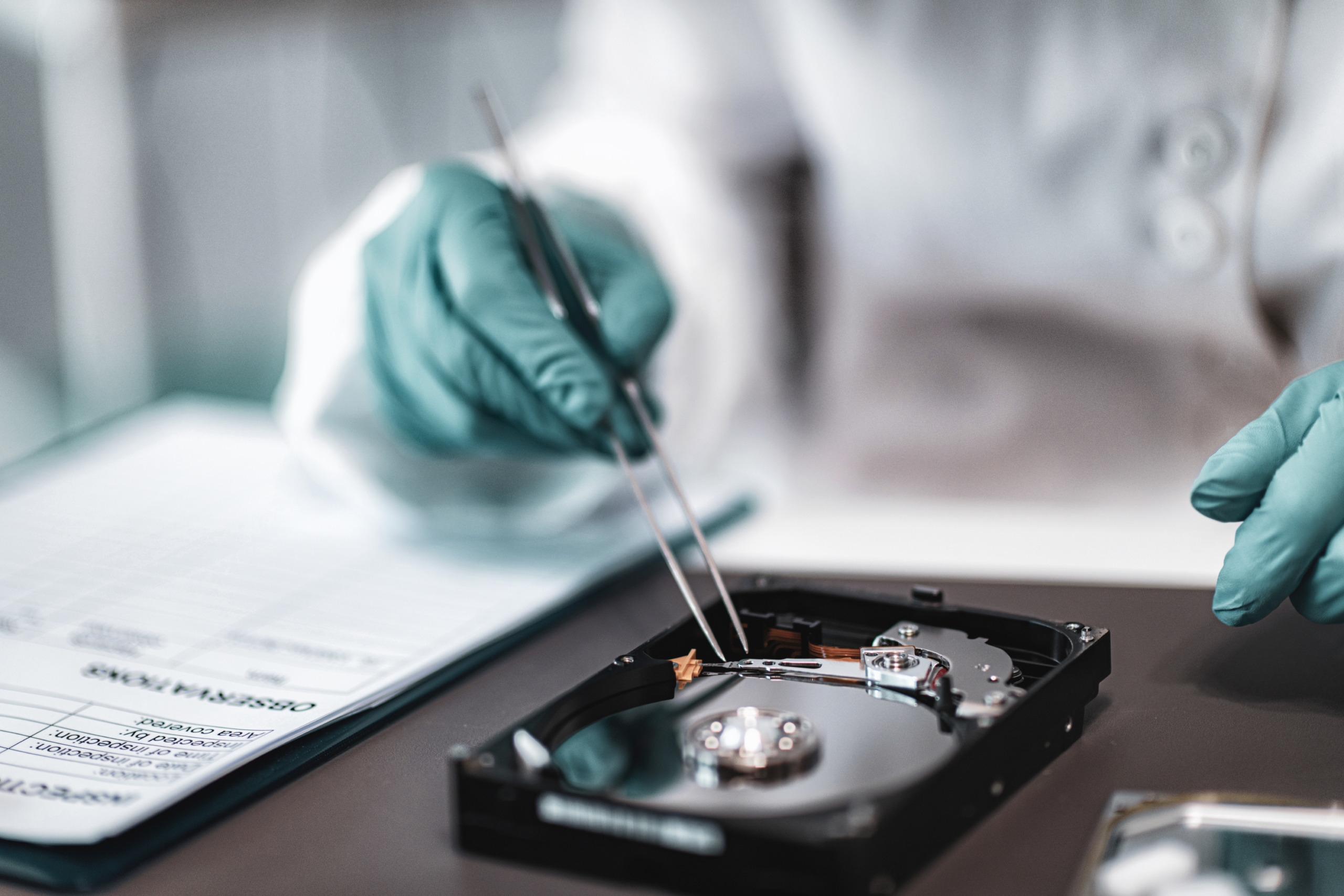
In today’s fast-changing world, digital devices are everywhere. This means that they’re often present when events of interest occur, which has increased the need for experts in digital forensic science around the globe who can identify, capture and analyse digital device content. Almost every investigation of every type involves some form of digital information.
Digital forensic science isn’t just about police work; it also applies to government agencies and organisations, private companies, and can even be a stepping stone into the world of cybersecurity, offering many different career paths.
A Great Fit?

People who work in digital forensic science come from a range of backgrounds and avenues, such as the military, police, computer science and maths. So, why are forensic science students a great fit for specialising in digital forensic science?
Their thorough training in collecting and analysing evidence, as well as their attention to detail, gives them a strong foundation for navigating the complex world of digital investigations. They have a unique mix of skills and knowledge that enables them to analyse situations and find relevant information. They’re good at solving problems and thinking critically – crucial in a field where experts deal with large amounts of data and often need to uncover hidden or encrypted information.
Highly Adaptable
Moreover, those with a background in forensic science have a solid understanding of laws and ethics. Not only are they already trained in communicating their results to a lay audience, they also grasp the importance of preserving the integrity of and documenting their process. Their background makes them highly adaptable, allowing them to quickly understand computer science and digital forensic science fundamentals. This adaptability is important in a field that’s always changing.
Forensic science does not just concern things like blood and DNA, but now the ability to understand and evaluate digital evidence is of paramount importance.
Funding Support:
If you’re interested in pursuing a Digital Forensics MSc with Cranfield University, the CCL Future of Digital Forensic Science Scholarship may be just what you need to start your journey.


Categories & Tags:
Leave a comment on this post:
You might also like…

Setting your research on the right course: Four questions every researcher should ask
Whether you are just beginning your doctoral journey or are already well into your research career, successful research rarely happens by accident. Like any successful mission, it depends on good planning, informed decisions, and getting ...

5 budgeting mistakes students make (and how to avoid them)
Good financial planning isn't about how much money you have. It's about the habits you build. We asked Dr Lakshmy Subramanian, Course Director for the Banking, Economics and Finance MSc, about the budgeting mistakes ...

Finding your reading materials
Use Library Search Library Search is the first place to start when you are trying to find academic sources for your work. This is the search box on the library website homepage. It allows you ...

Formula 1 was the dream and Cranfield was the conduit
I still remember the exact moment Formula 1 (F1) got its hooks into me. I was in my first year of an aerospace undergraduate engineering degree when I watched a video about the sport ...

Introducing Barrington Library
Welcome to all our new students! Barrington Library supports all the students and staff at Cranfield Defence and Security on the Shrivenham site. We are looking forward to meeting you all soon, in person or ...

About to start your journey at Cranfield? We’re here to help!
Congratulations on accepting your offer to study at Cranfield! If you’re keen to get a head start before your course begins, our Library Services team is here to support you every step of the way. ...
Comments are closed.