

Exploring the world beneath our feet!
11/10/2023

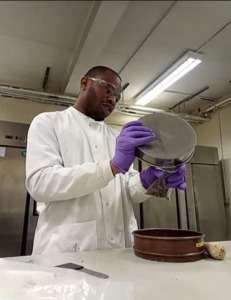
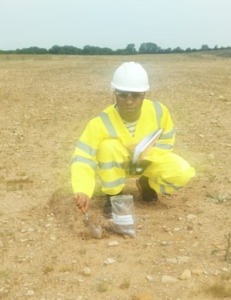
Hi readers! I’m Marvellous Christopher Etuk, an environmental engineer passionate about restoring degraded ecosystems through soil science. I recently completed my MSc in Environmental Engineering at Cranfield University in the UK. Through my MSc thesis, I got linked with Hanson, UK who are my sponsors for the project on microbial community structure in restored quarried grasslands. In addition to the data skills in principal component analysis, I have garnered fine skills from field-to-lab experience in visual soil assessment, phospholipid fatty acid analysis (PLFA), microbial biomass, and available nitrogen and phosphorus through this project. These experiences showed me how applied science can develop sustainable solutions tailored to local contexts. As an emerging steward of our shared planet, I’m eager to join mission-driven organizations advancing biodiversity conservation, regeneration, and land restoration. I also hope to continue pursuing research uncovering novel nature-based strategies to add to the pool of scientific bodies and benefit communities.
On this blog, I look forward to sharing my perspectives as an early career scientist. From exploring soil microbiomes to highlighting promising technologies, I aim to make science accessible while driving impact. I believe ecology should empower, not overwhelm us. Let’s grow our wonder for the living world! I’m glad you’re joining me on this journey to dig into our marvellous planet. Let’s get started!
When we think of biodiversity, oftentimes the focus is on larger lifeforms we can see above ground; big animals like elephants or trees probably come to mind. But did you know there’s a whole hidden world of diversity living right beneath our feet?
Inside every spoonful of soil are billions of tiny living things – algae, fungi, bacteria, protozoa. Together, these microscopic soil organisms are called microbiomes. Though invisible to our eyes, soil microbiomes powerfully impact ecosystems and our lives. Much like how COVID brought societies to a halt, soil organisms exert tremendous invisible influence.
Growing up, I learned it’s often the smallest things that have the biggest effects. The fertile soils that grow our food rely on the diversity of microbial communities living symbiotically with plant roots. These microbiomes recycle nutrients, store carbon, unlock essential minerals for vegetation (above-ground biodiversity), and even regulate the entire planet’s climate! Yet modern practices from tillage to pesticides can disrupt these essential partnerships, throwing off natural balances.
Soil microbiomes let ecosystems flourish the way our gut microbiome keeps us healthy. And we’re just beginning to unlock their incredible secrets! Hanson and Ketton Quarry are using innovative tools to study how land management choices impact these communities. Just like how a doctor analyses your microbiome to offer health advice, soil samples help experts recommend steps to restore the habitats of these soil microbiomes. Hanson and Ketton Quarry actively work to conserve and rebuild microbial biodiversity through sustainable land management strategies tailored to local ecology. Recent research by myself and colleagues evaluating quarry restoration sites, particularly at Ketton Quarry found management options ranging from reduced soil disturbance, and seed mixes to organic amendments can help improve belowground diversity.
Here are three simple ways YOU can help conserve these soil microscopic helpers:
- Grow native plants – their roots nourish unique underground species.
- Reduce chemical fertilizers and pesticides – they harm essential fungi and bacteria.
- Limit soil disturbance – tillage and compaction disrupt delicate communities.
By getting smart about belowground biodiversity, we can nourish healthier soils to grow more resilient crops, support carbon storage, and maintain the interconnected web of life. When it comes to conservation, small things count in a very big way! What are you doing to take care of the little things? So, let’s spread the word to get others excited about the tiny ecosystems under their feet with conservation at the forefront!!

Categories & Tags:
Leave a comment on this post:
You might also like…

Setting your research on the right course: Four questions every researcher should ask
Whether you are just beginning your doctoral journey or are already well into your research career, successful research rarely happens by accident. Like any successful mission, it depends on good planning, informed decisions, and getting ...

5 budgeting mistakes students make (and how to avoid them)
Good financial planning isn't about how much money you have. It's about the habits you build. We asked Dr Lakshmy Subramanian, Course Director for the Banking, Economics and Finance MSc, about the budgeting mistakes ...

Finding your reading materials
Use Library Search Library Search is the first place to start when you are trying to find academic sources for your work. This is the search box on the library website homepage. It allows you ...

Formula 1 was the dream and Cranfield was the conduit
I still remember the exact moment Formula 1 (F1) got its hooks into me. I was in my first year of an aerospace undergraduate engineering degree when I watched a video about the sport ...
Introducing Barrington Library
Welcome to all our new students! Barrington Library supports all the students and staff at Cranfield Defence and Security on the Shrivenham site. We are looking forward to meeting you all soon, in person or ...

About to start your journey at Cranfield? We’re here to help!
Congratulations on accepting your offer to study at Cranfield! If you’re keen to get a head start before your course begins, our Library Services team is here to support you every step of the way. ...
Comments are closed.