

The importance of words in neurodiversity
14/03/2023
The words we use in studying neurodiversity are important. It’s easy to get caught up in the conversation about words. This is often generated by not wanting to cause offense or being in search of the most acceptable word, phrase, or variant in an ever-changing glossary.
I have had conversations where there has been argument for and against the use of the word ‘neurodiverse’ or ‘neurodivergent’. The disagreement often centres around grammar and syntax – that a person should not be called neurodiverse because the word neurodiverse refers to a group and an individual should be referred to as neurodivergent. However, if someone comes to me and they say “I am neurodiverse”; I’m not going to ‘correct’ them. The importance is that they are discussing the subject.
Meadows (2021) offers us a useful summary on neurodiversity as a neurology paradigm rather than a pathological one:
“The pathology paradigm says: there is a normal, healthy brain and an abnormal, unhealthy brain. People with abnormal brains have something wrong with them and need diagnosis and treatment to become more normal.
The neurodiversity paradigm says: there is no such thing as a normal brain. Variation in neurology is natural, and none is more right or wrong than another.”
To me the neurodiversity paradigm is a logical argument in that everyone is neuro-distinctive.
That does not mean to undermine the discussion around neurodiversity or impinge on the argument that societal barriers for those with a particular condition or learning difficulty should be broken.
It raises an interesting point though – if we accept the neurodiversity paradigm and in doing so reject an ‘us and them’ narrative, then the word neurotypical also starts to become problematic. If everyone is neuro-distinctive and there is no ‘normal’, then it follows that there is no ‘neurotypical’. But society does demand some form of words to make a distinction, to trigger access to assistance under law and policy; to prompt discussion. What we may mean is neuro-expectation, the level of development, function, and behaviour general society expects…but that is a road that eventually leads us back to the start again.
When we look at variation in other areas of nature, it is unusual to try to find what normal is. Perhaps our inclination to make such a comparison is just an obscure way to look at things. I wonder if we should just accept that there is no normal and that some people in our society need assistance a little more than others. More debate is needed on this.
I have also had conversations around the phrase ‘non-visible’ difference. It is better than the word ‘hidden’ which suggests something that should be buried and not talked about.
Non-visible does seem inadequate because some elements under the neurodiversity umbrella, can be visible. It is apparent to family and friends in the way that their children or relations react or act. Indeed, it is often observation that leads them to diagnosis.
Another interesting aspect is the way some words and phrases are owned. A term that springs to mind is ‘Aspies’ for people who were once diagnosed with Asperger’s syndrome (now included within Autism Spectrum). Juntti (2022) details the pushback on the loss of a word and diagnosis that many had owned and used as identity.
Ownership is seen too in what I once jokingly gave the collective name ‘Dys’s – I know it sounds like Dizzys – which is not great. Others use the collective ‘”3Ds” or “4Ds”.
It is interesting because people will come to me and say “I’m… Dyslexic/Dysgraphic/Dyscalculic/Dyspraxic.” Owning the word and identifying with it.
The prefix ‘Dys’ has several interpretations – it is ill, bad, impaired, or abnormal depending on which dictionary used. Despite these negative meanings people do not seem to mind. The prefix does not seem to be as important as the identification, association, or conversation.
The words we use are important. We can continue to add to, delete and amend the ways that we use to describe neurodiversity and yes – it’s ok if we use words like ‘difference’. Surely the most important thing is the underlying message of acceptance, celebration, and challenging preconceptions.
If you are interested in pursuing studies in organisational behaviour or neurodiversity please do email me at: Robby.Allen@cranfield.ac.uk
References
Meadows (2021)
https://jessemeadows.medium.com/youre-using-the-word-neurodiversity-wrong-e579ffa816a8
Juntti (2022)
https://www.fatherly.com/health/aspergers-vs-autism-and-hans-asperger
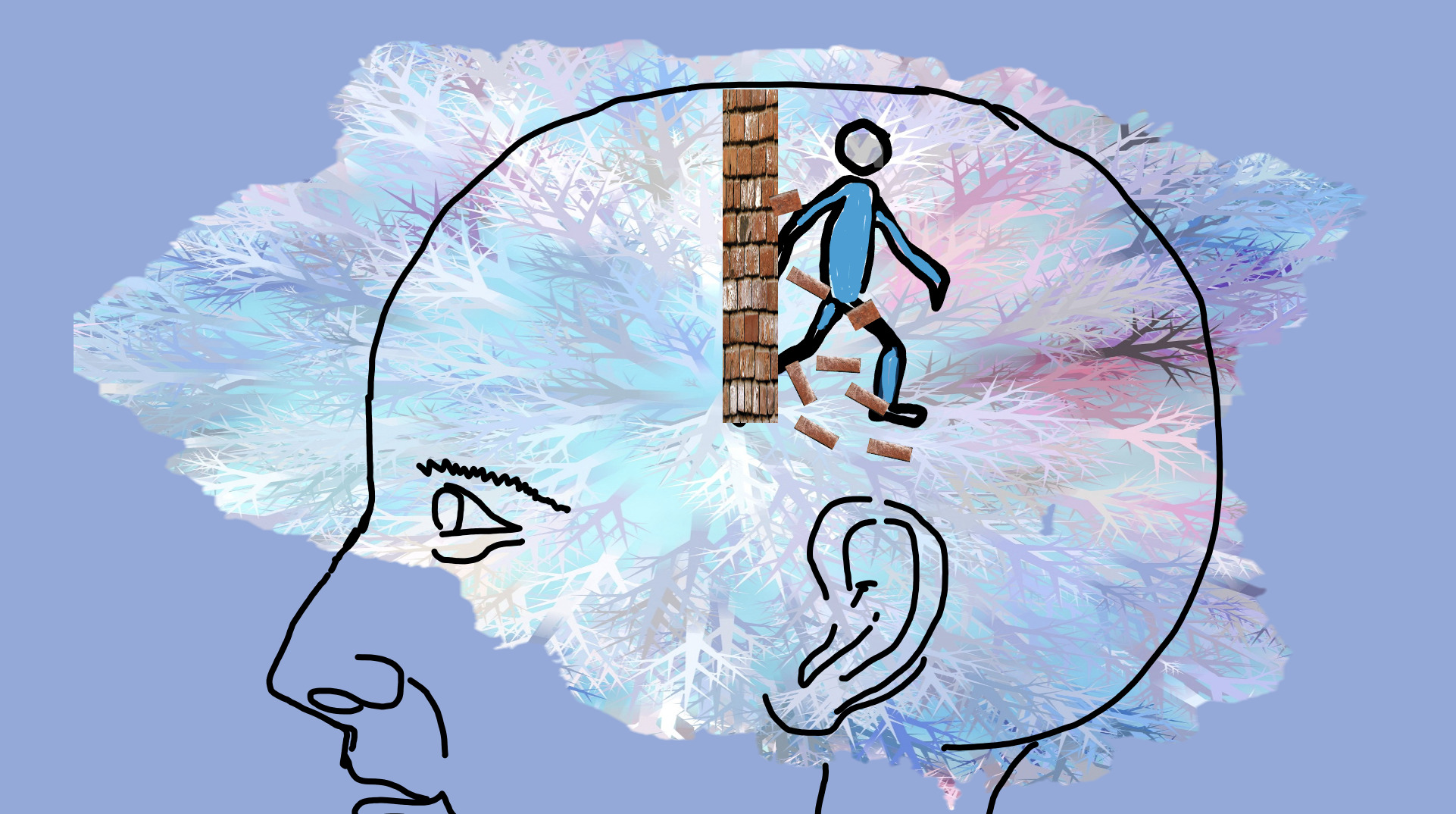
[Feature image credit: Dr Robby Allen]

Categories & Tags:
Leave a comment on this post:
You might also like…

Keen to develop your study skills?
Alongside the technical skills and academic knowledge that you will gain on your course, as a Cranfield student you have the opportunity to develop a range of other skills that can enhance your learning experience. ...

The V-conomy: powering the sixth wave of global economic growth
The world could be on the verge of a major surge in economic growth and development, driven by the convergence of AI and clean energy technology. Waiting to ride the K-wave The Russian ...

Need help using the Python programming language?
We know some of our students are currently trying to learn Python, so we wanted to make you aware of some great LinkedIn Learning videos that can help. But don't you have to pay for ...

What does it really take to become a Chevening Scholar?
Say “Turkmenistan” to most people and you’ll get a blank look. That was true when I left Ashgabat for the UK to study an MSc in Logistics and Supply Chain Management at Cranfield University ...

Get a head start on referencing and plagiarism
We offer a module on Referencing And Avoiding Plagiarism which you can find on your Canvas dashboard. It explains the role and importance of citing references and how to incorporate the work of other authors ...

How Cranfield shaped my journey as an Aerospace Engineer
If I'm being specific about the moment it clicked, it was reading a paper called "On the Role and Challenges of Computational Fluid Dynamics (CFD) in the Aerospace Industry" by two Boeing engineers, P. ...
Comments are closed.