


Extending global networks for responsible cyberpower
11/01/2023
Smaller nations are facing more concerted cyber-attacks, from hostile states, criminal gangs and terrorists. And like other countries, whatever their size, their governments, institutions and businesses lack capacity when it comes to dealing with the ever-changing complexity of malicious activities online.
The interconnected nature of our digital IT-based world is both its weakness and its strength. Digital connectivity means more open systems and opportunities for anonymised attacks. At the same time, it also means real benefits from working together to build a common basis of mutual security.
As an internationally recognised centre of expertise for cybersecurity, Cranfield Defence and Security has been playing its part in supporting the UK’s role in global cyberspace, spreading responsibility and good practice. We’ve been hosting 12 mid-career professionals from the Western Balkans who have the potential to be cybersecurity leaders of the future, driving forward the development of cyber defences.
The Chevening Western Balkans Cyber Security Fellowship is a programme funded by the Foreign, Commonwealth and Development Office (FCDO), aimed at building relationships with partner countries, aligned with the work of the National Cyber Security Centre (NCSC) and the UK’s strategy to be a democratic and responsible cyber power by 2030. The cohort includes five Fellows from Kosovo, two from Serbia, two from Albania, two from Montenegro, and one from North Macedonia.
Jovan Radakovic works in the corporate intelligence sector in Serbia. “More organisations are making use of online intelligence, meaning we’re seeing new vulnerabilities,” he said. “My aim is to take ideas and principles from the programme and turn them into working practices in Serbia. I want to be mapping out the specific threats and how they operate so that we’ll be in a position to understand the most effective approach to defences. The Fellowship has been especially important in opening up very strong access to networks of professionals in the Balkans facing similar challenges.”
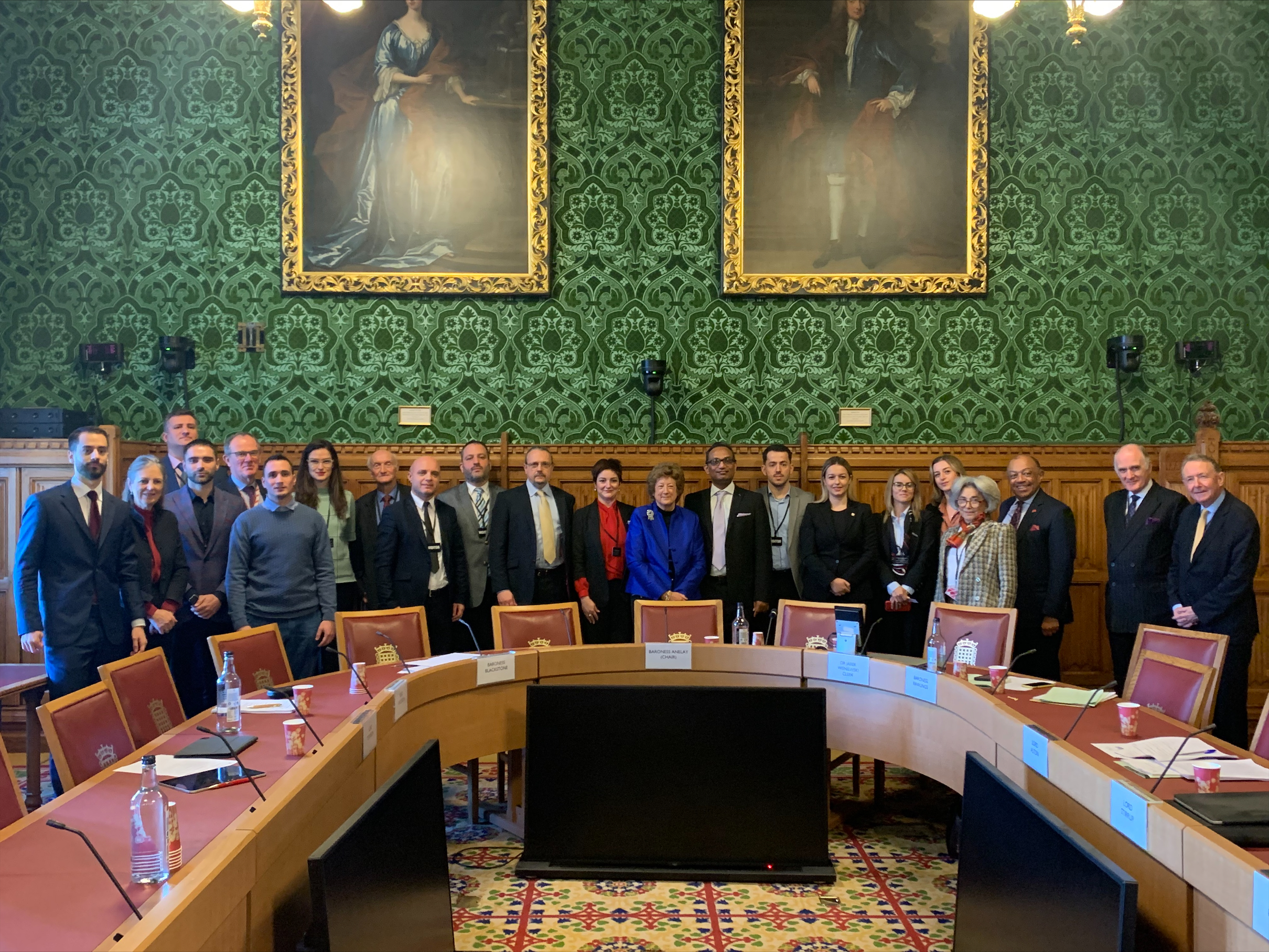
Over the course of the 10 week programme, the group explored forms of cybersecurity best practice, hearing from organisations like Qinetiq and Thales on building defence systems. They learnt more about the UK’s heritage in the field of intelligence by visiting Bletchley Park, the Allies’ HQ for code-breaking during the Second World War. The Fellows were also invited to the House of Lords by the Rt Hon. Baroness Anelay of St Johns, chair of the Select Committee on International Relations and Defence, to be part of a private committee meeting. The meeting included the sharing of insights relating to the UK’s current inquiry into the new age of defence following Russia’s invasion of Ukraine and increasing risks from ‘sub-threshold’ warfare, such as cyberattacks.
Liljana Pecova-Ilieska, from North Macedonia, has an extensive professional background working with the police, government institutions and the civil society sector. “The real value of the programme has been in taking a multi-stakeholder approach, bringing in the academia, defence, private public partnerships, corporate sector. Since cybersecurity is not just about IT, but the human aspects: the social sciences, governance and management, strategy-making. It is very much bringing all in. Cybersecurity is a discourse – we simply need to talk more about it.
“Being at Cranfield has meant having access to case studies from industry, the chance to be part of a wider networks of experts that we wouldn’t otherwise meet or talked to, or visit places we wouldn’t be able to go to. We need that larger perspective from across world to ensure we can integrate with good practice.”
Fellows undertook research projects relevant to specific needs in their nations, including disinformation and its impact on the electoral process; the growth in digitised billboards across sectors, including transport and education, and the need for defences against propaganda and disinformation; cryptocurrencies and their use in crime; and the potential for recruiting experts from businesses to form voluntary cyber defence units. Projects were presented to the FCDO at sessions attended by ambassadors from the Western Balkans countries.
The Fellowship has built another set of foundations for the UK on cybersecurity, for mutual support and co-operation over the long-term.
“The chance to meet select committee members at the House of Lords has been a testament to the standing of the fellowship and also Cranfield itself,” said Jovan Radakovic.
Liljana Pecova-Ilieska added: “The WB region has to redefine itself in terms of a strong and shared cybersecurity resilience. It’s this kind of initiative and opportunity for sharing thinking that makes progress much easier; there’s now an embedding of UK values and approaches to responsible cyber-power that can be a model in our countries to build security.”
Applications are now open for The Chevening Western Balkans Cyber Security Fellowship and close on Tuesday 7 March 2023. The Fellowship is aimed at mid-career professionals with demonstrable leadership potential in the field of cyber security or cyber policy in the Western Balkans.
Submit your application here.
Research essays from this year’s Chevening Western Balkans Cyber Security Fellows
Exploiting recruitment agencies to steal your personal data, by Jovan Radakovic
Know your enemy_Preventing data leakage from insider threats, by Klorenta Pashaj
Gamification_A pain killer for cybersecurity hiring, by Liljana Pecova-Ilieska

Categories & Tags:
Leave a comment on this post:
You might also like…

Setting your research on the right course: Four questions every researcher should ask
Whether you are just beginning your doctoral journey or are already well into your research career, successful research rarely happens by accident. Like any successful mission, it depends on good planning, informed decisions, and getting ...

5 budgeting mistakes students make (and how to avoid them)
Good financial planning isn't about how much money you have. It's about the habits you build. We asked Dr Lakshmy Subramanian, Course Director for the Banking, Economics and Finance MSc, about the budgeting mistakes ...

Finding your reading materials
Use Library Search Library Search is the first place to start when you are trying to find academic sources for your work. This is the search box on the library website homepage. It allows you ...

Formula 1 was the dream and Cranfield was the conduit
I still remember the exact moment Formula 1 (F1) got its hooks into me. I was in my first year of an aerospace undergraduate engineering degree when I watched a video about the sport ...

Introducing Barrington Library
Welcome to all our new students! Barrington Library supports all the students and staff at Cranfield Defence and Security on the Shrivenham site. We are looking forward to meeting you all soon, in person or ...

About to start your journey at Cranfield? We’re here to help!
Congratulations on accepting your offer to study at Cranfield! If you’re keen to get a head start before your course begins, our Library Services team is here to support you every step of the way. ...
Comments are closed.