


The future of soil science – investing in the next generation of soil scientists
02/08/2022
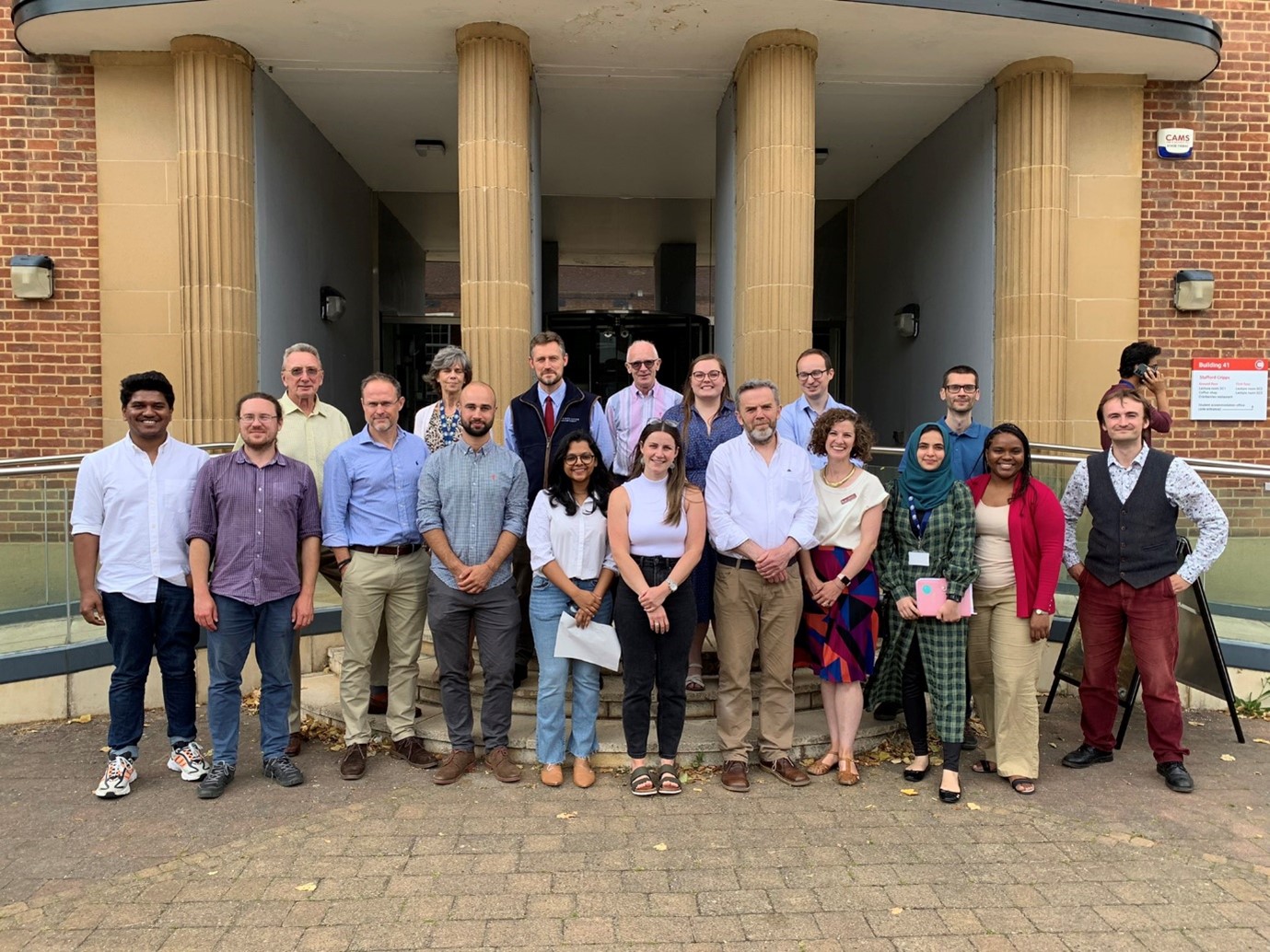
Dr Dan Evans, 75th Anniversary Research Fellow, School of Water Energy and Environment
The perceived importance of sustainable soil management has surged in recent years. Soils, and their delivery of critical goods and services, are a fundamental asset for the health, sustainability, and resilience of the terrestrial environment, its ecosystems, as well as the longevity and productivity of society. Recently, there has been widespread recognition from researchers, industry, and policy arenas of the burgeoning pressures faced by soils, and the urgency needed to deploy robust land management strategies to address these. For example, a growing number of businesses and organisations are now integrating sustainable soil management strategies into their operational plans. This activity has accelerated following a series of recent policy launches by the UK Government. For example, companies on the London Stock Exchange will be obliged to design detailed plans to transition to net-zero by 2023, as part of the UK’s effort to combat climate change post-COP26.
The role of soils to sequester carbon is widely acknowledged, but many organisations still lack the basic knowledge about the soil management practices that can best deliver healthy, sustainable, and resilient soils. Addressing this shortfall in knowledge and skills is more vital than ever. For instance, Defra has recently launched their Sustainable Farming Incentive scheme, the first of three new environmental schemes for which the management and monitoring of soil health is one of the primary objectives. Whilst this is a welcomed step towards protecting soil resources at the national scale, it is pivotal that organisations and sectors are sufficiently (up)skilled with the knowledge, understanding, tools, practices, and resources to achieve optimal soil management.
Over the past year, a team of researchers led by Dr Dan Evans from SWEE’s Centre for Soil, Agrifood, and Biosciences have been working on developing new soils-focused sustainable land management training materials. Developing these training materials relies on precisely targeting them towards the needs of industry to ensure they can attract a combination of stakeholders from business, industry-sponsored students, and those seeking to pursue a career focussing on sustainable land and soil management and land restoration. It is therefore vital that we, as researchers, network with a wide range of stakeholders, and invite them into a co-design process.
On the 14th July, we hosted representatives from research, industry, consultancy, and policy sectors at a co-design workshop. These multisectoral events are so important, especially for soil scientists, because it allows us as researchers to learn about the precise challenges facing different industries and maximize the impact of our research. In this case, the aim of the workshop was to consider the core attributes required of future learners and practitioners in soil science, such as the technical knowledge and understanding, but also transferable skills such as teamworking and problem solving. In the morning, we divided the attendees into three diverse and multisectoral groups to discuss these in detail, before feeding back to everyone before lunch. Some of the ideas coming out of this session can be found in the word-cloud below.
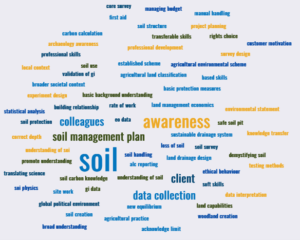
In the afternoon, the groups reconvened to discuss the key themes and topics that should be considered when developing a programme of soil science training. Once again, many common themes emerged including the need for a basic understanding of the soil system and its interactions with other components of terrestrial systems, including water and plants. The theme of accessing and interpreting data was also mentioned, particularly in terms of the use of Earth observation data, as well as data obtained via social science methods. A blend of practical (i.e., field-based) experience with desk-based studies (e.g., GIS, data management) was also encouraged by those in attendance.
In addition to the programme, a group of ten MSc and PhD students from SWEE’s Environment and Agrifood programmes were invited to the workshop’s lunch and networking session to present their projects and research to workshop attendees. This provided the students with the opportunity to get valuable experience in networking with industry. Likewise, it allowed our guests to learn more about some of Cranfield’s current research interests and projects. This was followed up with a couple of facility tours led by Professor Jane Rickson and Dr Ian Truckell where guests were taken around our soils laboratories, greenhouses, the VR suite, and our soils archives.

Categories & Tags:
Leave a comment on this post:
You might also like…

Mendeley: a powerful tool to organise and manage your references
Are you looking for a way to manage your references, create in-text citations and reference lists for your assignments or thesis? If so, you may wish to consider using Mendeley. What is it? Mendeley is ...

Keen to develop your study skills?
Alongside the technical skills and academic knowledge that you will gain on your course, as a Cranfield student you have the opportunity to develop a range of other skills that can enhance your learning experience. ...

The V-conomy: powering the sixth wave of global economic growth
The world could be on the verge of a major surge in economic growth and development, driven by the convergence of AI and clean energy technology. Waiting to ride the K-wave The Russian ...

Need help using the Python programming language?
We know some of our students are currently trying to learn Python, so we wanted to make you aware of some great LinkedIn Learning videos that can help. But don't you have to pay for ...

What does it really take to become a Chevening Scholar?
Say “Turkmenistan” to most people and you’ll get a blank look. That was true when I left Ashgabat for the UK to study an MSc in Logistics and Supply Chain Management at Cranfield University ...

Get a head start on referencing and plagiarism
We offer a module on Referencing And Avoiding Plagiarism which you can find on your Canvas dashboard. It explains the role and importance of citing references and how to incorporate the work of other authors ...
Comments are closed.