


Group Project Experience for Computational Fluid Dynamics MSc students
04/06/2020
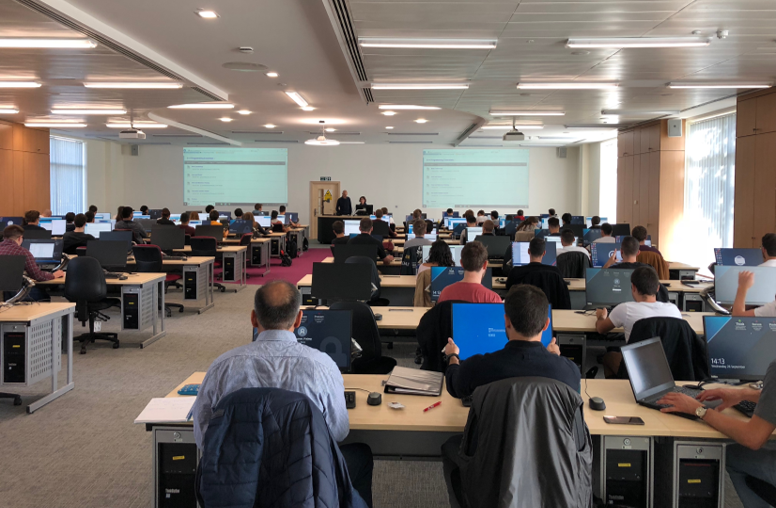
Our CFD MSc students have successfully presented and submitted their Group Projects. When the students started their GP’s in February, no-one anticipated the exceptional circumstances involving COVID-19. During the past few weeks several students had moved back to their countries, they faced unprecedented circumstances including lockdown, but they were all very determined. Cranfield University provided every possible facility to the students returning to their homes, and to the students who stayed on campus, so that they could successfully complete.
Our Group Project creates a virtual consultancy environment by bringing together students from various backgrounds to solve an industrial problem. Each group of students work together on a different thematic project, related to a fluid problem encounter in industry. There are three themes: aerospace, automotive and energy.
Presentations were held online, students globally from Mexico to Croatia joined and each group presented their work to the examiners on time and to exceptional quality. Here are a couple of examples of the brilliant efforts put in by our students – well done to the CFD MSc class of 2019/2020!
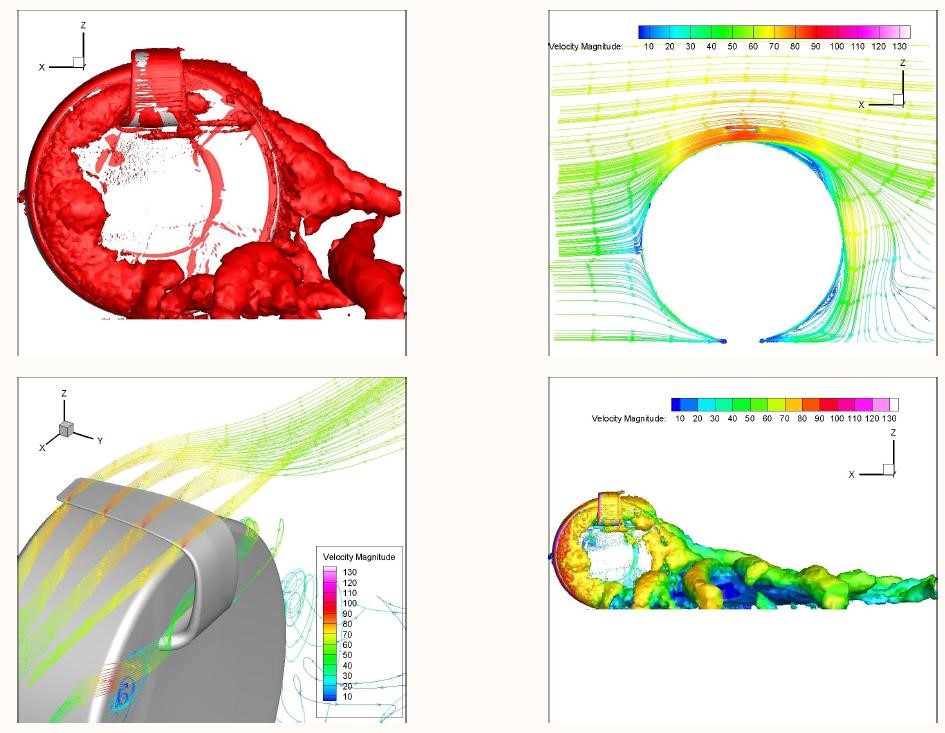
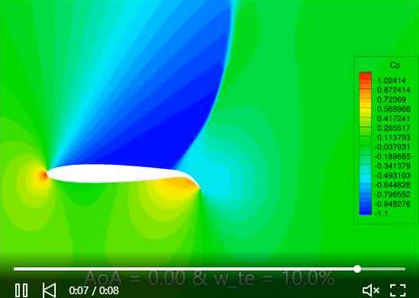
Design and CFD Analysis of Camber Morphing Airfoils in Transonic Regime, Jesus Miguel Sanchez Gil
It has been a stimulating journey where I could learn more in depth about Compressible Simulators and apply it to this concept of the morphing airfoil. These results for optimal design would not have been possible without the collaboration of my team colleagues who have demonstrated great motivation and enthusiasm throughout the course of the project. We aim to publish this project in a scientific article.”
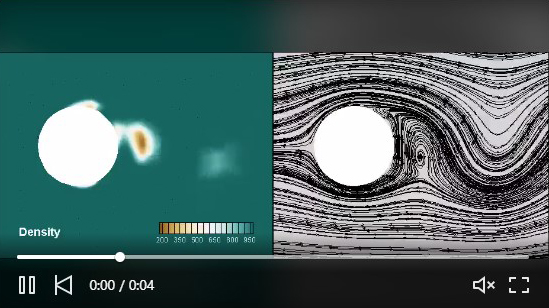
Study of Cavitating Flow Behind a Bluff Body, Jason Ong
I am delighted to showcase some of the research that myself and my colleagues have been working on over the past few months. This animation shows the alternating jet formation that causes cavitating vortex streets as documented by Arpad Fay in 1967.
The animation on the left side depicts the density field that characterises the bubble formation since the void fraction is a function of the liquid density, while the one of the right shows the streamline visualisation of the vortex structures generated. The re-entrant jet causes cavity breakoff on a periodic basis as it slides under cavity zones in a direction that is opposite to that of the localised flow field.
Find out more about Computational Fluid Dynamics MSc course

Categories & Tags:
Leave a comment on this post:
You might also like…

5 budgeting mistakes students make (and how to avoid them)
Good financial planning isn't about how much money you have. It's about the habits you build. We asked Dr Lakshmy Subramanian, Course Director for the Banking, Economics and Finance MSc, about the budgeting mistakes ...
Finding your reading materials
Use Library Search Library Search is the first place to start when you are trying to find academic sources for your work. This is the search box on the library website homepage. It allows you ...
Formula 1 was the dream and Cranfield was the conduit
I still remember the exact moment Formula 1 (F1) got its hooks into me. I was in my first year of an aerospace undergraduate engineering degree when I watched a video about the sport ...
Introducing Barrington Library
Welcome to all our new students! Barrington Library supports all the students and staff at Cranfield Defence and Security on the Shrivenham site. We are looking forward to meeting you all soon, in person or ...

About to start your journey at Cranfield? We’re here to help!
Congratulations on accepting your offer to study at Cranfield! If you’re keen to get a head start before your course begins, our Library Services team is here to support you every step of the way. ...

Bank holiday hours for Library Services: Monday 31 August
Library Services staff will be taking a break on Monday 31 August for the bank holiday. You will still be able to access all the resources and help you need via our library website. The 24/7 ...