

Environment MSc students visit the FAAM Plane
30/03/2020

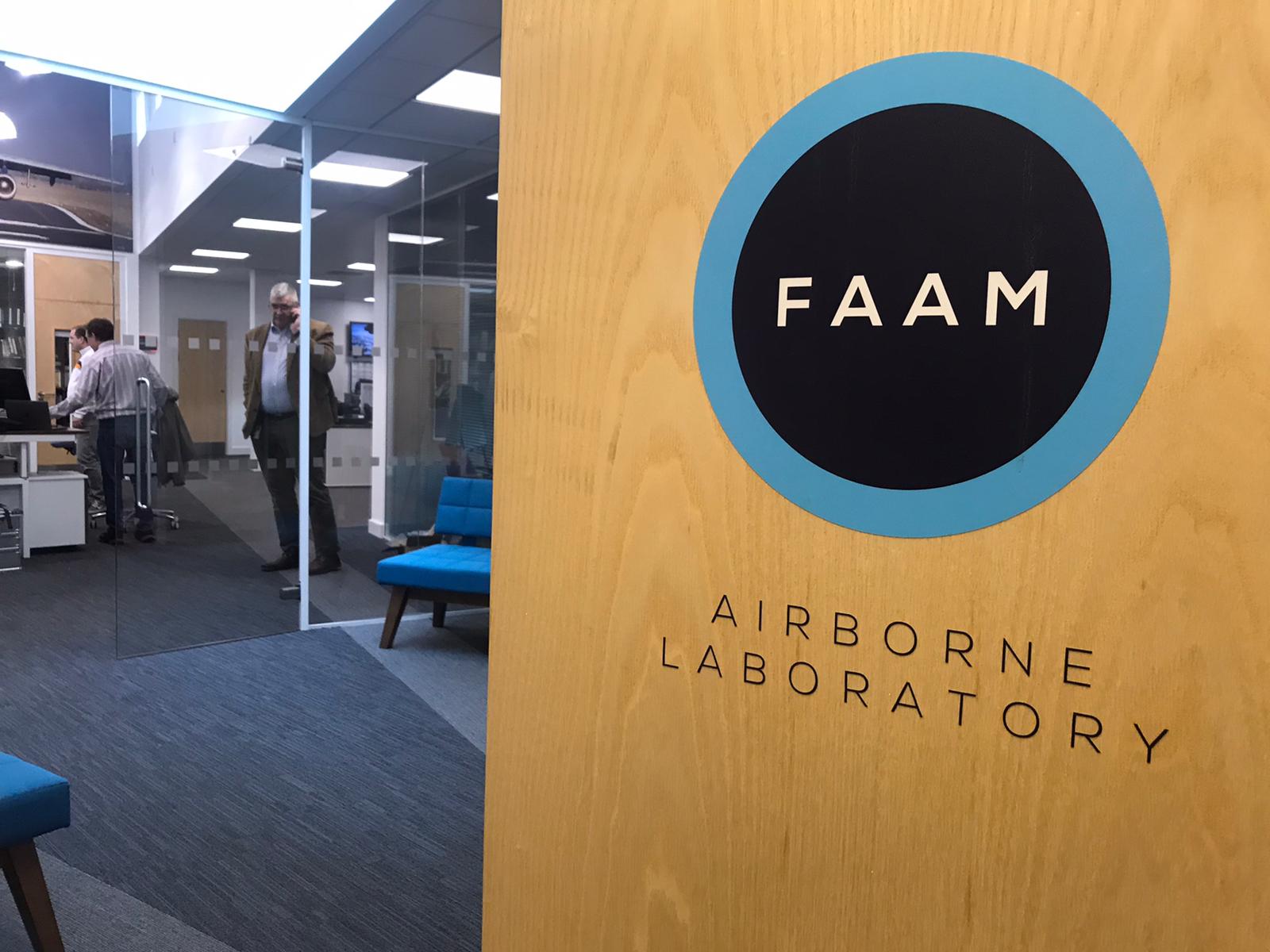
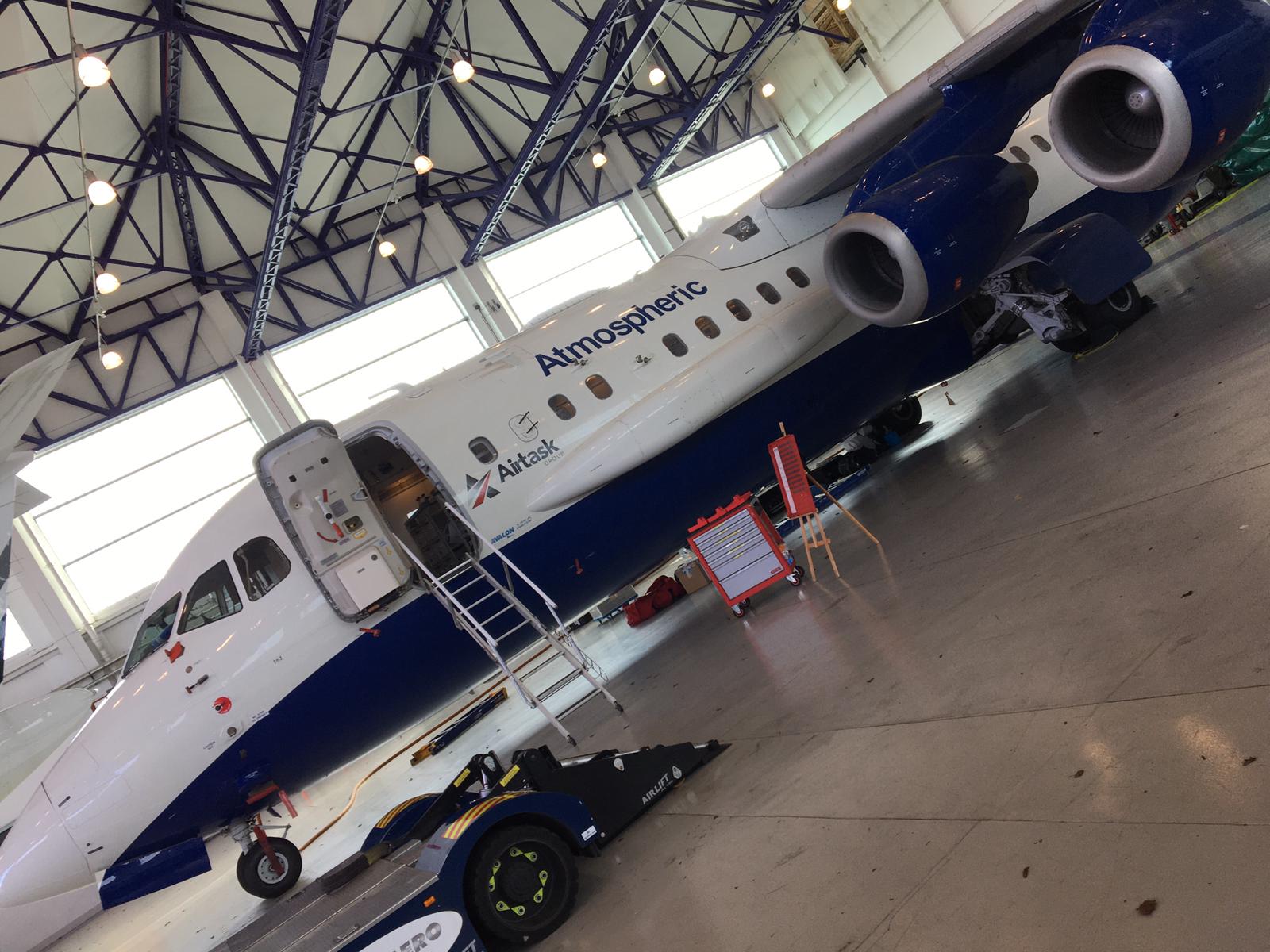
In January, along with some of the students from the Environmental Engineering MSc, we went to Cranfield Airport Hanger 1 to see the FAAM (Facility for Airborne Atmospheric Measurements) plane!
The aircraft is joint owned and run by NERC (Natural Environment Research Council) and the Met Office. FAAM is an independent company based at Cranfield University. Cranfield is the perfect place for this research facility. It is one of the only Universities which has its own airport and is a leader in research fields such as environment and aerospace.
We met with Alan Woolley, Head of FAAM, who explained all about the benefits of the FAAM plane and the important research that it records. We had the opportunity to board the plane which was amazing! The plane was the same size as a passenger plane but instead of rows upon rows of seats, there was testing equipment and computers along both sides of the plane. Surprisingly though, it still had the iconic plane smell: the source of which I still can’t put my finger on!
Alan told us all about the different flights that the plane goes on and the different places he has been able to visit as well as the sort of work he does on location. The main function of the FAAM plane is to look at clouds, specifically at raindrops. The aircraft measures temperature, humidity, and air pressure, collecting samples during flight to measure and make comparisons with other reported data from other sources. During the tour, the students were given the chance to ask Alan questions about the data that is collected and how Alan got into his field of work.
It was really inspiring to see how the content of the modules the students are learning in their lectures can be applied in the industry. It was fascinating to learn and see the amazing impact that this research facility is having on being able to research more about the atmosphere the how the information goes on to help inform the Met Office and improves weather forecasts.

Categories & Tags:
Leave a comment on this post:
You might also like…
Introducing Kings Norton Library
Welcome to all our new students! We are looking forward to meeting you soon. You will find Kings Norton Library in the centre of the Cranfield campus, and it is open 24/7 to all staff ...

Setting your research on the right course: Four questions every researcher should ask
Whether you are just beginning your doctoral journey or are already well into your research career, successful research rarely happens by accident. Like any successful mission, it depends on good planning, informed decisions, and getting ...

5 budgeting mistakes students make (and how to avoid them)
Good financial planning isn't about how much money you have. It's about the habits you build. We asked Dr Lakshmy Subramanian, Course Director for the Banking, Economics and Finance MSc, about the budgeting mistakes ...

Finding your reading materials
Use Library Search Library Search is the first place to start when you are trying to find academic sources for your work. This is the search box on the library website homepage. It allows you ...

Formula 1 was the dream and Cranfield was the conduit
I still remember the exact moment Formula 1 (F1) got its hooks into me. I was in my first year of an aerospace undergraduate engineering degree when I watched a video about the sport ...

Introducing Barrington Library
Welcome to all our new students! Barrington Library supports all the students and staff at Cranfield Defence and Security on the Shrivenham site. We are looking forward to meeting you all soon, in person or ...