


Early detection of fungal pathogens in fruits
23/09/2019
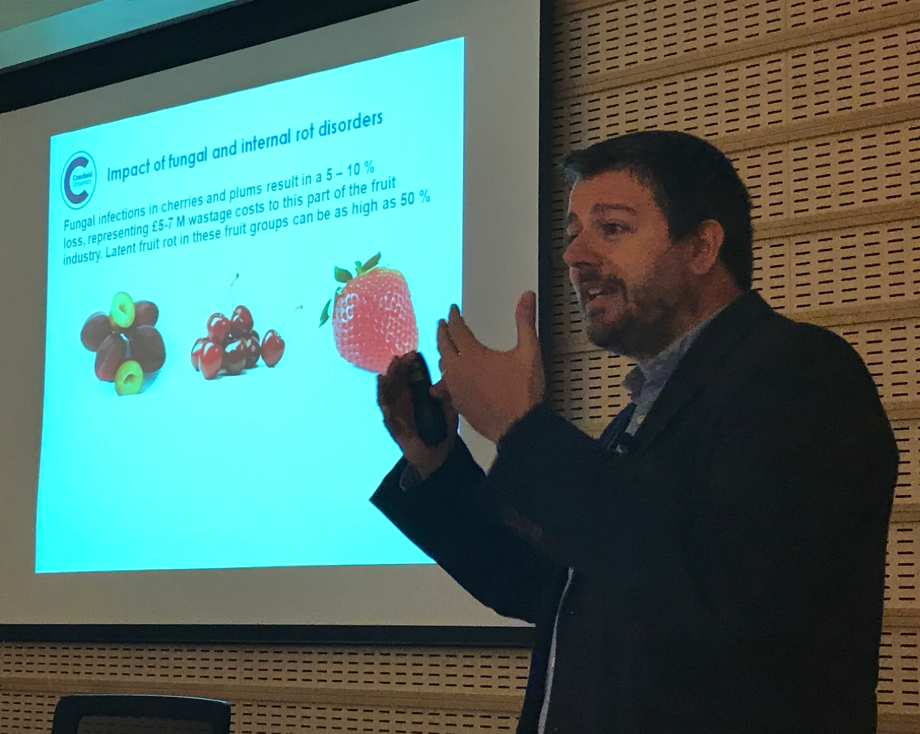
Recently Dr Angel Medina presented at the Postharvest workshop organised by (IRTA). He shared his research on early detection of fungal pathogens in fruits and vegetables using volatile organic compound (VOC) biomarkers.
Volatile organic compounds are compounds that easily become vapours or gases and can be sampled through breath or diet and are used to detect fungal pathogens. VOC biomarkers provide a non-invasive and quick approach to detect fungal pathogens.
Examples of where VOCs have been used for early identification of fungal and bacterial rots is in the spoilage of fruits and vegetables. Fungal infections in cherries and plums result in a 5-10% loss representing a cost of £5-7 million in wastage in this section of the fruit industry. Detection of disorders post storage and prior to market would enable infected fruit to be safely marketed early to reduce loss. There are many advantages to identifying biomarkers such as the detection of disorders post-harvest which would enable infected produce to be isolated resulting in a reduction in the spread of infection and thusly enabling better crop management.
The results indicate that the prototype validation for strawberries show the amount of biomarkers detected or emitted depend on a number of parameters such as the fruit origin, variety, size as well as punnet size and temperature. The data analysis of this is very challenging due to the number of parameters that affect the result.
The current progress in the research project is that there is a detection system which has been built to monitor latent fungal infection emitted by strawberries. The system built is fit for purpose in terms of sensitivity, speed and ease of use. It is to be further investigated as to whether other fruits and vegetables may be able to give more reliable information as analysing the data from strawberries has been challenging.

Categories & Tags:
Leave a comment on this post:
You might also like…

Finding your reading materials
Use Library Search Library Search is the first place to start when you are trying to find academic sources for your work. This is the search box on the library website homepage. It allows you ...

Formula 1 was the dream and Cranfield was the conduit
I still remember the exact moment Formula 1 (F1) got its hooks into me. I was in my first year of an aerospace undergraduate engineering degree when I watched a video about the sport ...
Introducing Barrington Library
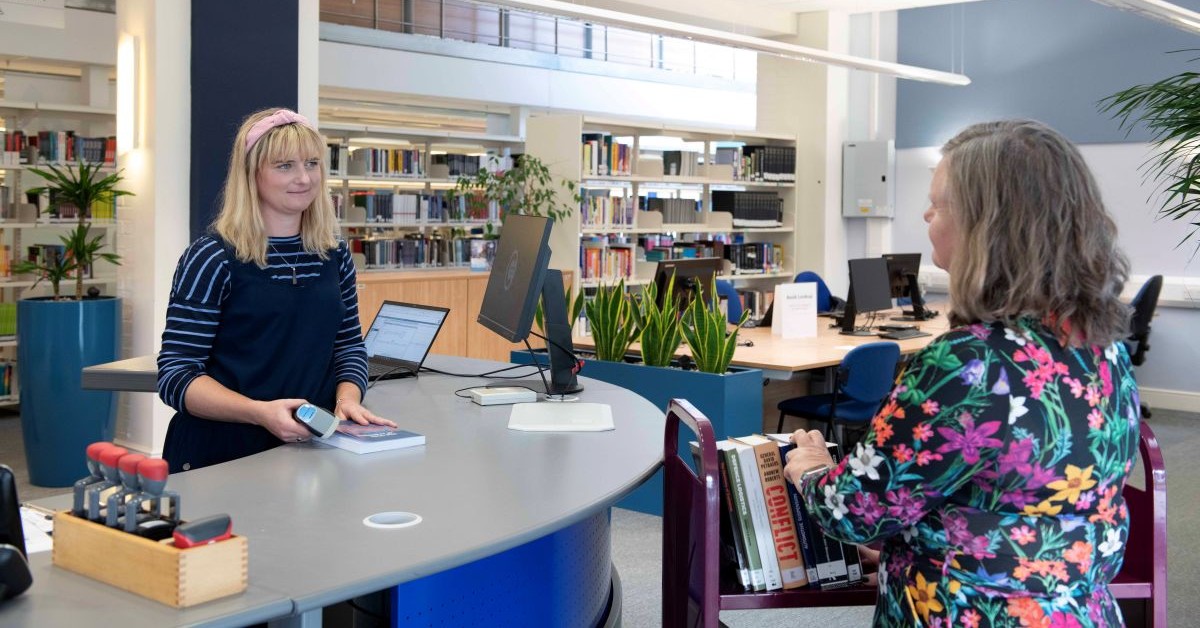
Welcome to all our new students! Barrington Library supports all the students and staff at Cranfield Defence and Security on the Shrivenham site. We are looking forward to meeting you all soon, in person or ...

About to start your journey at Cranfield? We’re here to help!
Congratulations on accepting your offer to study at Cranfield! If you’re keen to get a head start before your course begins, our Library Services team is here to support you every step of the way. ...

Bank holiday hours for Library Services: Monday 31 August
Library Services staff will be taking a break on Monday 31 August for the bank holiday. You will still be able to access all the resources and help you need via our library website. The 24/7 ...

The real cost of studying in the UK – what international students need to budget for
Moving overseas to pursue a postgraduate degree is one of the most exciting investments you can make in your future. It's also one of the most significant financial commitments you and your family will ...