


Thailand Study Tour
15/05/2019

Written by Neeraj Mehrotra and Tim Smith
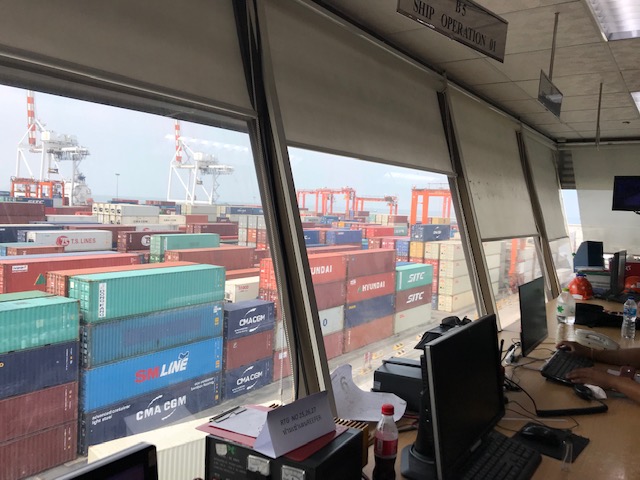
This is where it all starts – our visit to Laem Chabang International Terminal.
All ready and excited to be at our first visit.
The day began with an early start at 6:30am. I had been quite excited and looking forward to this visit as this would be the first port that I would be visiting. Ports are the lifeline for logistics and can truly be called the backbone of a logistics infrastructure.
Ports play a strategic role and can have a significant impact on the economic growth of the area/country where they are situated. With the growth in the size of container ships, the requirements of infrastructure across ports has also significantly increased. Laem Chabang is Thailand’s largest port and handles about 25% of national trade. We were honoured to visit the offices of Laem Chabang Container Terminal (LCIT), a DP World company. LCIT handles around 1.6m containers per year. LCIT CEO Captain Alpesh Sharma and Head of People Ms. Kathleen Leung explained some of the challenges they gave every day, including the challenge to attract new talent to the industry! We were fortunate to visit the operations control tower where LCIT coordinates the handling of up to 150 containers per hour. It was truly amazing to see the complexity of planning needed to execute an efficient loading and unloading of a ship, which would involve balancing of weight on the ship, sequencing of delivering to various ports on the way etc, while also coordinating this with the tide level too!!! Quite an experience.

Categories & Tags:
Leave a comment on this post:
You might also like…

5 budgeting mistakes students make (and how to avoid them)
Good financial planning isn't about how much money you have. It's about the habits you build. We asked Dr Lakshmy Subramanian, Course Director for the Banking, Economics and Finance MSc, about the budgeting mistakes ...
Finding your reading materials
Use Library Search Library Search is the first place to start when you are trying to find academic sources for your work. This is the search box on the library website homepage. It allows you ...

Formula 1 was the dream and Cranfield was the conduit
I still remember the exact moment Formula 1 (F1) got its hooks into me. I was in my first year of an aerospace undergraduate engineering degree when I watched a video about the sport ...
Introducing Barrington Library
Welcome to all our new students! Barrington Library supports all the students and staff at Cranfield Defence and Security on the Shrivenham site. We are looking forward to meeting you all soon, in person or ...

About to start your journey at Cranfield? We’re here to help!
Congratulations on accepting your offer to study at Cranfield! If you’re keen to get a head start before your course begins, our Library Services team is here to support you every step of the way. ...

Bank holiday hours for Library Services: Monday 31 August
Library Services staff will be taking a break on Monday 31 August for the bank holiday. You will still be able to access all the resources and help you need via our library website. The 24/7 ...