


Shifting Gears: How virtual prototyping is driving the future of automotive and motorsport
10/03/2025
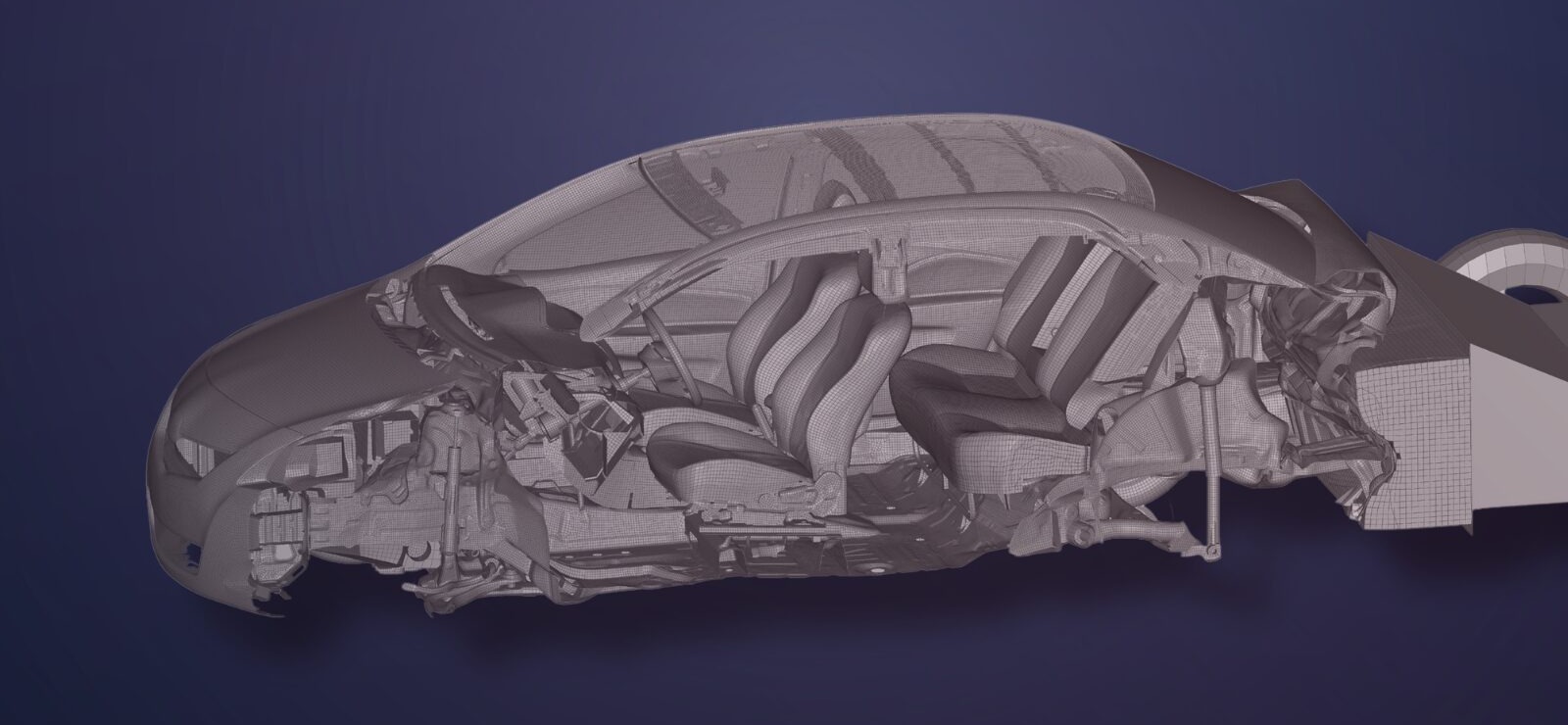
The roar of the engine, the thrill of the track, the relentless pursuit of perfection – these are the hallmarks of racing cars. But even in the world of high-octane performance, the automotive and motorsport industries are in a constant state of evolution. Pushing the boundaries of performance, safety, and sustainability demands constant innovation, and one area is experiencing a revolution: virtual prototyping. This digital transformation is reshaping how vehicles are designed, developed, and optimised, creating exciting opportunities for engineers with the right expertise.
So, what are the critical skills gaps driving this change?
Cranfield’s industrial partners understand the critical skills gaps driving this change and have highlight several key areas:
• Efficient automatic structural optimisation: The ability to rapidly and automatically optimise vehicle structures is crucial for achieving light-weighting targets without compromising safety or performance. This requires advanced knowledge of optimisation algorithms and simulation techniques.
• Composite materials expertise: The increasing use of composite materials in vehicle construction demands specialised skills in simulating and automatically optimising the complex layups and material properties of these advanced materials.
• Automation of analysis and postprocessing: The sheer volume of data generated by simulations requires automated tools for analysis and postprocessing, enabling engineers to quickly extract meaningful insights and make informed decisions.
• Modelling complex non-linear structures: Modern vehicles often incorporate highly non-linear structures, requiring advanced modelling techniques to accurately predict their behaviour under various loading conditions.
Graduates with expertise in these areas are highly sought after. They can contribute immediately by pushing the boundaries of virtual prototyping, adding value to the design process, and gaining invaluable skills in the process.
This aligns perfectly with the evolving needs of advanced vehicle design and development. Shorter lead times, rapidly changing targets, and increasingly complex projects are pushing the industry towards virtual development.
Our industrial partners believe that everything is pushing towards the direction of working in the virtual development world, reducing at the real minimum the experimental time and costs to be spent. This shift emphasises the importance of advanced finite element modelling, crashworthiness, durability, and NVH – all strategic areas for the future of vehicle design.
What career paths await graduates with these skills?
The possibilities are vast. A strong technical foundation opens doors to a wide range of roles, from design and simulation to testing and track activities, spanning both operative and management positions. The key is a good and specific technical preparation, in line with the today needs of our industry but also open enough to be ready for the fast-changing environment where we are living and working in.
Therefore, we have collaborated with industrial partners, including Ferrari, to design a course that bridges this gap. With our established reputation in automotive and motorsport engineering, we are uniquely positioned to deliver this cutting-edge education. Our deep involvement in the industry provides not only technical expertise but also a holistic vision of vehicle design, encompassing industrial processes, available technologies, and business considerations.
According to our partners at Ferrari:
“The very important and ‘wide-angle’ involvement in automotive and motorsport industry are giving Cranfield a deep experience on the technical subjects, but also quite a ‘holistic’ vision of what a car or a race car are when we look at them not only as very complex systems that should deliver performance along a very wide set of objectives, but also when immersed in the more general context of industrial processes, available technologies, business cases.”
The impact of graduates from such programmes on the industry’s ability to innovate in areas like lightweighting, safety, and sustainability is immense. These complex challenges demand sophisticated virtual modelling capabilities.
Virtual prototyping empowers engineers to explore new concepts, optimise designs, and accelerate the innovation process, leading to increased efficiency, reduced time to market, and enhanced performance.
The future of automotive and motorsport is being built virtually, and graduates with these specialised skills are ready to drive that change.


Categories & Tags:
Leave a comment on this post:
You might also like…
Building more than research: Reflections from the ECRn Symposium 2026
There’s something quietly powerful about a room full of early career researchers. Not just the ideas, although there were plenty of those—but the conversations, the curiosity, and the sense that everyone is figuring things ...

Library services over Easter, 3-6 April
Kings Norton Library will remain open for study 24/7. You will need your University ID card to enter the building and can use the self-service machines to borrow and return items as usual. Barrington Library ...

How do I access the full-text of Harvard Business Review (HBR)?
This is a frequently asked question, and it's worth knowing how to access this key management journal. So, how do you access HBR in full-text? The short answer is via our eJournals finder. You can find ...

Engineering problem to solve? Let Knovel help you find a solution
Did you know that Knovel provides you with more than just eBooks? Knovel is a key database for many engineering, mechanical and materials courses here at Cranfield University, and contains content from an extensive range ...
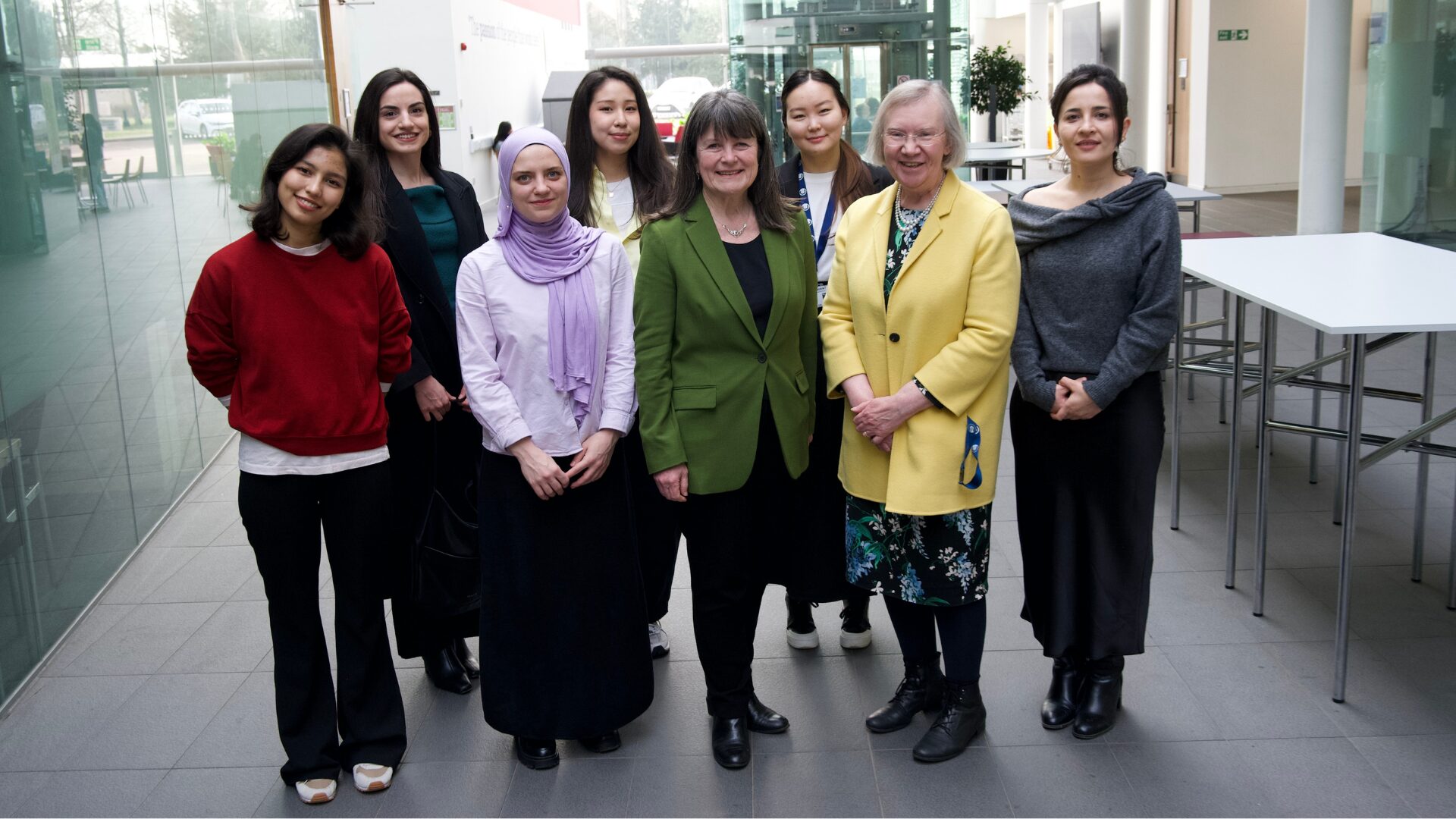
What happens when female scholars meet influential leaders?
On the 5 March 2026, our British Council Women in STEM Scholars had the privilege of sitting down with two excellent role models of industry and academia: Professor Dame Karen Holford, ...
From MSc to CEO: Igniting a research revolution
For many, a master’s degree is achieving a big milestone. Kilyan Ocampo, Computational Fluid Dynamics alumni shares how studying at Cranfield helped launch his career in the energy sector. Today, Kilyan ...