

Safety first: How Cranfield’s Safety in Human Factors MSc is shaping my future in aviation
20/11/2025
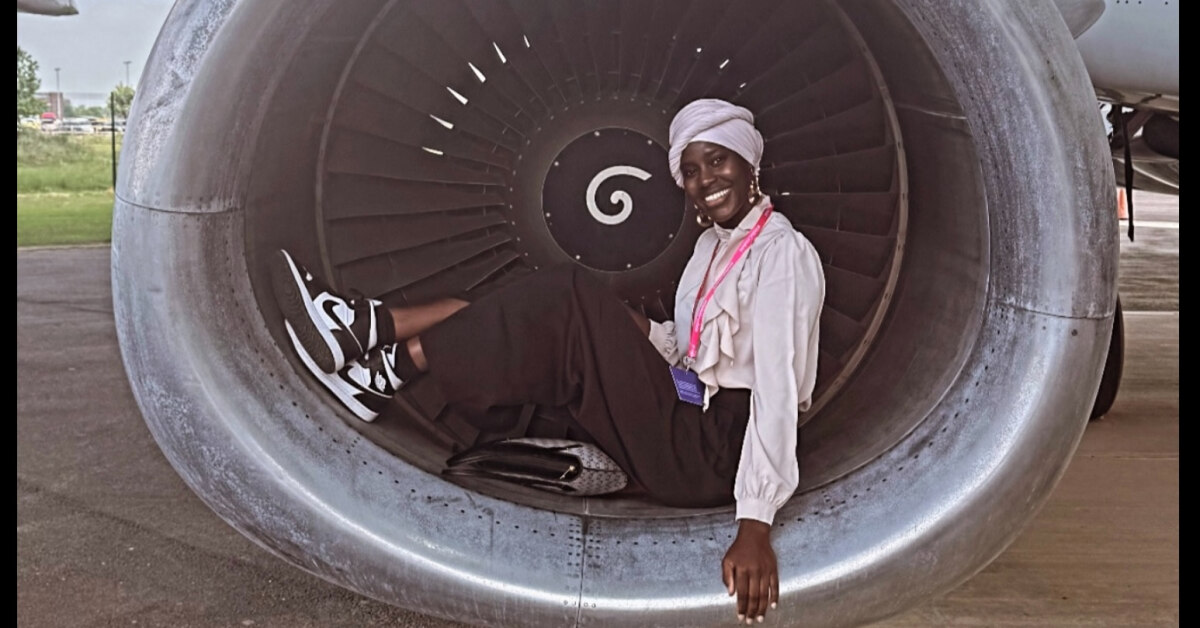
Hello! I’m Maty Dieng an Italian originally from Senegal, and I recently embarked on the exciting journey of an MSc in Safety and Human Factors in Aviation at Cranfield University. Choosing where to study is a monumental decision, but for me, the choice was crystal clear: I needed a university that didn’t just talk about the industry – it was part of it.
Why Cranfield? Finding the perfect balance
I knew Cranfield University had a distinct and well-deserved reputation for its strong ties to industry, especially within the aviation and aerospace sectors. I wasn’t just looking for technical knowledge; I sought a course that perfectly integrated demanding academic instruction with human-centred approaches to safety.
The MSc in Safety and Human Factors was the ideal fit for me, offering a curriculum packed with real-world applications directly transferable to an aviation career.
A huge part of Cranfield’s unique selling point is something truly unparalleled: Cranfield is the only university in the UK with its own operational airport, runway, and air traffic control on campus. This isn’t just a fun fact – it’s the foundation of the Cranfield experience. It meant that my “classroom” often extended right to the tarmac, allowing for unparalleled, hands-on learning and research that immediately reflects current aviation safety concerns.
The thrill of real-world learning
My time on the course has been both rewarding and challenging. The highlight has definitely been working on projects that mirrored real-world aviation safety concerns. Learning from instructors who possess a wealth of professional industry experience was invaluable; they weren’t just teaching theory; they were sharing insights forged in active careers.
Furthermore, collaborating with peers from various professional and cultural backgrounds made every project a truly global exercise – excellent preparation for the multicultural, multidisciplinary teams that are standard in international aviation.
A typical day on campus was always concentrated yet vibrant: it began with lectures, then moved into intense project work or group discussions. The afternoons were frequently spent in the library or during practical sessions. The focused yet friendly close-knit campus community made it simple to strike a balance between social life and academics.
Shaping aspirations and building confidence
Cranfield’s deep emphasis on industry collaboration and applied research profoundly influenced my career goals. It wasn’t just about gaining knowledge; it was about demonstrating how that knowledge can directly and immediately enhance aviation safety.
The course prepared me by sharpening my ability to think critically, teaching me how to assess intricate safety systems from a human-centred standpoint, and giving me the self-assurance to present complex solutions to both technical and non-technical audiences. This motivated me to seek out leadership positions in human factors research, safety management, or consulting, where I can have a real, tangible influence on operational effectiveness.
My ultimate goal is to keep developing in this vital field, supporting initiatives that increase operational safety, and assuming leadership roles where I can mentor the upcoming generation of industry professionals and impact policy.
My advice to future students
Studying at Cranfield University has been intellectually and culturally rewarding. I valued the friendly and encouraging staff, and the university’s emphasis on practical results truly sets it apart. The international community here made it simple to share ideas and gain knowledge from various viewpoints.
“My advice to you is simple: I urge you to be proactive and make the most of Cranfield’s abundant resources and unique networking opportunities. Make sure to interact with your peers, as teamwork is one of the most beneficial features of the course – those relationships will last a lifetime. Finally, strike a vital balance between your studies and personal development, because the relationships and experiences you make will be just as valuable as your degree.”
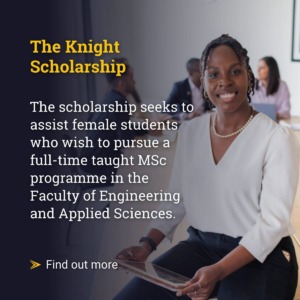
Maty is a recipient of the Cranfield Knight scholarship. She also received the prestigious Royal Aeronautic Society scholarship.



Categories & Tags:
Leave a comment on this post:
You might also like…
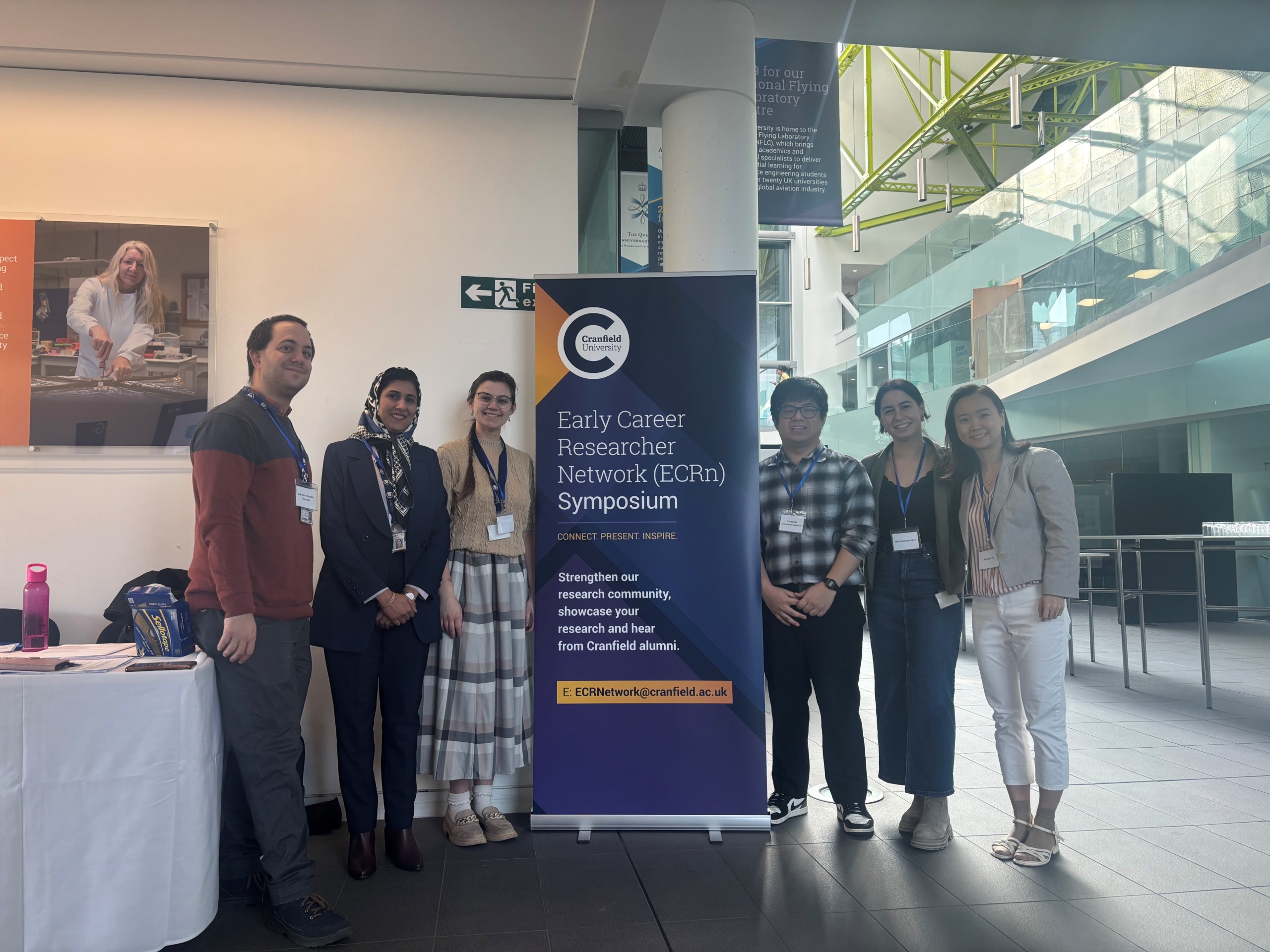
Building more than research: Reflections from the ECRn Symposium 2026
There’s something quietly powerful about a room full of early career researchers. Not just the ideas, although there were plenty of those—but the conversations, the curiosity, and the sense that everyone is figuring things ...

Library services over Easter, 3-6 April
Kings Norton Library will remain open for study 24/7. You will need your University ID card to enter the building and can use the self-service machines to borrow and return items as usual. Barrington Library ...

How do I access the full-text of Harvard Business Review (HBR)?
This is a frequently asked question, and it's worth knowing how to access this key management journal. So, how do you access HBR in full-text? The short answer is via our eJournals finder. You can find ...

Engineering problem to solve? Let Knovel help you find a solution
Did you know that Knovel provides you with more than just eBooks? Knovel is a key database for many engineering, mechanical and materials courses here at Cranfield University, and contains content from an extensive range ...
What happens when female scholars meet influential leaders?
On the 5 March 2026, our British Council Women in STEM Scholars had the privilege of sitting down with two excellent role models of industry and academia: Professor Dame Karen Holford, ...

From MSc to CEO: Igniting a research revolution
For many, a master’s degree is achieving a big milestone. Kilyan Ocampo, Computational Fluid Dynamics alumni shares how studying at Cranfield helped launch his career in the energy sector. Today, Kilyan ...