


Aviation Safety Management, Risk and Regulation MSc student Raj De talks about combining study with work and the future of aviation safety
09/06/2023
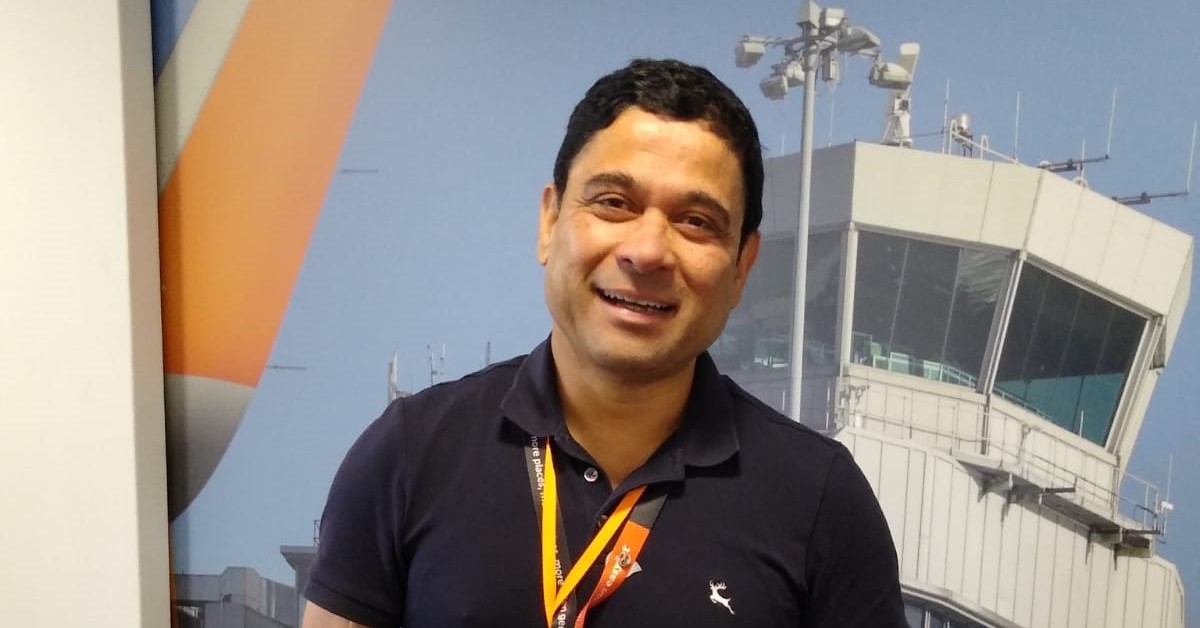
Raj De is studying for an MSc in Aviation Safety Management, Risk and Regulation (ASMRR). Here he talks about his career in aviation safety to date, balancing his current studies with his job, and the learnings he will take forward into his career.
What sparked your interest in aviation safety?
“My background in aviation is in engineering and maintenance and I have been in this field for over 30 years in various roles. Whether it is in hands-on maintenance activities or in engineering and maintenance management activities, safety has been at the forefront of my mind in whichever role I have been in. The implementation of the safety management system (SMS) in Part-CAMO has given a further zeal to gain an in-depth understanding about the subjects related to the SMS, especially the core risk management processes and regulations.”
Can you tell us a little bit about your life before coming to Cranfield?
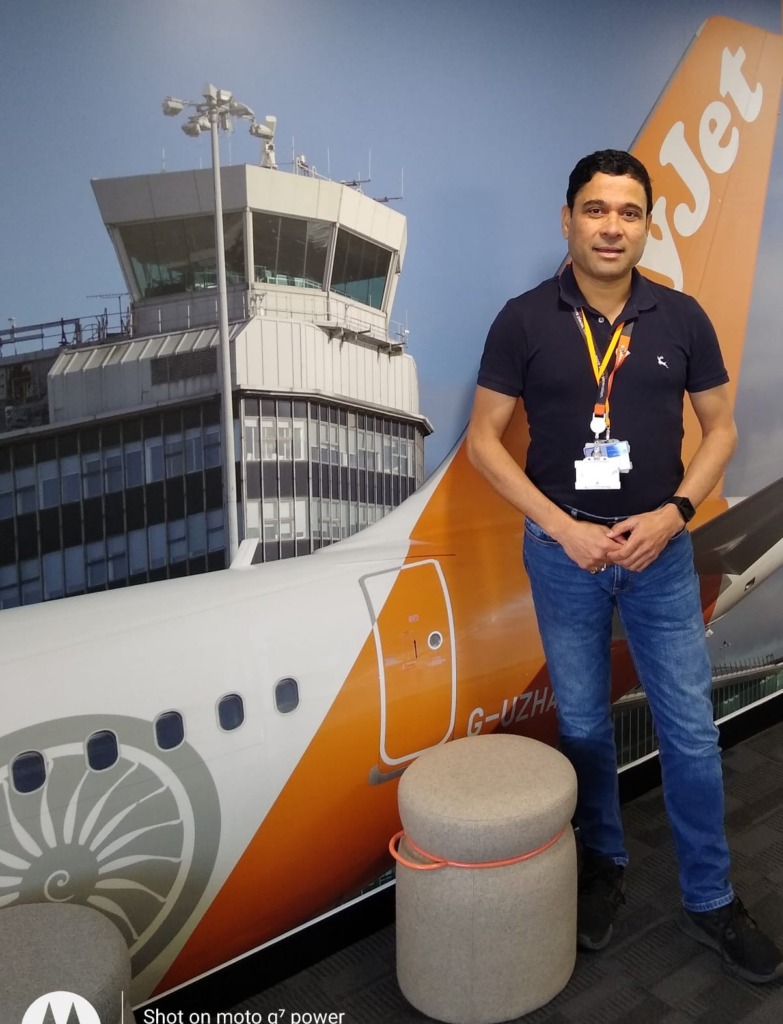
“I started off my career (after education) in a helicopter services company in India as a licenced engineer and from there on I have worked as an engineer in the 737 series and A320 family of aircraft. I have been at easyJet airline since 1999, when we had under 10 aircraft and have seen the growth of the company to over 300 aircraft now, in various roles. Presently, I have been a Nominated CAMO Safety Manager for easyJet UK for the past two years. However, before my present role, I used to manage the maintenance planning across the whole easyJet fleet(s) and prior to that I was in maintenance operations control.”
Why did you choose the ASMRR MSc course?
“In 2020 my new role in easyJet changed to Engineering and Maintenance Safety Manager. One of my first jobs was to see through the Part-CAMO approval for the three easyJet AOCs. As you probably know, the integration of the safety management system (SMS) in (previous) Part-M approved organisations is the main requirement for getting the Part-CAMO approval. While trying to prepare for the same for the organisation I had to quickly build my own knowledge and understating of SMS. Although I did this largely through the online available resources, with which I could work my way through for the audits for the Part-CAMO approval, I felt that a structured course that covered all aspects of SMS, including risk management and regulation, would be beneficial for me to build the in-depth understanding of these subjects. An online search and recommendation by someone pointed me to the ASMRR MSc from Cranfield. On reviewing the course modules and the structure, I found that this is what I was looking for to enhance my knowledge.”
How does the course fit in with your other commitments?
“Being an online-based course it provides flexibility which is helpful, but it does take a significant chunk of time from my day. At times the workload becomes quite high especially during the assignments but, to be fair, it remains manageable.”
What have been the highlights so far?
“I am really enjoying the course content and this is exactly what I was hoping for when I joined the ASMRR MSc. The assignment questions after each module are well-thought-out in my view, as they drive me towards a much better understanding of the module content, ensuring a high retention about the subject in my mind. As I am progressing through the second year of the MSc, I find that the knowledge gained is not only helping me significantly in my job role but also in enhancing my profile within easyJet.”
What are your plans upon graduating?
“I would like to continue to apply what I have learnt from the ASMRR course and broaden my horizons.”
What is your favourite thing about Cranfield?
“From a university perspective I find the research work that Cranfield does, especially in the field of aviation, very exciting. As a student I find the support system and flexibility that Cranfield provides extremely helpful.”
What would you say to others in your industry?
“I think we are at a very interesting point in the aviation timeline and in the near future I expect step changes in technology will drive us to a future from where the present time will be unrecognisable — something similar to the change from landline phones to smart phones. Organisations with good adaptability and learning culture will probably find themselves on the top of the competition.”
What are your thoughts about the future of aviation and/or other safety-critical industries?
“My view is that AI will become increasingly ingrained in everything we do. From an engineering perspective, predictive maintenance use will expand significantly to include most of the on-condition components in the aircraft. This will help in optimising maintenance inputs and reducing unscheduled maintenance, thereby not only increasing the passenger satisfaction but this will also reduce the maintenance costs. From a risk management perspective, the industry will develop a better understanding of risks from a systems view — this will help to design more effective risk controls from the outset for any intended activity.”
Is there anything else we should know about you?
“Apart from my day job, I do regular stage shows as a singer – this I find helps me to de-stress my mind (and takes up most of my free time).”

Categories & Tags:
Leave a comment on this post:
You might also like…
Library services over Easter, 3-6 April
Kings Norton Library will remain open for study 24/7. You will need your University ID card to enter the building and can use the self-service machines to borrow and return items as usual. Barrington Library ...

How do I access the full-text of Harvard Business Review (HBR)?
This is a frequently asked question, and it's worth knowing how to access this key management journal. So, how do you access HBR in full-text? The short answer is via our eJournals finder. You can find ...

Engineering problem to solve? Let Knovel help you find a solution
Did you know that Knovel provides you with more than just eBooks? Knovel is a key database for many engineering, mechanical and materials courses here at Cranfield University, and contains content from an extensive range ...
What happens when female scholars meet influential leaders?
On the 5 March 2026, our British Council Women in STEM Scholars had the privilege of sitting down with two excellent role models of industry and academia: Professor Dame Karen Holford, ...
From MSc to CEO: Igniting a research revolution
For many, a master’s degree is achieving a big milestone. Kilyan Ocampo, Computational Fluid Dynamics alumni shares how studying at Cranfield helped launch his career in the energy sector. Today, Kilyan ...

Commuting, collaborating and growing: My first term experience at Cranfield
My first term at Cranfield University has been an extremely positive and rewarding experience. While the course has been intense at times, it has pushed me in the best possible way and allowed me ...
Comments are closed.