


From Kenya to Cranfield: A career in motorsport engineering
03/11/2025

It’s hard to pinpoint the exact moment my interest in motorsport truly began. I didn’t grow up around racetracks or garages, and in Kenya, a career in motorsport is practically unheard of. But looking back, there were always signs that this was where I was headed…
At school, I was drawn to subjects that made me think, especially Maths and Physics. I liked the logic in them and how everything had an explanation if you looked hard enough. I joined a few maths contests and even won a Brookside Mathlete medal, but more than the prizes, I enjoyed the process of figuring things out. That curiosity naturally led me to engineering.
Maybe it should have been obvious from the hours I spent playing Need for Speed just for fun, or from the way I’d subconsciously reach for books like Adrian Newey’s “How to Build a Car” alongside Jane Austen’s novels. At the time, I didn’t realise it, but those little interests were quietly pointing me toward engineering and, later, a career in motorsport.
When it came time to choose a degree, Mechatronics Engineering felt like the right fit. It combined both the mechanical and electrical sides of engineering and felt perfect for someone who was curious about how things worked but not quite ready to choose one path over the other.
During my undergraduate studies, I joined my university’s Formula Student team and worked on the chassis design. This was my first real exposure to motorsport engineering, and it completely changed how I saw the field.
As I took on more responsibility and eventually became Chassis Team Leader, I began to realise how much I enjoyed the process itself, the teamwork, the problem-solving, and the satisfaction of seeing our designs take shape. It was challenging at times, but it never felt like work because I loved every part of it, and having a team made it easier to push through. That experience made me want to learn more about the technical side of racing and the performance that drives it all forward. Building on that foundation and deepening my understanding led me to pursue a master’s in Advanced Motorsport Engineering at Cranfield University.
Why Cranfield?
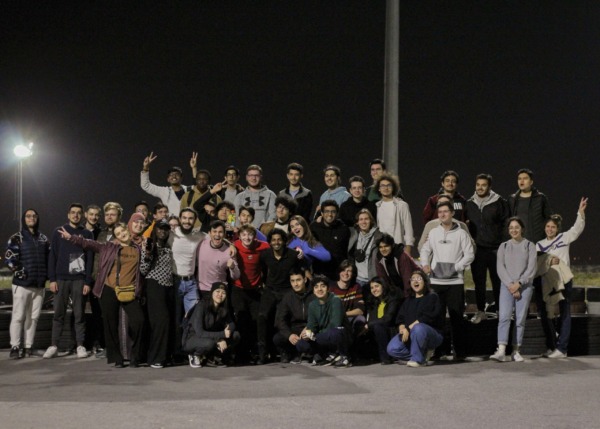
What drew me specifically to Cranfield was its strong academic reputation and its location in the heart of the UK’s Motorsport Valley. Being surrounded by so many teams, suppliers, and professionals meant that learning didn’t just happen in lectures or workshops; it happened through the connections you made and the environment you were part of. The programme’s track record for producing graduates who go on to work in Formula 1 was also a huge factor.
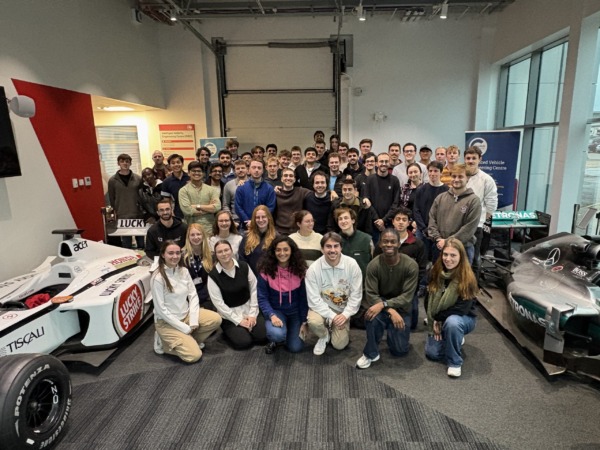
Knowing that alumni like James Vowles had walked the same halls and now lead at the very top of the sport made it feel both inspiring and achievable.
Tell us about your student experience so far
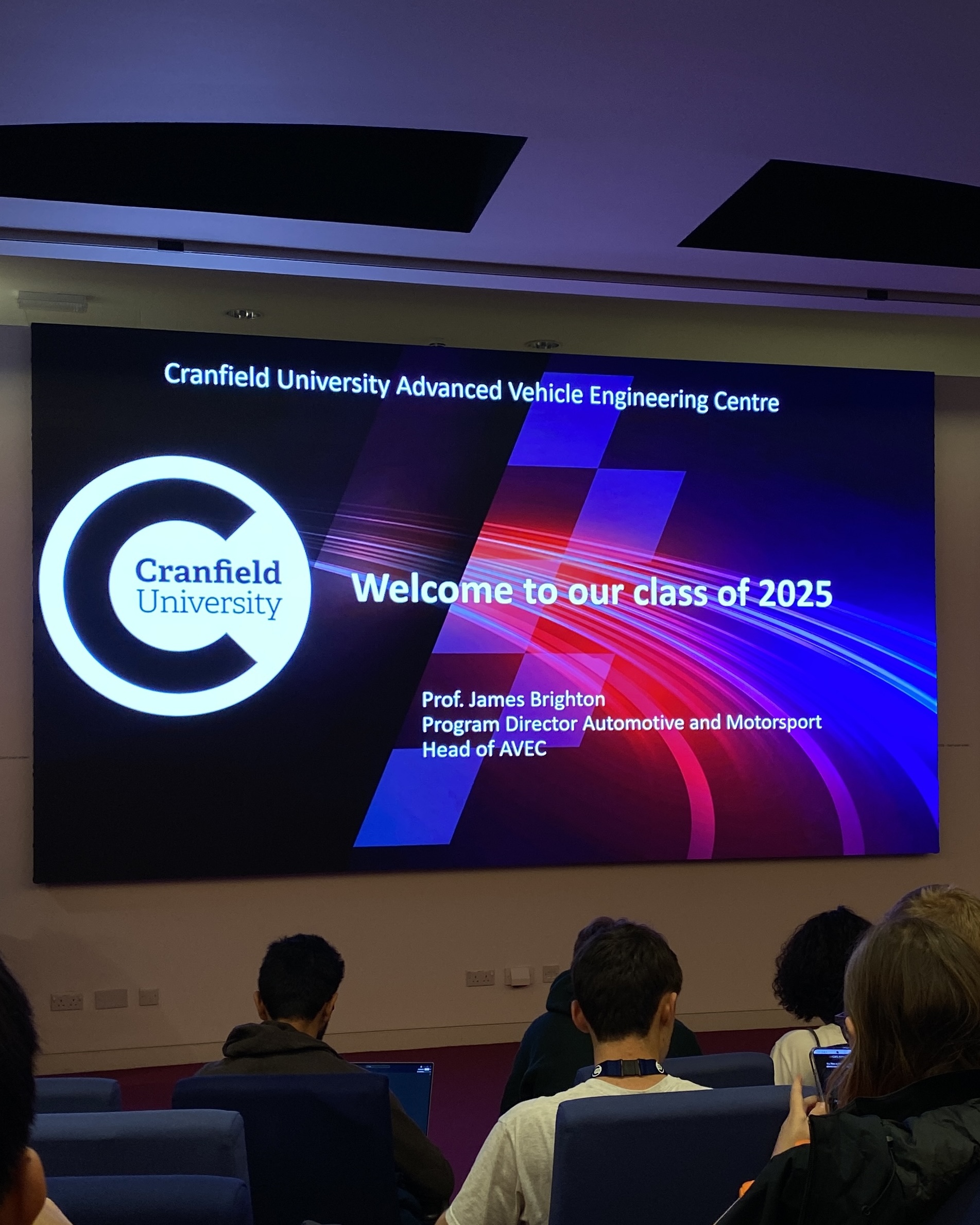
Even though it has only been a month, this term has already been full of exciting experiences. One of the highlights was a group design task where we built a chassis out of pasta and paper. It might sound silly, but it was a brilliant way to test creative problem-solving and see ideas take shape.
Another standout moment was getting up close to a Mercedes AMG F1 Petronas engine during our powertrains module, which was incredible to see in person.
I also had the chance to visit Silverstone as a volunteer panellist for a STEM day, representing our master’s course alongside some of my course mates. The day focused on promoting careers in STEM, and it was especially rewarding for me as a passionate advocate for women in STEM, particularly women of colour.
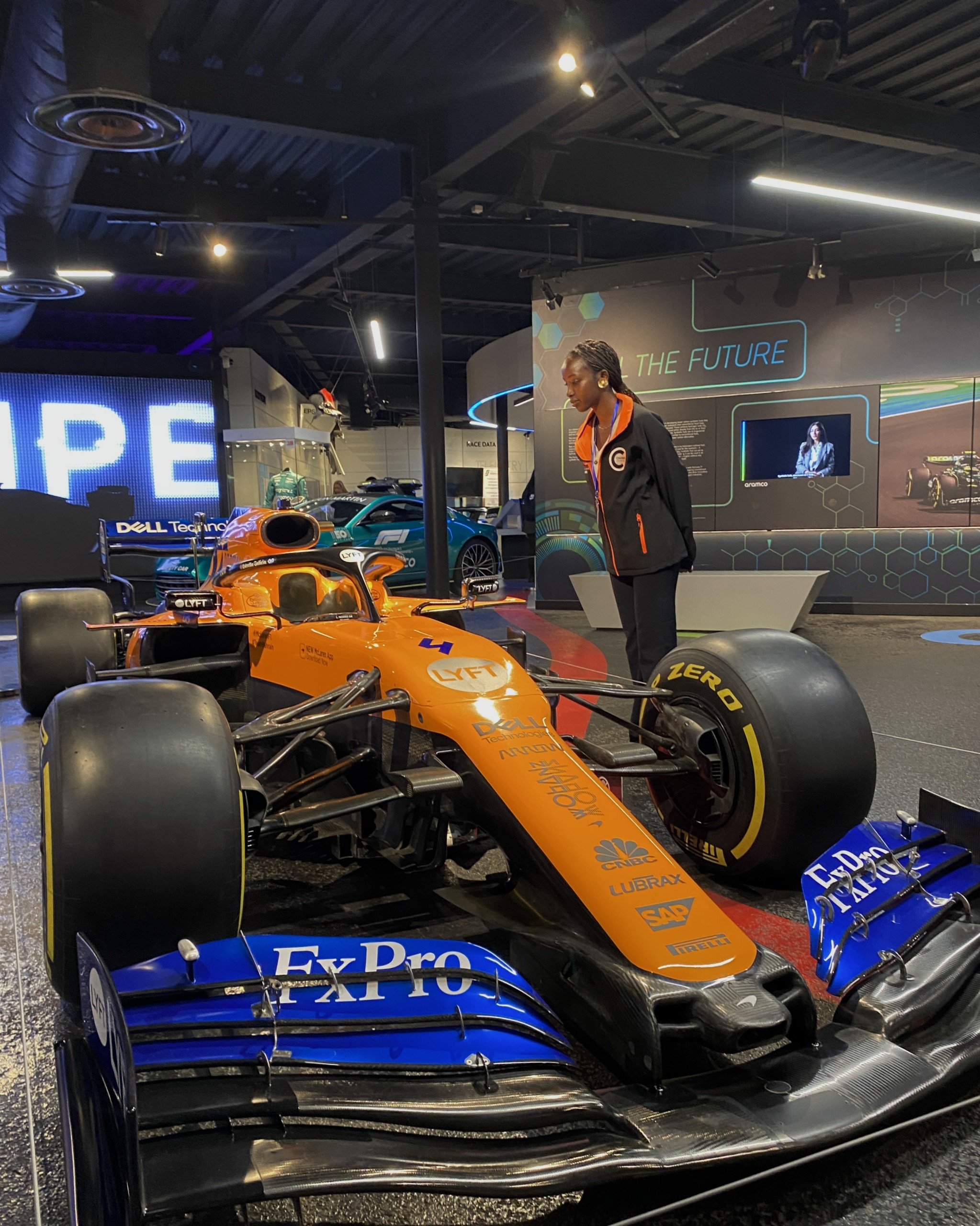
Getting to share my journey while surrounded by so much motorsport history was surreal, and I’m still not over the cars I saw at the Silverstone Museum.
Looking ahead, we have some exciting guest lectures coming up that I can’t reveal just yet, and our next module will give us the chance to use the wind tunnel for testing, which I’m really looking forward to. Honestly, everything about the course feels exciting, and these are just a few examples of the opportunities we’ve had so far.
What does being an engineer mean to you? What has been your experience as a woman in the motorsport industry?
To me, being an engineer means staying curious, always learning, and finding joy in the process of figuring things out. I also believe that engineering, like any other field, should be open to anyone with the skill and passion for it, regardless of their race or gender.
Being a woman in motorsport comes with its challenges but also incredible opportunities. The industry is still largely male-dominated, and that can feel intimidating at times, but it’s equally exciting to see things changing and to be part of that progress. I was pleasantly surprised by how many women are in my class, even though I’m still the only black woman. Even so, I’ve been fortunate to have supportive mentors and classmates, and that’s made all the difference. It’s also reminded me how important it is to keep advocating for diversity and inclusion so that more people, regardless of their background, feel like they belong in this space.



Categories & Tags:
Leave a comment on this post:
You might also like…

How do I access the full-text of Harvard Business Review (HBR)?
This is a frequently asked question, and it's worth knowing how to access this key management journal. So, how do you access HBR in full-text? The short answer is via our eJournals finder. You can find ...

Engineering problem to solve? Let Knovel help you find a solution
Did you know that Knovel provides you with more than just eBooks? Knovel is a key database for many engineering, mechanical and materials courses here at Cranfield University, and contains content from an extensive range ...
What happens when female scholars meet influential leaders?
On the 5 March 2026, our British Council Women in STEM Scholars had the privilege of sitting down with two excellent role models of industry and academia: Professor Dame Karen Holford, ...
From MSc to CEO: Igniting a research revolution
For many, a master’s degree is achieving a big milestone. Kilyan Ocampo, Computational Fluid Dynamics alumni shares how studying at Cranfield helped launch his career in the energy sector. Today, Kilyan ...
Commuting, collaborating and growing: My first term experience at Cranfield
My first term at Cranfield University has been an extremely positive and rewarding experience. While the course has been intense at times, it has pushed me in the best possible way and allowed me ...

Sourcing country analysis – a guide to Library sources
For those researching a country, you will find that country information tends to take two forms: Analysis - country reports are descriptive reports covering most areas of interest on a country. They contain an analysis ...
Comments are closed.