


A woman’s experience in environmental science within defence
09/02/2026
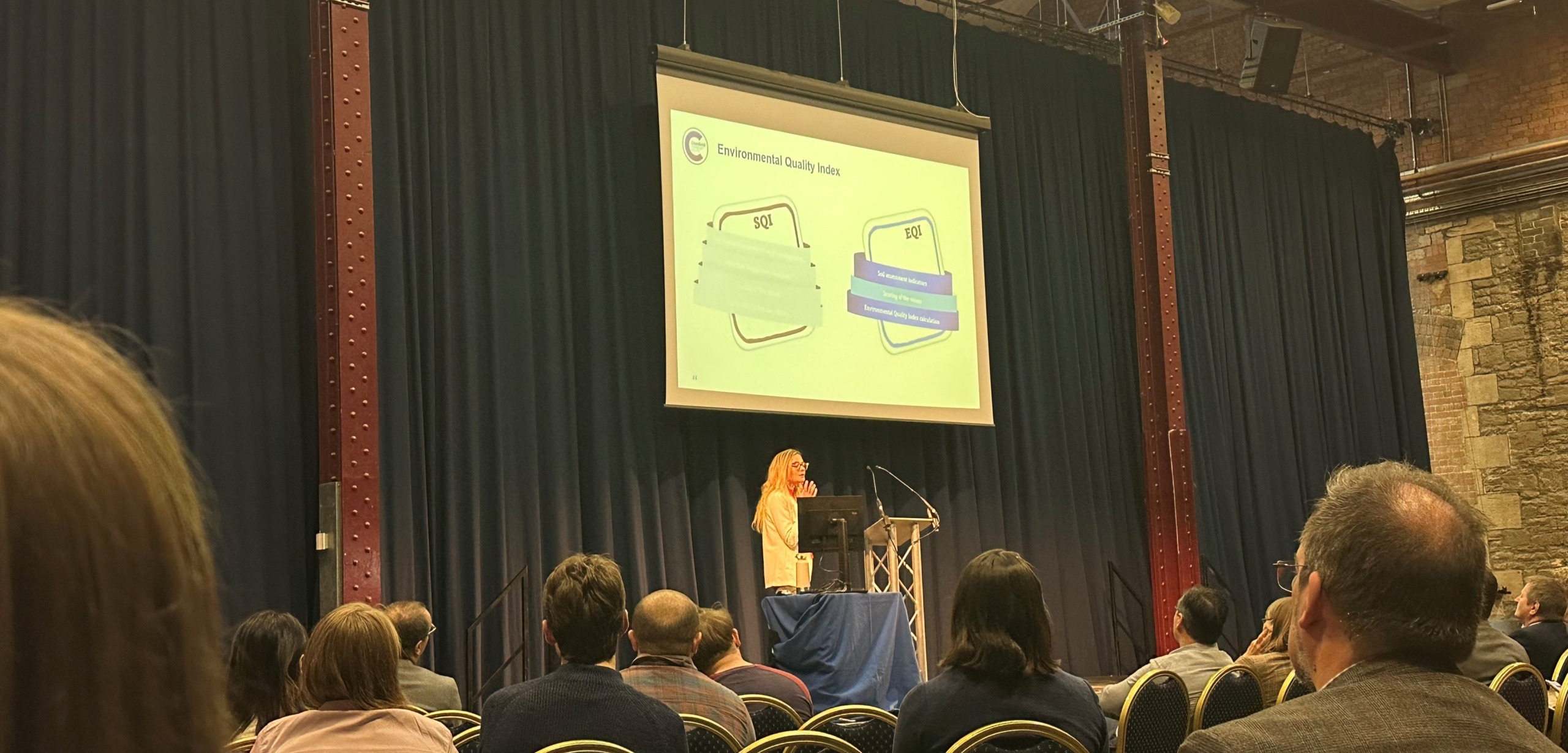
When I stepped into the gates of the Defence Academy it was the 30th September 2019. I did not know at the time that this would be the beginning of a long journey as a research scientist in defence.
When I started my PhD, I came to Defence Academy with more questions than answers. The first thing that surprised me was that most of the academics around me were women. This challenged my first belief that Defence was an all-male environment, although I started thinking that this was because my work was closer to environmental science. Was it true? We`ll never know. What I do know is that from that day until later on when I transitioned into a staff role, I developed a strong sense of responsibility to make sure that my voice was heard.
This was not always easy. Firstly, English is not my first language and learning how to convey a message is already hard in itself; secondly, expressing environmentally friendly ideas in a defence context can be challenging.
So, I was faced with two main challenges:
1. Teaching and translating environmental science into something meaningful, relevant, and applicable within a defence context;
2. Learning to speak with confidence and clarity, particularly in classrooms where the majority of students are male.
Moreover, I was an Environmental Scientist just entering the field and it seemed to me that environmental protection and national defence were rarely discussed in the same sentence. However, as I later learned, they are deeply connected. Military training is essential, but it can also have environmental impacts, including land degradation and contamination.
Even though there are many women around me, in the classroom that is different as the majority of students are male. As I mentioned before, having your voice heard can be even tough as I had more challenges to face, I was a woman, younger than some students and working in a second language.
There were moments when, often unintentionally, students would turn to my male colleagues for questions or mentorship, sometimes assuming that I was in a support role rather than leading the course they were attending. These experiences have affected my confidence, and at times I hesitated to speak up, even if I was the knowledgeable person in the room as I was worried that my voice would not be heard.
I was lucky that I had and have supportive colleagues, mentors, and a line manager who helped build my confidence overtime. I clearly remember being challenged on climate change by a small number of students who did not believe it existed, despite attending an environmental course.
The first time this happened, I had an opinion but felt unsure about expressing it. Someone in the room noticed and helped bring me into the conversation by just stating what they thought and then adding “Isn’t that true, Fed?” That moment gave me the confidence to speak, and since then, I have not stopped. It seems like a small thing, but that helped me in so many ways.
Over the years, this has led to meaningful and insightful conversations with students about balancing environmental protection with operational urgency, conversations that are more relevant now than ever. These discussions have led to collaborations, projects, and deeper engagement, reinforcing my belief that communication is one of the most powerful tools we have.
The main question became: how do we find the right balance between environment and defence? And why is this balance so important? The environment around us is changing with rising temperatures, water scarcity, and soil degradation which could affect food security, infrastructure, and stability within countries. These changes can lead to future instability and potentially affect national security. For example, if land degrades to the point where it can no longer support training, operational readiness is compromised. There are also several examples where this has already happened: changes in temperature and humidity have affected equipment resilience and the ability to train personnel safely and effectively. Protecting the environment, therefore, is not separate from defence, it is essential to it.
So, if you are a woman considering a career in environmental science in defence: we need you. We need more women to be part of this conversation, to bring environmental perspectives into defence, and to help shape the future of operational readiness and sustainability.




Categories & Tags:
Leave a comment on this post:
You might also like…

How do I access the full-text of Harvard Business Review (HBR)?
This is a frequently asked question, and it's worth knowing how to access this key management journal. So, how do you access HBR in full-text? The short answer is via our eJournals finder. You can find ...

Engineering problem to solve? Let Knovel help you find a solution
Did you know that Knovel provides you with more than just eBooks? Knovel is a key database for many engineering, mechanical and materials courses here at Cranfield University, and contains content from an extensive range ...
What happens when female scholars meet influential leaders?
On the 5 March 2026, our British Council Women in STEM Scholars had the privilege of sitting down with two excellent role models of industry and academia: Professor Dame Karen Holford, ...

From MSc to CEO: Igniting a research revolution
For many, a master’s degree is achieving a big milestone. Kilyan Ocampo, Computational Fluid Dynamics alumni shares how studying at Cranfield helped launch his career in the energy sector. Today, Kilyan ...
Commuting, collaborating and growing: My first term experience at Cranfield
My first term at Cranfield University has been an extremely positive and rewarding experience. While the course has been intense at times, it has pushed me in the best possible way and allowed me ...

Sourcing country analysis – a guide to Library sources
For those researching a country, you will find that country information tends to take two forms: Analysis - country reports are descriptive reports covering most areas of interest on a country. They contain an analysis ...
Comments are closed.