

Public engagement: A career-enhancing journey
04/08/2025
“You can use public engagement to further your own career, develop critical communication skills and strengthen your network, whilst making a positive impact on securing the future talent pipeline.”
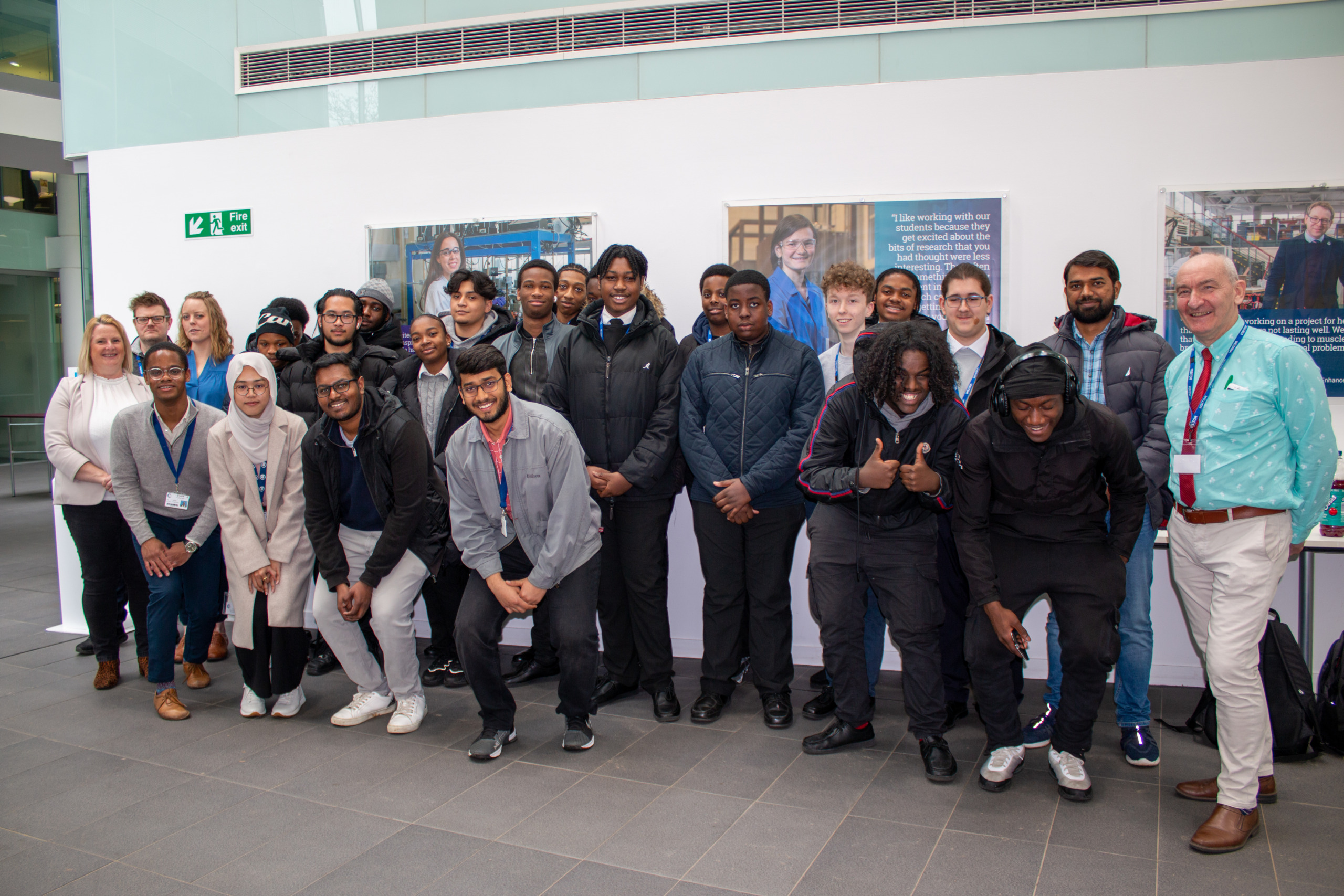
Geoffrey Neale, Lecturer in Multifunctional Composites shares his perspective on how public engagement can be both enjoyable and rewarding, offering a unique way to connect with others while developing valuable skills.
Finding my public engagement voice
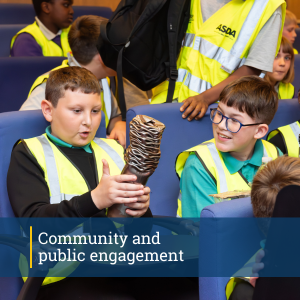
As part of my PhD programme, my cohort was encouraged by the funder (in this case the EU) to participate in STEM outreach events alongside some dissemination of the project outcomes. I remember going along to a STEM fair at a girl’s high school where I began the event feeling very much like an imposter.
People would come over thinking that a researcher meant researching cancer and there I was, about to bore them by talking about materials science, automobiles and airplanes instead! How I managed to convince these students that materials engineering was worthwhile is a distant memory, but by the end we had drummed up a real interest in all things engineering, and some of the students left in awe about what I was working on. This was when I realised that all they needed was interaction with a different perspective/path and someone to give that a personal touch. Since then, that’s always been the driving force that has pushed me to keep up my outreach activities.
Relevance rules
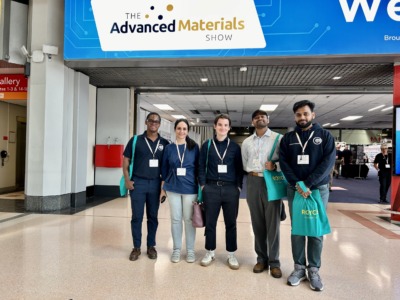
Outreach work has definitely helped to shape my own research and teaching insofar as setting the course a bit towards what I think people want to hear. This kind of engagement, whether it be related to policy or general STEM work, gives me a sense of what people outside of academia find interesting. For example, I’m a materials engineer who is pretty agnostic in terms of what sectors I apply my work to. I realised that my colleagues who work in astrophysics seem to secure significant research funding and wider public engagement based on “selling” the idea of wonder and awe at the galaxy and how it works. This is completely different from the way engineers typically contextualise our research, which is a lot more impact driven with respect to economic factors, sustainability, etc. This is all very great and useful, but it doesn’t often excite public audiences or even our own students. My sector focus on space, defence and energy has been very conscious choice as a result. This is a more awesome and inspiring story to tell in the application of my work. This story translates from my outreach work to research proposals, publications and into my teaching materials. I can’t go as far as saying that my outreach work has had masses of impact on the public, but it does give people a true sense of the possibilities of materials engineering and how we can shape our future as a species.
Learning the languages of engagement – glue with strings
In my engagement work I try to vary audience and formats – to reach as many people as possible in a setting that is familiar of comfortable to them, so that the message is better received. I’ve done presentations, panels, podcasts, videos, magazine articles…you name it! This benefits me as it enables me to hone my communication skills – the way you explain things to kids as opposed to the general public can be quite different.
But there is also something of a ‘public style’. A well-seasoned colleague once told me before I went for a fellowship interview – “speak as if explaining what you do to an 11-year-old and everyone will understand.” I’ve kept this in the back of my mind, and it’s served me very well ever since.
I try to break key points down into a sensible story that is illustrated by one very visual example that sets the context. If a non-technical audience asks me what composites are, I often say “glue with strings in it” and I work my way up from there to build the audiences’ knowledge.
I think the key here is to find something that the audience can really hold on to in their mind and of course pictures (if you have them available) help a lot. This has indeed changed the way that I communicate my research to a technical audience as well. A lot of the time, I sense that general audiences are a lot more interested in the story than its culmination. So, I’ve since added this flair for a story into all my research communications. This makes it a lot easier to stay on track and to set expectations in conferences or journal articles, which generally leads to a better perception of my work.
Be prepared to be unprepared
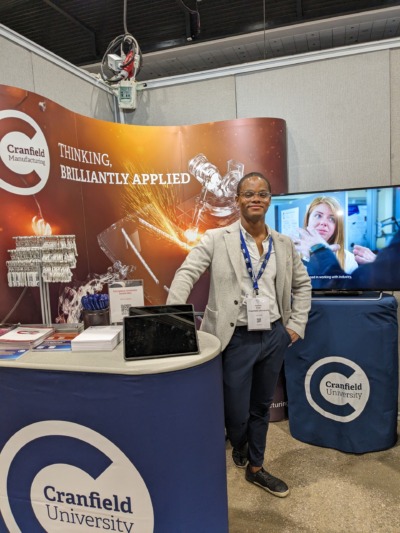
Last year, I gave a keynote talk at the Royal Society’s Summer Science Exhibition where I spoke for near an hour about materials for gaseous and liquid hydrogen storage and transport infrastructure. It was on trend, in the public interest and I thought I was well prepared. I remember a child, couldn’t be older than 10 years old, asked me a really specific question about solid-state hydrogen storage (which I know absolutely nothing about). I gave a (hopefully sensible) answer at the time – now immortalised on YouTube – but I remember thinking “how on earth does this child know this much about solid-state hydrogen storage and more importantly, why don’t I know?” The point here is that you really never know who’s going to be in the audience or to what extent they will have interest in what you’re talking about. But for him, this was clearly a burning question that he wanted to ask a scientist, and he was absolutely thrilled that I was able to engage with him in an open discussion in front of about 100 people in the room and many more on the live stream. The audience applauded him, he felt chuffed and hopefully he will join us as a researcher at Cranfield one day…who knows?
Collaborative power of public engagement
Public engagement can be a passion for some and a burden for others, but I think the key is to find some personal satisfaction in it. I’ve found this incredibly useful for self-promotion in a more inclusive way. This is especially prudent in a field (like mine) in which it can be hard to penetrate networks controlled by the “old guard.”
It’s a very tactical way to meet others who are likeminded with whom you can build professional relationships. The more your name gets out there, the more people come to you to learn more about what you do and why. Anyone who knows me has probably heard me affirm that “a rising tide lifts all ships,” and I truly believe this.
You can use public engagement to further your own career, develop critical communication skills and strengthen your network, whilst making a positive impact on securing the future talent pipeline. Everybody wins. Know your audience, tailor your message and have fun!


Categories & Tags:
Leave a comment on this post:
You might also like…
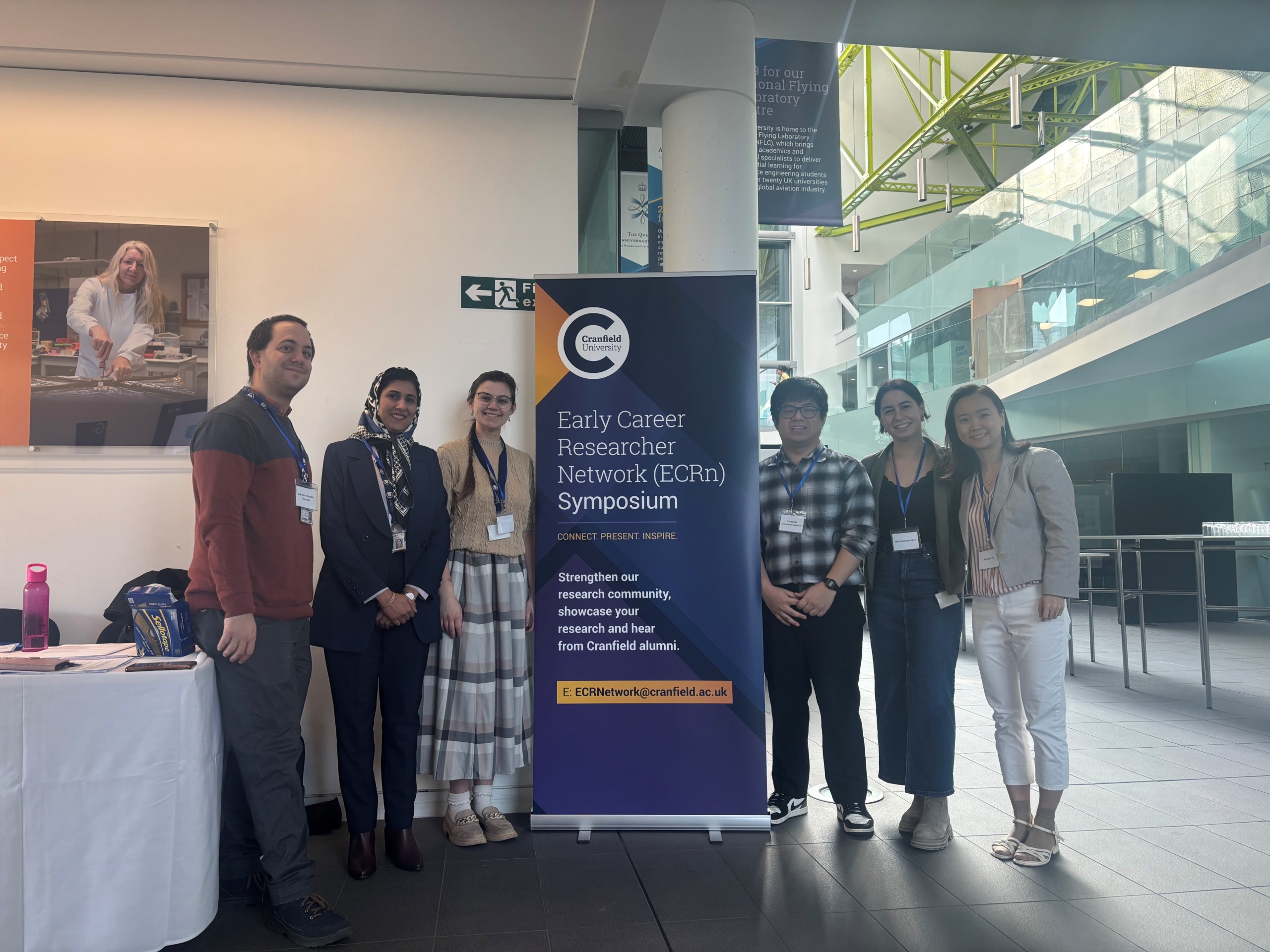
Building more than research: Reflections from the ECRn Symposium 2026
There’s something quietly powerful about a room full of early career researchers. Not just the ideas, although there were plenty of those—but the conversations, the curiosity, and the sense that everyone is figuring things ...

Library services over Easter, 3-6 April
Kings Norton Library will remain open for study 24/7. You will need your University ID card to enter the building and can use the self-service machines to borrow and return items as usual. Barrington Library ...

How do I access the full-text of Harvard Business Review (HBR)?
This is a frequently asked question, and it's worth knowing how to access this key management journal. So, how do you access HBR in full-text? The short answer is via our eJournals finder. You can find ...

Engineering problem to solve? Let Knovel help you find a solution
Did you know that Knovel provides you with more than just eBooks? Knovel is a key database for many engineering, mechanical and materials courses here at Cranfield University, and contains content from an extensive range ...
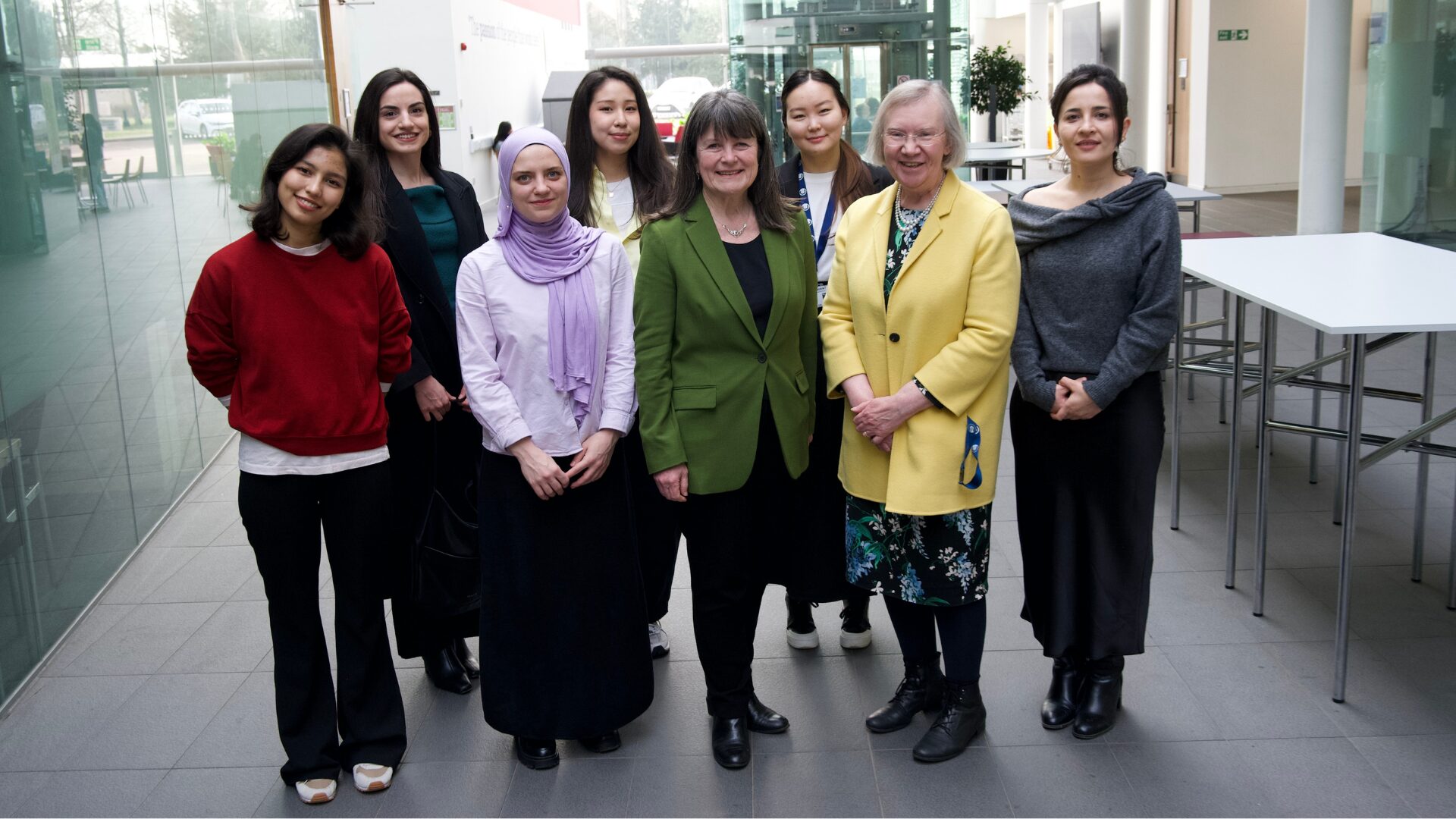
What happens when female scholars meet influential leaders?
On the 5 March 2026, our British Council Women in STEM Scholars had the privilege of sitting down with two excellent role models of industry and academia: Professor Dame Karen Holford, ...
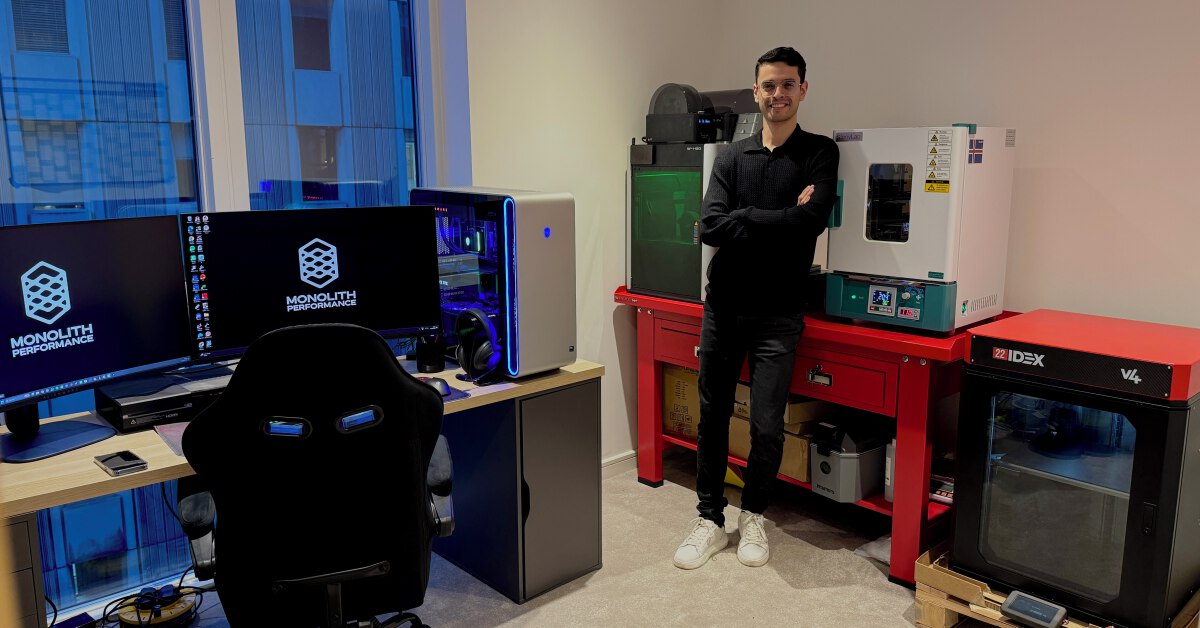
From MSc to CEO: Igniting a research revolution
For many, a master’s degree is achieving a big milestone. Kilyan Ocampo, Computational Fluid Dynamics alumni shares how studying at Cranfield helped launch his career in the energy sector. Today, Kilyan ...
Comments are closed.