


Studying MSc Management: A Journey of Personal Growth and Professional Development for an International Student
09/05/2023
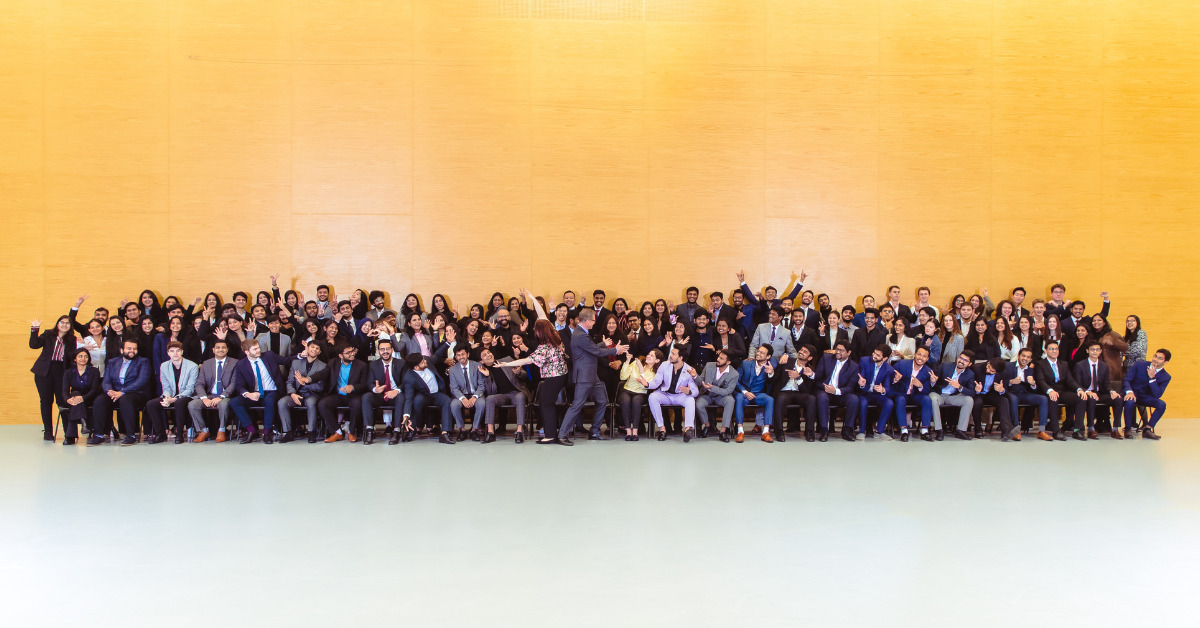
As an international student with a background in English and literature, I’ve always been interested in the power of words to alter our perspective of the world. My studies in these topics have given me the opportunity to delve into the complexities of human cognition and experience them through the written word. However, as I neared the end of my undergraduate degree, I began to crave a fresh challenge that would push me outside of my comfort zone and help me acquire new abilities. That’s when I learned about the MSc in Management programme at Cranfield University. I was captivated by the notion of bringing my critical thinking and analytical talents to the world of business and management, so I decided to take the plunge and explore this new path. In this blog post, I’ll discuss my own journey from a humanities background to studying business and management at a top UK university, as well as the obstacles and joys that have come with it.
Organisational behaviour has been my favourite subject so far in my Master’s in Business and Management programme. The class has been engaging and has introduced me to many theoretical frameworks, such as the MBTI, Belbin roles, and Maslow’s Hierarchy of Needs, among others. I still remember the first session with Dr Deirdre Anderson, where I was intrigued by her perspective that we’re all here to fulfil each other’s shortcomings and that nobody needs fixing. It is a matter of how we see ourselves and work with colleagues effortlessly. Apart from organisational behaviour, there are many other interesting subjects in the programme, such as economics for managers, management consulting, leading corporate sustainability, and more. I am also excited to take elective modules, such as mastering project management and supply chain management. The programme also includes modules that take place in Spain, with one month in Granada and Valencia. I’m particularly looking forward to the Evidence-based Management and Effective Course Cultural Management modules, which I believe will expand my knowledge and understanding of different cultural perspectives and approaches to management.
At Cranfield University, we pride ourselves on our commitment to diversity and inclusivity. Our student body is made up of individuals from a wide range of backgrounds and countries, including STEM, pharmacy, and literature. This diversity not only creates a dynamic and enriching learning environment but also prepares us to be more effective global citizens with a better understanding and appreciation of different cultures and perspectives. Our professors at Cranfield are also a reflection of our diverse community, with expertise spanning fields such as organisational behaviour and applied psychology, sustainability, entrepreneurship, and changing the world of work. By embracing diverse perspectives and expertise, Cranfield is able to provide a comprehensive and holistic education that prepares us to tackle the complex challenges facing the world today.
In addition to a diverse and enriching learning environment, Cranfield University offers a range of support services to ensure that every student has the opportunity to excel in their academic pursuits. From the Career and Employability Team to Student Academic Support and the Library Team, I have always felt supported since my first day at Cranfield School of Management. These teams work tirelessly to ensure that language barriers, learning difficulties, and teamwork are addressed and resolved for students so that we can focus on our studies and personal growth. With access to unlimited scholarly articles and educational aids, the academic experience has been brought to the next level. At Cranfield, it’s not just about acquiring knowledge; it’s also about developing the skills and confidence to apply that knowledge in real-world settings, and support services are an essential component of that mission.
 Aside from the academic sphere, we have so many fun activities, from bowling night to prestige case competitions such as the Hultz prize, Unilever challenges, and Infosys challenges.
Last but not least, the MSc Management programme at Cranfield offers a unique opportunity for students to explore UK-based internship experiences and prepare for the industry. The internship experience provides a chance to apply the knowledge and skills we have learned in a practical setting and to develop relationships with potential employers. Most importantly, we have the flexibility to choose whether to do a thesis-based internship or follow the traditional thesis route, depending on our own passions and areas of expertise. Each member of my learning team has a unique background: from an IT, military services, and finance professional to a UN ambassador.
At Cranfield, we are not just studying for a degree but preparing ourselves for a successful and fulfilling career. The combination of diverse perspectives, supportive resources, and practical experiences has made my time at Cranfield University genuinely unforgettable, and I would highly recommend it to any student looking for a challenging and rewarding academic experience.


Categories & Tags:
Leave a comment on this post:
You might also like…
Building more than research: Reflections from the ECRn Symposium 2026
There’s something quietly powerful about a room full of early career researchers. Not just the ideas, although there were plenty of those—but the conversations, the curiosity, and the sense that everyone is figuring things ...

Library services over Easter, 3-6 April
Kings Norton Library will remain open for study 24/7. You will need your University ID card to enter the building and can use the self-service machines to borrow and return items as usual. Barrington Library ...

How do I access the full-text of Harvard Business Review (HBR)?
This is a frequently asked question, and it's worth knowing how to access this key management journal. So, how do you access HBR in full-text? The short answer is via our eJournals finder. You can find ...

Engineering problem to solve? Let Knovel help you find a solution
Did you know that Knovel provides you with more than just eBooks? Knovel is a key database for many engineering, mechanical and materials courses here at Cranfield University, and contains content from an extensive range ...
What happens when female scholars meet influential leaders?
On the 5 March 2026, our British Council Women in STEM Scholars had the privilege of sitting down with two excellent role models of industry and academia: Professor Dame Karen Holford, ...

From MSc to CEO: Igniting a research revolution
For many, a master’s degree is achieving a big milestone. Kilyan Ocampo, Computational Fluid Dynamics alumni shares how studying at Cranfield helped launch his career in the energy sector. Today, Kilyan ...
Comments are closed.