


Researching… Company ownership
23/08/2023

Company ownership can have a huge impact on company operations and decisions. A company’s owners are its shareholders – and in the marketplace we have companies of all shapes and sizes – from small (mostly privately-owned) companies with one or two owners through to giant publicly-listed corporations with tens of thousands of owners.
If you want to research a company’s shareholders, several of the Library resources will be of interest to you. For privately-owned companies in the UK and Ireland, use Fame. For publicly-listed companies worldwide, try Capital IQ or Bloomberg. Capital IQ also includes some private equity and venture capital data for privately-owned firms.
Capital IQ
Access Capital IQ’s shareholder information via the ‘Investors’ menu in the left-hand menu.
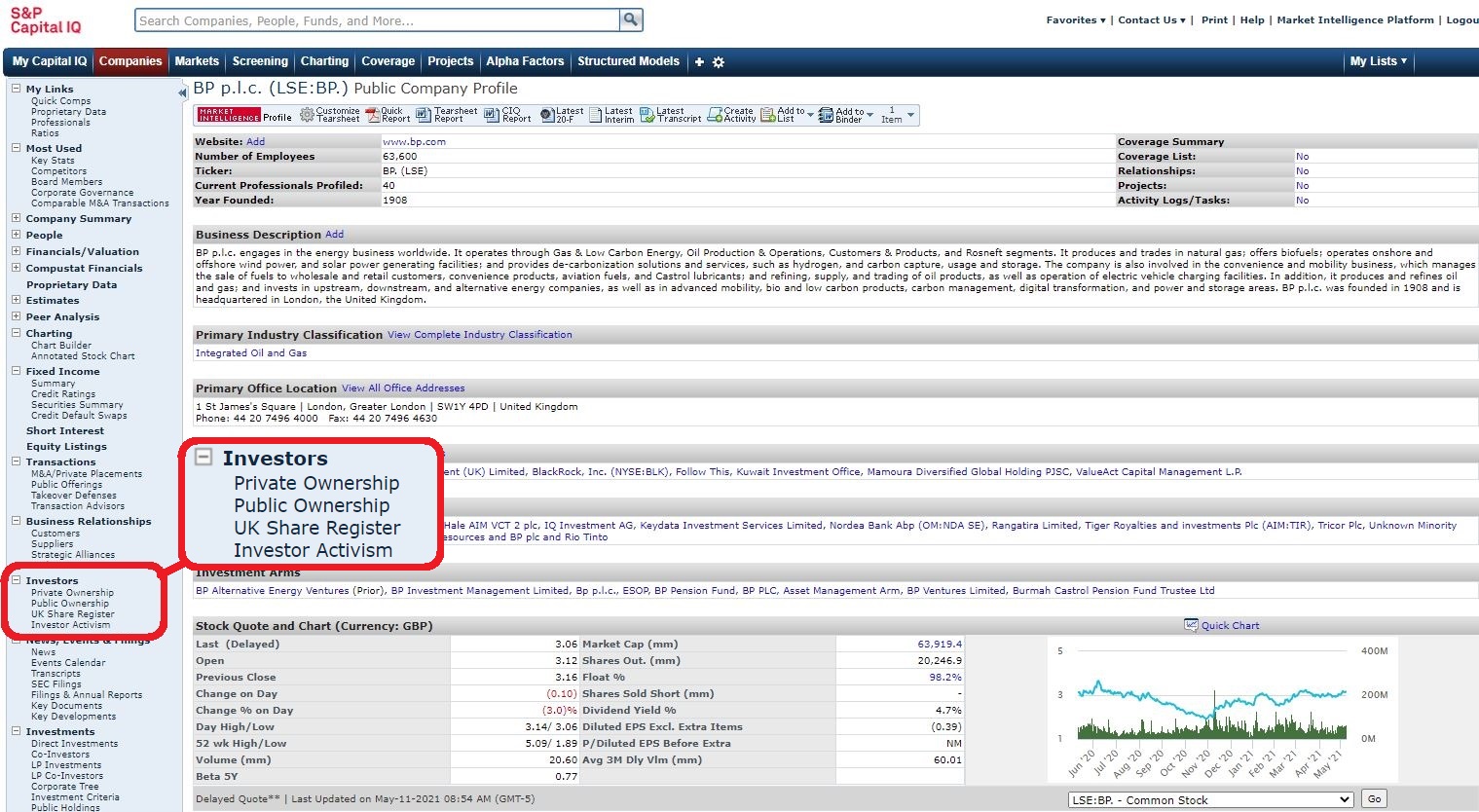
Private Ownership displays information on current or pending and prior private equity and venture capital investments. Because this is data on privately-negotiated equity investments in private companies, disclosure and therefore coverage is not always uniform.
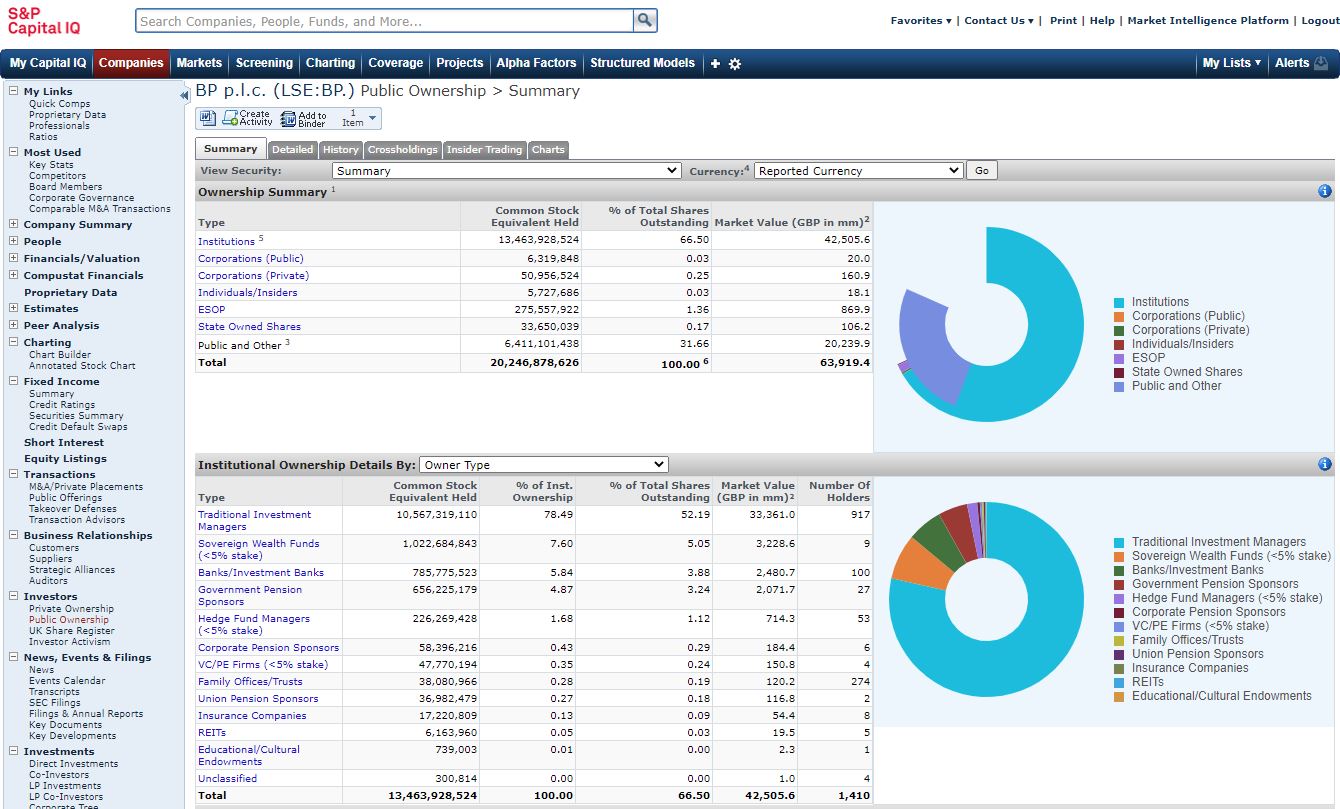
Public Ownership gives information about the institutions, companies, and other holders of publicly-listed companies and is sourced from public filings. Where filings are made public for private companies with public debt, this data is available too. Use the tabs to browse to different areas.
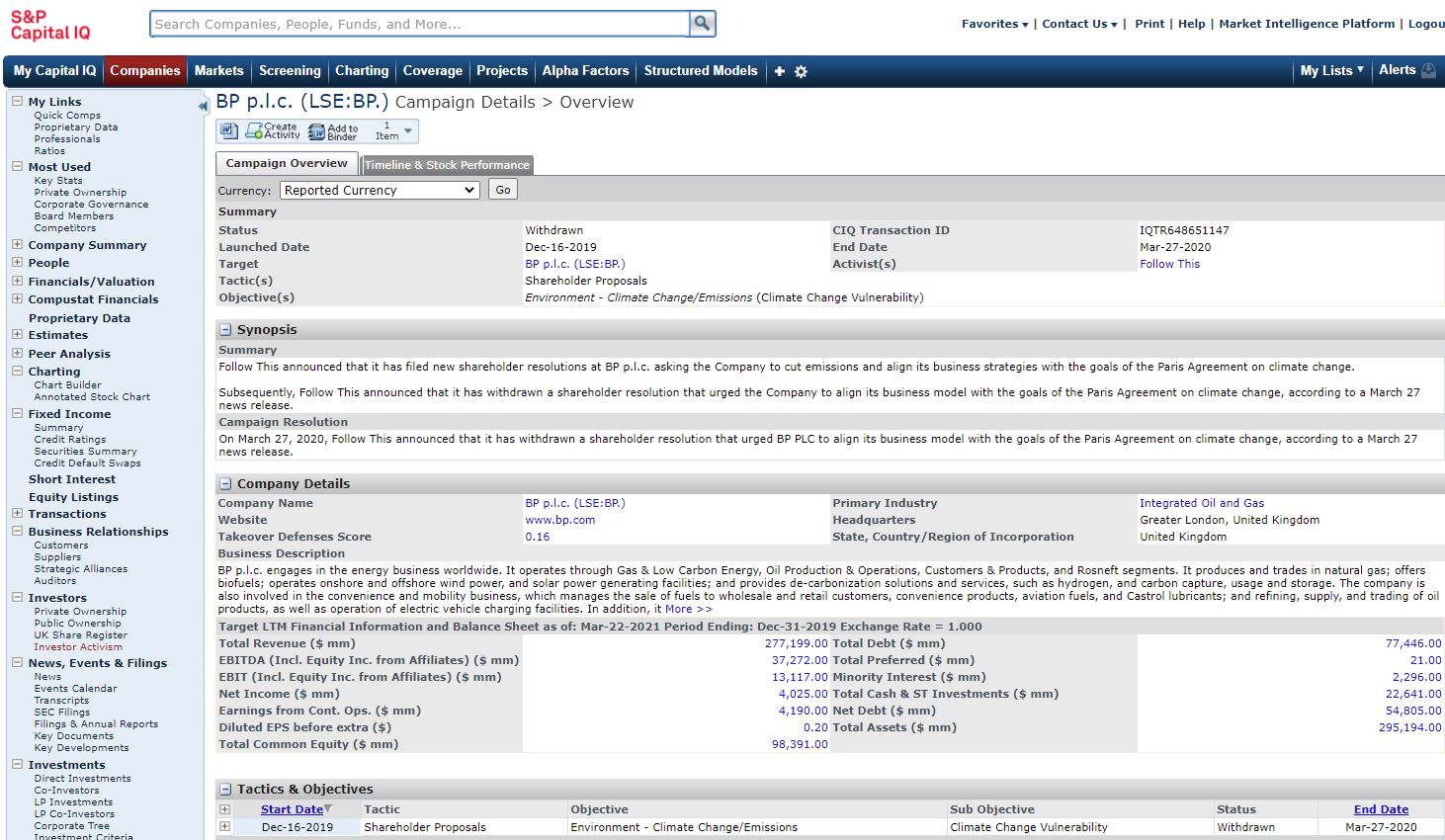
Investor Activism displays efforts recorded by shareholders to influence the company’s operations. Details and status are available for each campaign.
Bloomberg
Access the Ownership Summary for any publicly listed company from its Equities menu, or use Bloomberg code <OWN>. In this example we are looking at the company Alphabet, Inc.
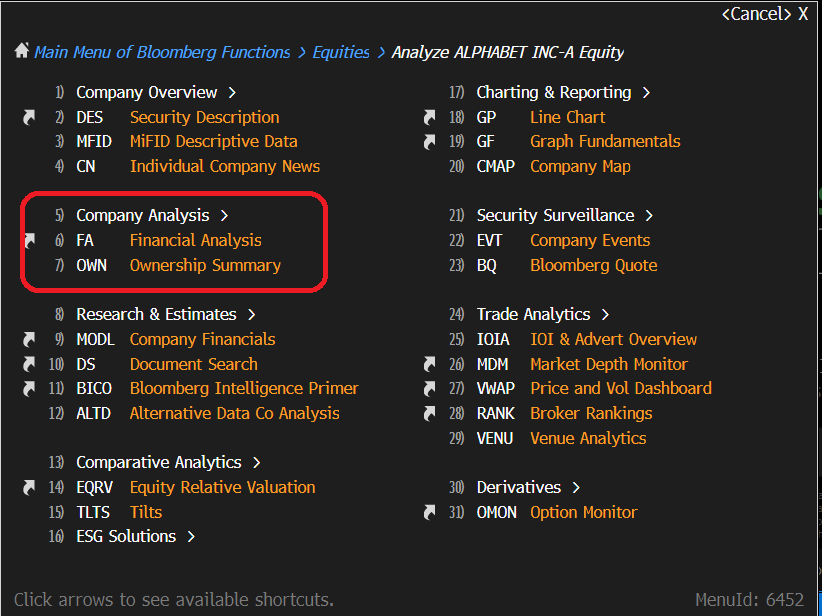
Accessing Ownership information within Bloomberg
On the Ownership Summary page, you will find top-level statistics allowing for analysis of institutional holders, insider transactions, geographic ownership and ownership type (investment, hedge fund, individual, government, etc.). Click on any of the white headings for a percentage breakdown of share ownership within that particular category.
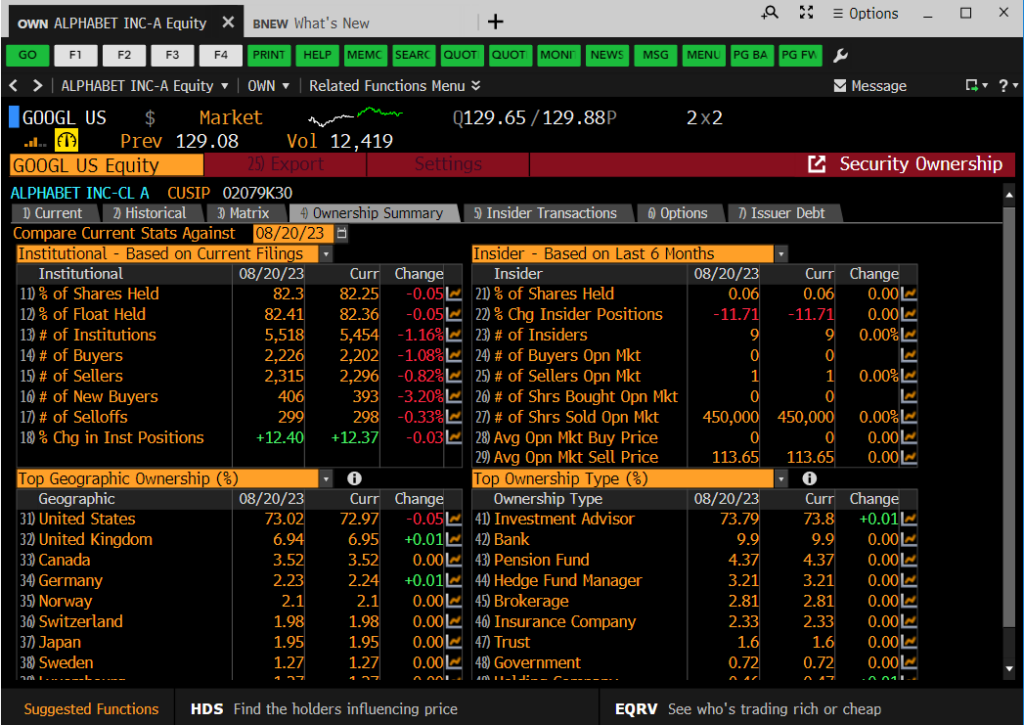
Bloomberg’s Ownership summary
We can see from the screenshot above that 72.97% of shares in Alphabet, Inc. were held by US-based holders and 6.95% by UK holders on the accessed date. We can compare these figures against another date by entering it in the orange ‘Compare Current Stats Against’ date box at the top of the page.
If we were interested in insider transactions, the tab of the same name will display a graph of such transactions and list the largest of these. To switch to data view, click on ‘Table’ at the top right of the graph.
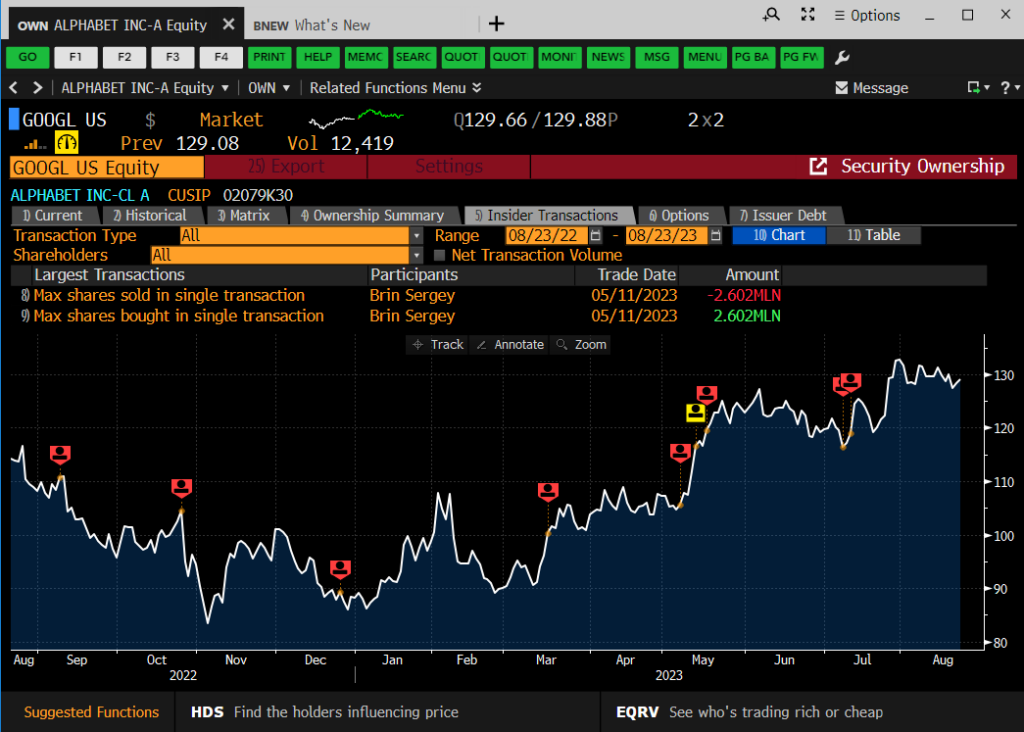
Insider Transactions in Bloomberg
To view current shareholders, select the ‘Current’ tab which will list holders according to how many shares they own. Institutional holder names can be expanded into individual fund families and funds. This page will also allow you to search for individual holders.
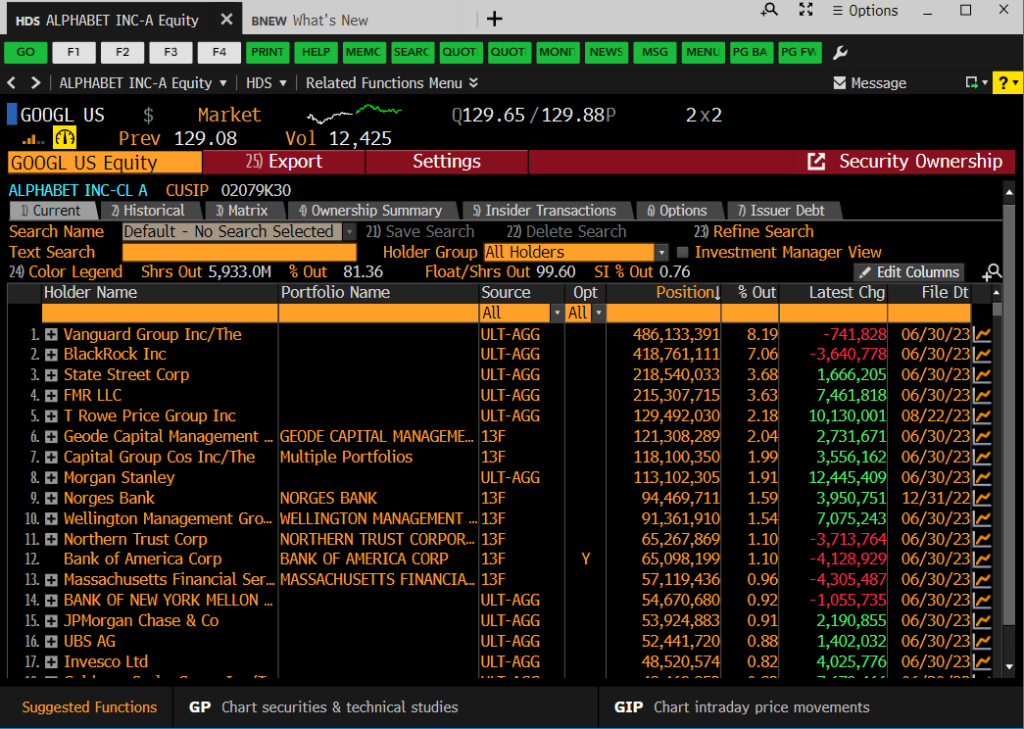
Searching for shareholders in Bloomberg
To export data to Excel, first ensure that you have installed the Bloomberg Excel Add-in (instructions available here) then click on ‘Export’ on the red menu bar.
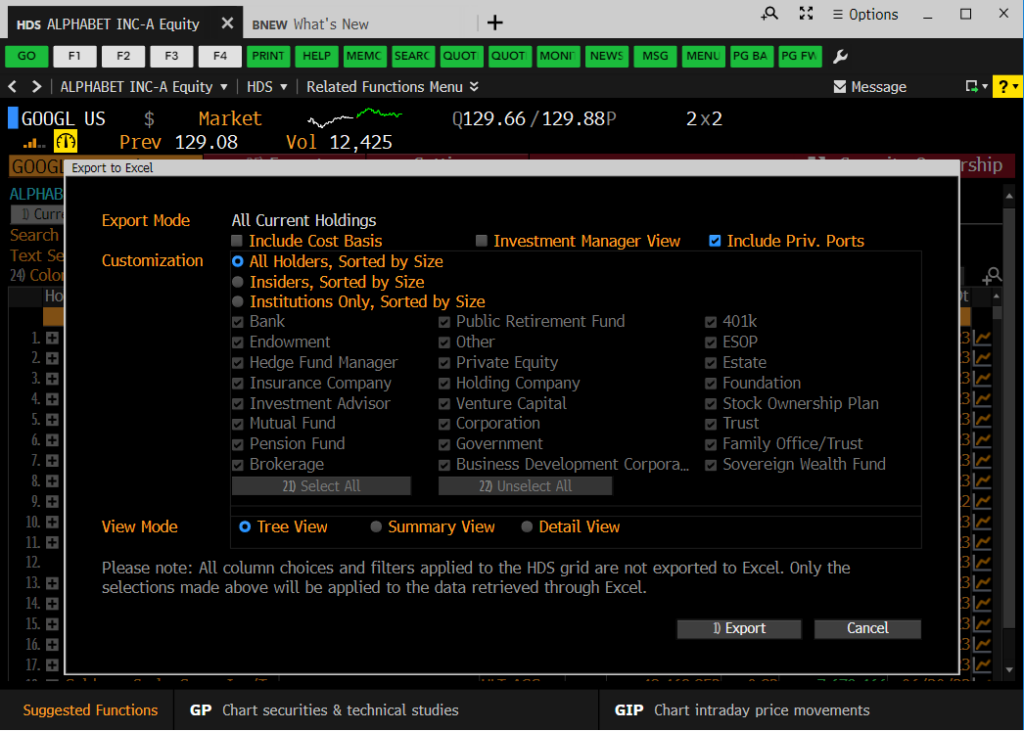
Export options
Select the criteria required and click on ‘Export’ at the bottom.
Fame
For companies in the UK and the Republic of Ireland (private companies in particular), Fame is your best source. Search for your company in the top search box.
Within each company record you will find ownership information (both current and historical), information on corporate structure, including subsidiaries, the Global Ultimate Owner’s (GUO) details and the evolution of shareholders’ ownership.
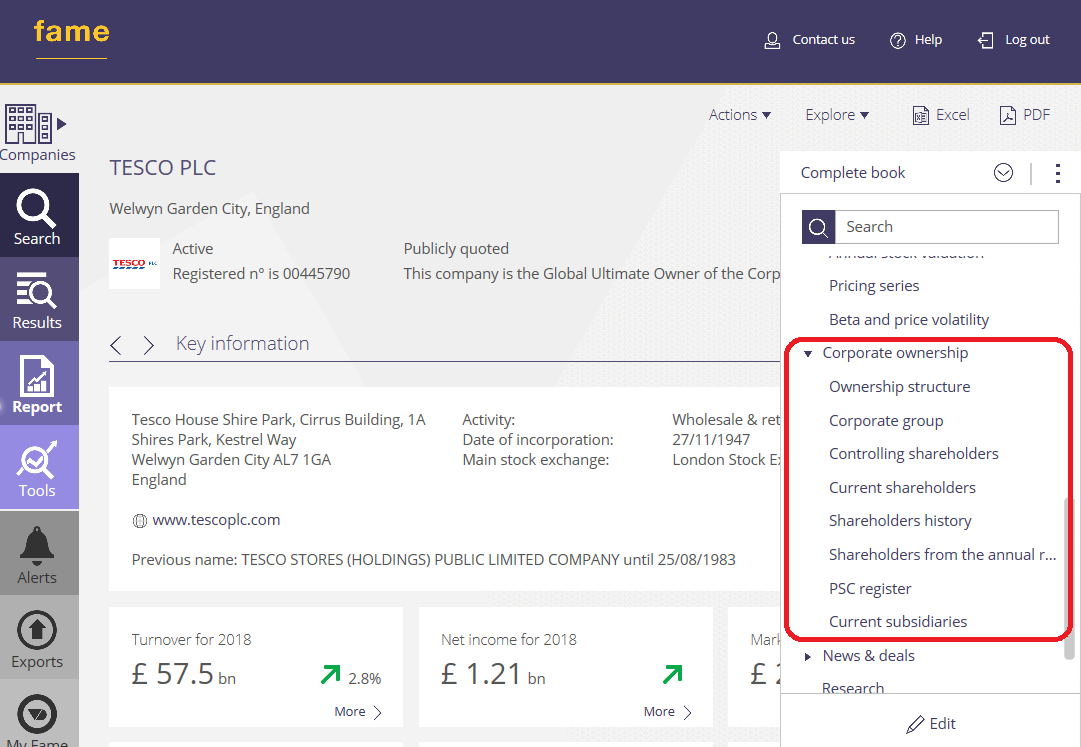
From the company’s cover page, use the table of contents on the left-hand menu. Click to open the Corporate Ownership section and select the area you require from the options. Lots of information is available.
The Current Shareholders page will display shareholders of all kinds in order of importance.
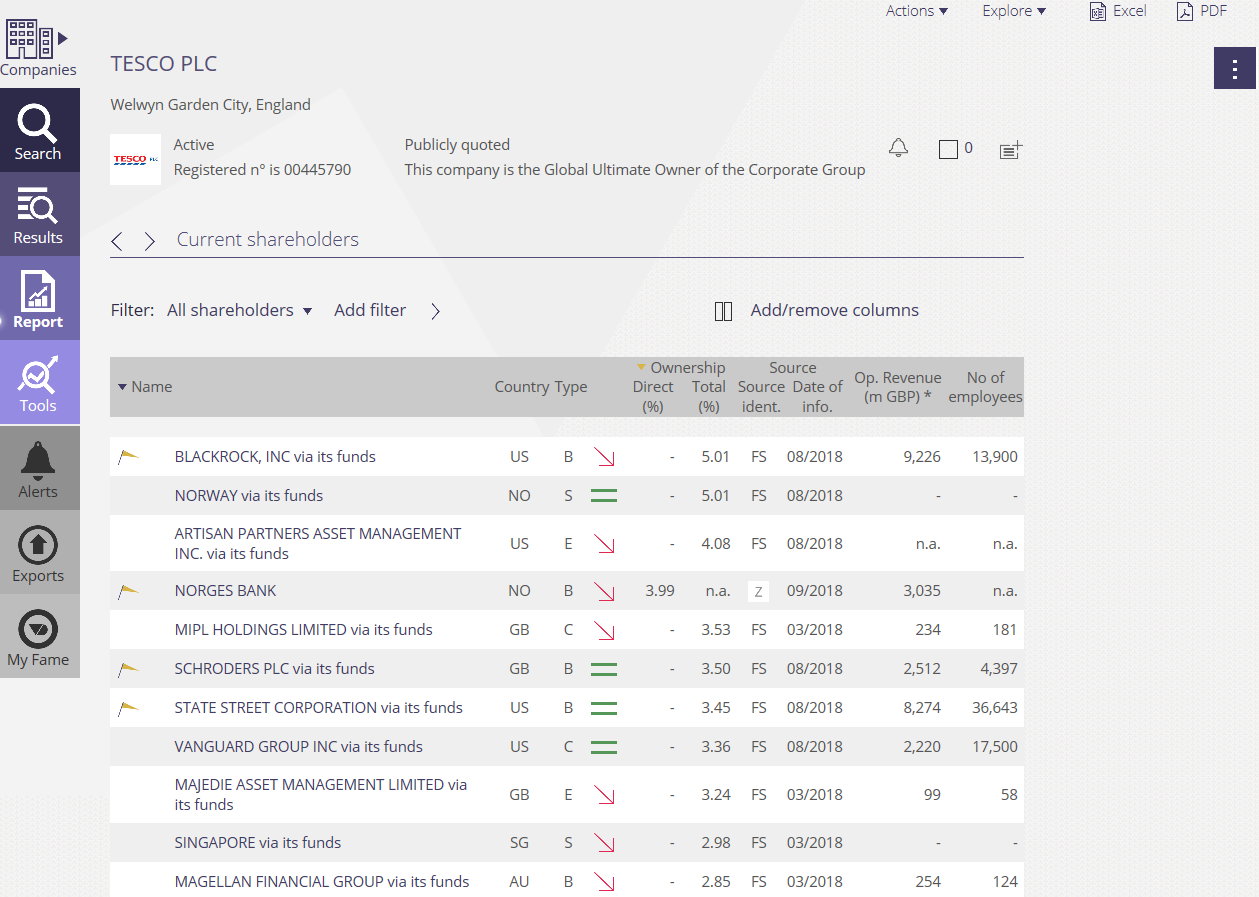
For those shareholders included in our Fame subscription, you can click through to their profiles.
If you have any further questions about where to find details of company ownership or any other financial data you require, please do not hesitate to contact the Library.
Feature image from Pixabay. Available at: https://pixabay.com/photos/skyline-skyscraper-skyscrapers-1925943/

Categories & Tags:
Leave a comment on this post:
You might also like…

Engineering problem to solve? Let Knovel help you find a solution
Did you know that Knovel provides you with more than just eBooks? Knovel is a key database for many engineering, mechanical and materials courses here at Cranfield University, and contains content from an extensive range ...

What happens when female scholars meet influential leaders?
On the 5 March 2026, our British Council Women in STEM Scholars had the privilege of sitting down with two excellent role models of industry and academia: Professor Dame Karen Holford, ...

From MSc to CEO: Igniting a research revolution
For many, a master’s degree is achieving a big milestone. Kilyan Ocampo, Computational Fluid Dynamics alumni shares how studying at Cranfield helped launch his career in the energy sector. Today, Kilyan ...

Commuting, collaborating and growing: My first term experience at Cranfield
My first term at Cranfield University has been an extremely positive and rewarding experience. While the course has been intense at times, it has pushed me in the best possible way and allowed me ...

Sourcing country analysis – a guide to Library sources
For those researching a country, you will find that country information tends to take two forms: Analysis - country reports are descriptive reports covering most areas of interest on a country. They contain an analysis ...

The degree that launched my marketing career
Insights from Tayo George, Strategic Marketing MSc Alumni I chose the Strategic Marketing MSc at Cranfield because I wanted a programme that combined academic rigour with practical, commercial relevance. The emphasis on applied learning, ...