

Want to improve your oral presentation or group discussion skills?
03/11/2025
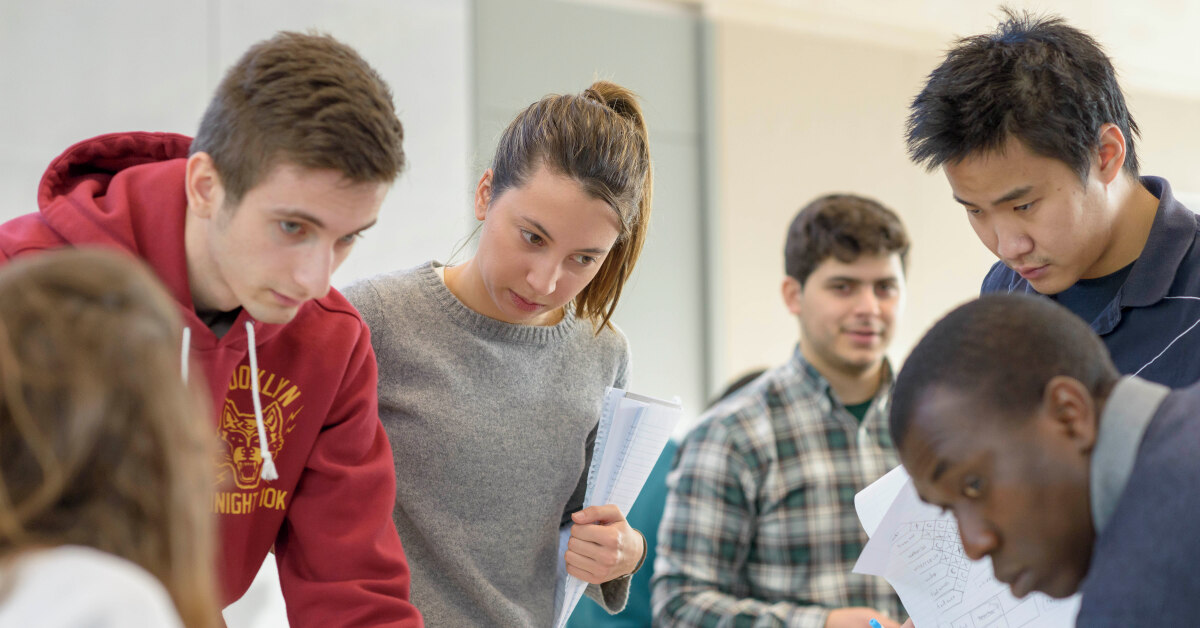
Did you know we offer support for students who would like to improve their written and spoken communication to a postgraduate level?
Our team of tutors are here to help you develop your academic skills to a postgraduate level. They can help you with a wide range of topics, including presentation and debating skills, how to critically engage with sources, how to read journal articles, and writing skills and more specifically, writing your thesis. Our sessions are suitable for everyone, whether you are a taught or research student, a first or second language speaker, and whether you want a skills refresher or a simple confidence boost.
A selection of our upcoming sessions
How to successfully communicate and work in groups
An online workshop to provide participants the opportunity to practice informal oral interactions and as a result increase their confidence when working with others and in group discussions. In this session we’ll start by discussing your experience of working in groups, then we’ll discuss two theories: Tuckman’s 5 stages of team development and Belbin’s team roles, and finally we’ll mention some examples of useful language to use when in working in groups.
Practising group discussion skills
An online workshop to provide participants the opportunity to practise informal oral interactions and as a result increase their confidence when working with others and in group discussions.
Oral presentation skills programme 1-8
This presentation skills course helps participants communicate their ideas with clarity, confidence and impact. Each session begins with an exploration of key concepts such as dealing with nerves, audience engagement and delivery techniques, followed by hands-on practice opportunities where participants apply what they have learned. Each participant then receives personalised performance feedback to support continuous improvement. By the end, you will not only understand what makes a presentation effective but also be able to deliver one that genuinely connects with your audience.
Browse our full range of upcoming workshops and book your place.
We run a range of online and in-person support options for free, including interactive small group workshops and 1-2-1 tutorial appointments. Visit the Academic language support page to find out more or email languagesupport@cranfield.ac.uk. There is also a collection of interactive learning resources available on our Study Skills Hub if you would prefer some self-paced online learning.

Categories & Tags:
Leave a comment on this post:
You might also like…

Keen to develop your study skills?
Alongside the technical skills and academic knowledge that you will gain on your course, as a Cranfield student you have the opportunity to develop a range of other skills that can enhance your learning experience. ...

The V-conomy: powering the sixth wave of global economic growth
The world could be on the verge of a major surge in economic growth and development, driven by the convergence of AI and clean energy technology. Waiting to ride the K-wave The Russian ...

Need help using the Python programming language?
We know some of our students are currently trying to learn Python, so we wanted to make you aware of some great LinkedIn Learning videos that can help. But don't you have to pay for ...

What does it really take to become a Chevening Scholar?
Say “Turkmenistan” to most people and you’ll get a blank look. That was true when I left Ashgabat for the UK to study an MSc in Logistics and Supply Chain Management at Cranfield University ...

Get a head start on referencing and plagiarism
We offer a module on Referencing And Avoiding Plagiarism which you can find on your Canvas dashboard. It explains the role and importance of citing references and how to incorporate the work of other authors ...
How Cranfield shaped my journey as an Aerospace Engineer
If I'm being specific about the moment it clicked, it was reading a paper called "On the Role and Challenges of Computational Fluid Dynamics (CFD) in the Aerospace Industry" by two Boeing engineers, P. ...
Comments are closed.