


Powering Health Tech Innovation: Cranfield’s Role in the HTCC Programme
15/08/2025
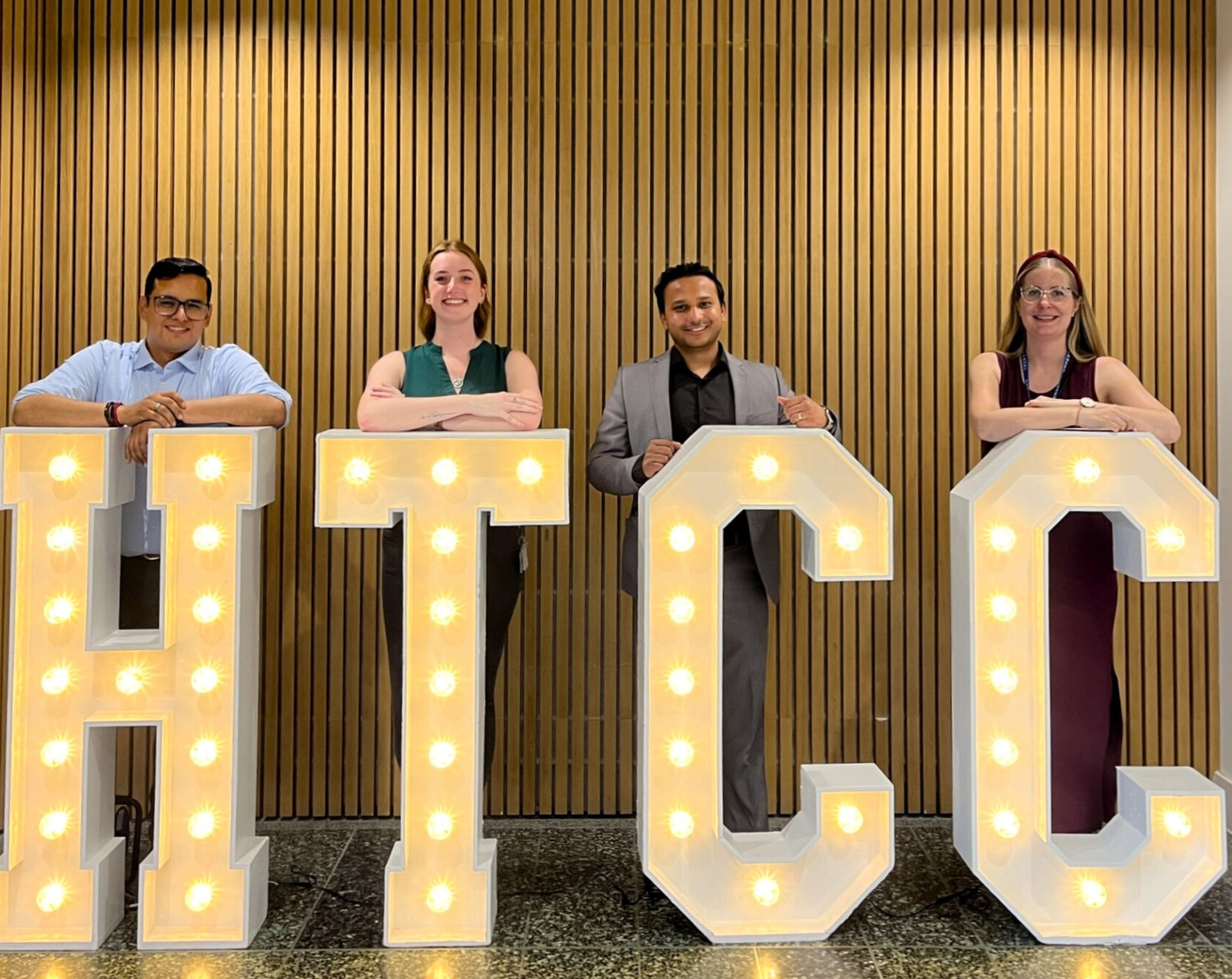
I joined the Healthcare Technologies Capability Connector (HTCC) programme team in March 2025 as a Project Facilitator, shortly after completing my PhD at Cranfield. Stepping into a fast-paced project already a year into delivery was challenging, especially one that spanned such diverse sectors, partners, and early-stage innovations. My first priority was to quickly understand each project’s trajectory, reconnect with stakeholders, and support delivery in a way that added value.
Coming from an academic background but with previous business experience, I found it fascinating to observe how early-stage health tech companies were navigating the complexities of R&D, technology readiness, and market positioning – often while juggling multiple roles. Many SME founders were simultaneously building prototypes, seeking funding, running trials, and managing small teams. Their drive was inspiring, and it was rewarding to contribute by helping bridge the gap between academic research and entrepreneurial execution.
The programme aimed to solve these scaling challenges, ensuring companies had the expertise and connections to move forward without feeling isolated. The HTCC linked together innovation clusters across London, Hertfordshire and Bedfordshire to unlock the potential of these early-stage health tech companies.
We were fortunate that the project was backed by nearly £1.5million from Research England’s Connecting Capability Fund, but the HTCC was much more than a funding programme: it was a testbed for how academic institutions can collaborate to strengthen the UK’s innovation landscape.
The HTCC blueprint
The HTCC was a joint effort that brought together Cranfield, Imperial College London and the University of Hertfordshire (lead) to support health tech innovation at scale. The programme focused on three strategic interventions which were proof of concept funding, SME acceleration and commercialisation training – all of which aimed to remove barriers to scale-up and translate academic research into real-world impact.
In total, HTCC supported 25 innovation projects, including 8 funded through the PoC stream. It did that by using a structure built around three workstreams:
- Proof of Concept (PoC) funding, which helped researchers translate early-stage ideas into commercially viable technologies.
- An SME acceleration programme that provided business and technical support to health tech companies with high growth potential
- The MarketReady Academy, a commercialisation training stream that delivered around 40hrs of workshops and mentoring to nearly 200 researchers.
Cranfield’s role in the HTCC
The Cranfield team had a breadth of expertise, including deep experience in applied R&D, systems thinking and manufacturing scale-up – vital for helping to position early-stage innovations for commercial and clinical adoption.
Seven Cranfield-based projects received hands-on support through product testing, prototyping, user-focussed design processes, mentoring and commercial guidance, as well as having opportunities to engage with funders and wider networks. The University also played an active role in planning and delivering showcase events and workshops that brought together researchers, entrepreneurs and stakeholders from across the partnership.
One of the parts of this project I found most illuminating was working alongside academic researchers who were contributing to SME-led projects, and being able to observe as they applied their expertise to solve real-world technical challenges. That same spirit of translation was evident in our PoC project, where the research team not only progressed their diagnostic technology but also began exploring commercial possibilities they hadn’t previously considered. Seeing that shift from research idea to potential application, reinforced the value of initiatives like HTCC in making innovation truly impactful.
With the SMEs, Cranfield offered over 120 hours of one-to-one commercial mentoring to help them understand regulatory and marketing expectations, refine business models and prepare for future investment. As a result, several companies secured additional grant funding, created advanced prototypes or initiated relationships that will continue long into the future.
Spirit of collaboration
Collaboration was at the heart of HTCC. While researchers and SMEs were often balancing multiple priorities, I found that flexibility and commitment from all sides made it possible to work around those challenges. Being part of those interactions, sometimes helping to interpret feedback between technical and commercial teams, gave me a clearer understanding of what meaningful translational support looks like in practice.
Further reinforcing that collaborative theme, one of the programme’s highlights was the HTCC Showcase held at Imperial College London on 12 June 2025. Project teams exhibited, shared their journeys, challenges and breakthroughs and the event really captured the spirit of HTCC. On the agenda we had a thought-provoking panel discussing healthcare innovation, inspiring pitches from six stand-out ventures and an engaging Q&A session exploring real-world barriers, such as regulatory complexity and gender equity in health tech.
At the showcase, one question posed by a senior academic to the presenting entrepreneurs stuck with me. It was: “How have you managed to achieve all this at such a young age?” A simple question, but it captured the spirit of the programme. The energy, drive, and creativity in the room were tangible. It reflected something powerful about the HTCC cohort: they’re a generation of innovators taking bold steps, often under pressure, but if supported by the right ecosystem of collaborative institutions they can accelerate change.
Into the future
Looking back, I’m pleased to have played a small part in enabling the success of these innovators – whether by supporting their technical journey, helping align university resources, or simply making space for meaningful conversations. In an era where healthcare needs are rapidly evolving, enabling innovation at the intersection of science, engineering, and entrepreneurship is more critical than ever. HTCC has shown how strategic collaboration can help remove barriers and build momentum, and I believe that the continuation of such programmes would bring lasting benefit not just to the UK’s health sector, but to society more broadly.
Cranfield continues to welcome collaborations with innovators and businesses working at the forefront of emerging technologies. To explore partnership opportunities or learn more about our translational research services, please get in touch with our Research and Innovation Office.


Categories & Tags:
Leave a comment on this post:
You might also like…

Sourcing country analysis – a guide to Library sources
For those researching a country, you will find that country information tends to take two forms: Analysis - country reports are descriptive reports covering most areas of interest on a country. They contain an analysis ...

The degree that launched my marketing career
Insights from Tayo George, Strategic Marketing MSc Alumni I chose the Strategic Marketing MSc at Cranfield because I wanted a programme that combined academic rigour with practical, commercial relevance. The emphasis on applied learning, ...

From national service to Environmental Engineering: My journey to Cranfield
Postgraduate study is often a defining step in shaping one’s academic and professional direction. For me, pursuing an MSc in Environmental Engineering at Cranfield University has been both a personal and professional adventure—one that ...

From limited experience to a UK marketing career
Top tips for postgraduate marketing students by Elnaz Dashchi, Strategic Marketing MSc alumni Coming into the postgraduate Strategic Marketing MSc, I did not have a lot of professional experience - and that made me ...

My journey to Cranfield as an FIA Motorsport Engineering Scholar
"You don’t need to fit a stereotype to succeed in engineering or motorsport. You need curiosity. Resilience. And the confidence to take up space." In this blog, Sanya Jain, current MSc student and FIA ...

‘Getting started with Bloomberg’ training – discover the power of Bloomberg terminals
Perhaps you've heard people talking about Bloomberg or heard it mentioned in the news and are wondering what all the fuss is about? Why not come along and find out at our Getting started with ...
Comments are closed.