

My journey to Cranfield as an FIA Motorsport Engineering Scholar
05/03/2026
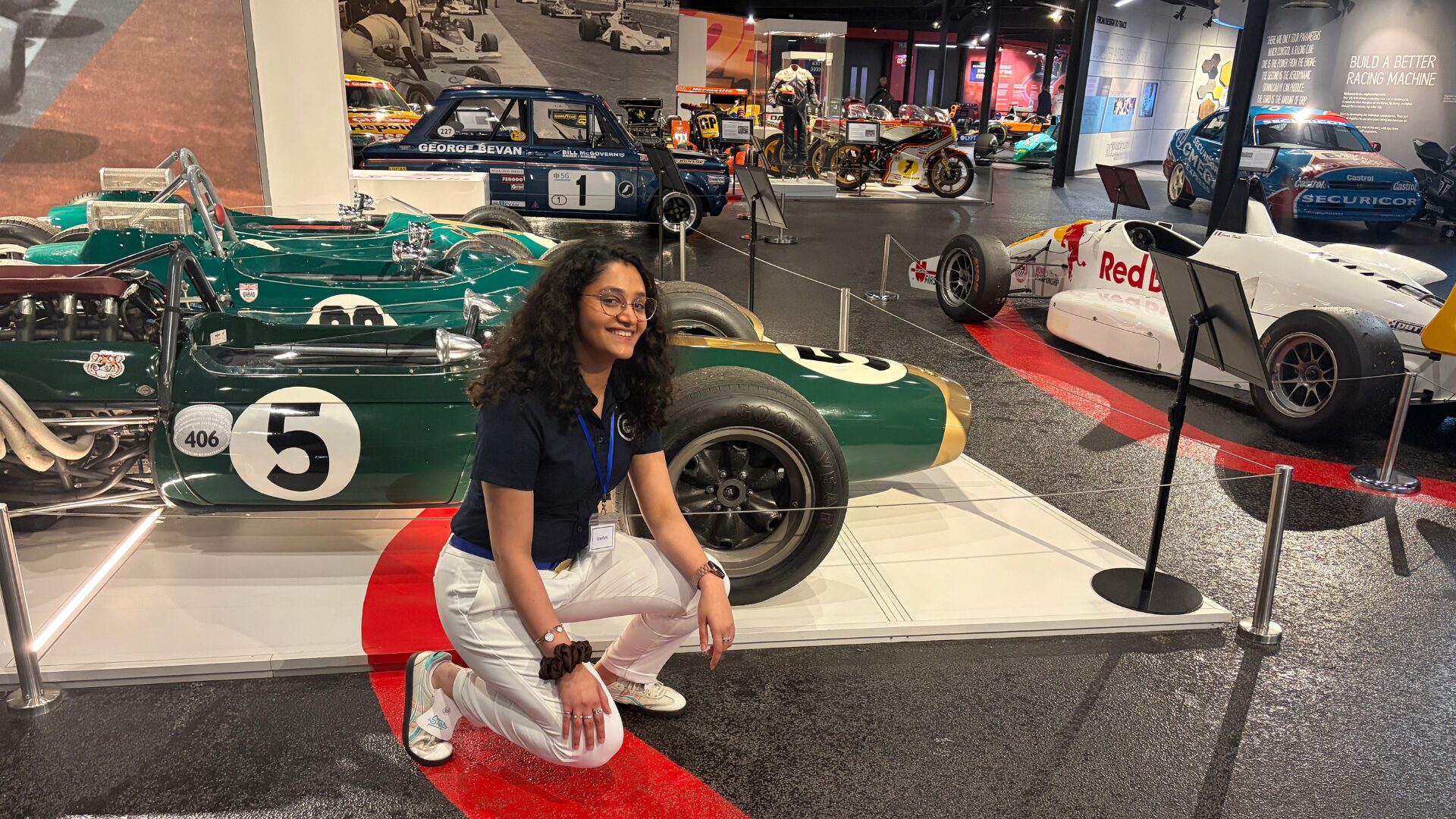
“You don’t need to fit a stereotype to succeed in engineering or motorsport. You need curiosity. Resilience. And the confidence to take up space.”
In this blog, Sanya Jain, current MSc student and FIA Motorsport Engineering Scholar reflects on the defining moments that led her to pursue an MSc in Advanced Motorsport Engineering, what it was like moving to the UK, launching her own motorsport platform, and navigating the industry as a woman and international student. Sanya shares the lessons, challenges, and advice she wish she’d known when starting out.
From Canada to Cranfield: My background in Motorsport
I’m originally from India and moved abroad at a young age to pursue my education. Growing up as an Indian woman aspiring to work in motorsport, I rarely saw people who looked like me in technical or performance engineering roles. That absence of representation shaped me more than I realised at the time.
It’s one of the reasons I feel so strongly about diversity and visibility in this industry. My journey isn’t just personal ambition, it’s also about widening access and challenging perceptions about who belongs in motorsport engineering.
I completed a Bachelor of Applied Science in Mechatronics Engineering at the University of Waterloo in Canada, where my motorsport engineering journey began. During my undergraduate degree, I specialised in multibody dynamics, computational fluid dynamics, and robotic systems, supported by co-op internships that immersed me in simulation, modelling, and performance engineering roles.
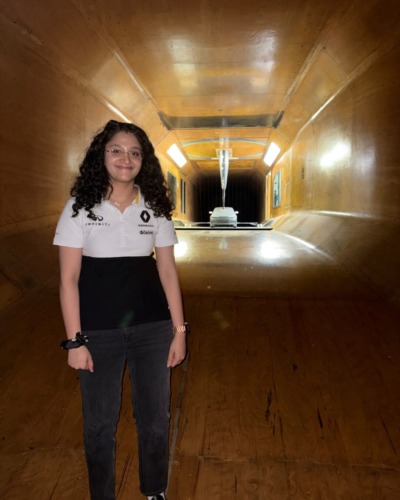 Those experiences gradually shaped my interest in high-performance vehicles and motorsport engineering. But the defining moment came when I realised how deeply engineering, strategy, data, and human performance intersect in motorsport.
I wasn’t just fascinated by how fast a car could go. I wanted to understand why it behaves the way it does, and how small engineering decisions can create massive performance gains. That curiosity, combined with my long-standing love for racing, pushed me to pursue a specialised MSc that would allow me to deepen my technical knowledge while staying closely connected to the motorsport industry.
I’m often asked what kind of background is needed to study motorsport engineering, but there’s no single path. Students come from mechanical, mechatronics, aerospace, electrical, and physics backgrounds. What matters most is a strong foundation in engineering fundamentals, strong problem-solving ability, and genuine passion for motorsport.
Why Cranfield and the FIA Motorsport Scholarship?
When researching postgraduate programmes, Cranfield University stood out immediately. Its strong industry integration, applied research focus, and reputation within motorsport made it a natural choice. Many of the lecturers come directly from industry. Projects are designed around real-world engineering challenges, and guest speakers frequently include engineers from Formula 1, endurance racing, and high-performance automotive sectors. Networking opportunities are one of the programme’s greatest strengths.
The Advanced Motorsport Mechatronics Engineering MSc is uniquely designed to bridge theory with real-world application, exactly what I was looking for.
The FIA Motorsport Engineering Scholarship was a life-changing opportunity. The application process was intense but incredibly rewarding. It is a competitive process, with applicants from all over the world. My advice to anyone applying for 2026/27, is that beyond academic excellence, the FIA looks for leadership, impact, advocacy for diversity, and a genuine commitment to the future of motorsport. Storytelling, clarity of purpose, and authenticity matter just as much as technical skills.
What helped me stand out was my clarity of motivation, strong technical foundations, leadership experience, and a demonstrated commitment to impact, particularly in diversity, inclusion, and outreach. Showing who you are beyond your grades truly matters.
Preparing my application challenged me to reflect on my journey, my motivations, and the impact I want to make. What resonated most with me was the FIA’s commitment to inclusivity, diversity, and accessibility in motorsport. Being selected as a scholar and student ambassador is a huge honour. I see it as both a privilege and a responsibility to open doors for others who may not traditionally see themselves represented in this space.
Moving to the UK
Relocating to the UK was both exciting and challenging. Starting fresh in a new country, academic system, and cultural environment pushes you well outside your comfort zone, but that’s also where the most growth happens.
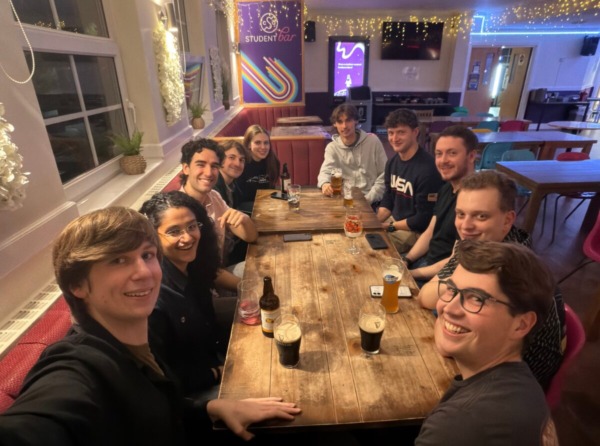 Cranfield’s tight-knit campus community made the transition far easier. Smaller class sizes, close interaction with lecturers, and a strong peer support system create a highly collaborative learning environment. It quickly began to feel like home.
What I’ve loved most is the hands-on nature of the programme. Working on applied motorsport engineering projects, integrating simulation, vehicle dynamics, aerodynamics, and real-world data has been a standout experience. There’s something incredibly rewarding about seeing classroom theory come alive through real engineering challenges.
Equally meaningful has been the community. Learning alongside students from around the world, each bringing different perspectives and ambitions, has truly enriched my experience.
Making motorsport more accessible: @wrenched_in
Alongside my MSc, I launched my own motorsport platform, @wrenched_in. It was born from a desire to make motorsport engineering feel more accessible, especially to students and young engineers who might not have traditional access routes into the industry.
When I was starting out, motorsport felt incredibly exciting, but also intimidating. There’s a lot of hidden knowledge, unspoken expectations, and uncertainty around career pathways.
Through @wrenched_in, I aim to break down complex engineering concepts, share behind-the-scenes insights, highlight career routes, and represent diverse voices in motorsport, particularly from regions and communities that are often underrepresented in global racing conversations. Motorsport is international by nature, and its talent pipeline should reflect that.
As a woman and an international student in this field, I’m passionate about showing that there is no single mould for success. If my journey helps even one person believe that they belong here, then it’s worth it.
That leads to another question I’m frequently asked:
Can international students realistically break into F1 or elite motorsport?
Yes, but it requires strategy, persistence, networking, and early preparation. Building relevant experience, developing technical depth, and actively engaging with the motorsport community are essential. Motorsport rewards those who are both technically excellent and relentlessly proactive.
Being a woman in motorsport – Celebrating International Women’s Day
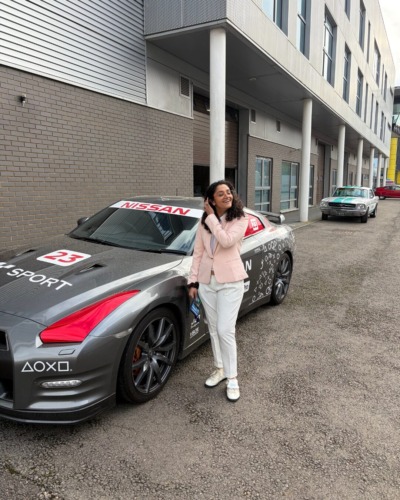 Being a woman in motorsport is both empowering and deeply motivating. While the industry is still male-dominated, I’ve seen real momentum toward change, inclusion, and representation.
For me, International Women’s Day is not just about celebration, it’s about visibility, advocacy, and responsibility. It’s about ensuring that young girls and women can see themselves in technical roles, leadership positions, and engineering spaces without hesitation.
As an Indian woman in motorsport, representation carries real weight for me. When I was younger, I didn’t see many women, let alone women of South Asian origin, in high-performance engineering roles. That’s part of why initiatives like Motorsport UK’s Race for Diversity and Dare to be Different resonate deeply with me. FIA’s Women in Motorsport Commission and FIA Girls on Track are great platforms for access.
Being associated with programmes that actively work to broaden participation in motorsport reinforces my belief that talent exists everywhere, opportunity does not always. If sharing my journey helps make this industry feel more accessible to young engineers from underrepresented backgrounds, then I’m proud to use my platform for that purpose.
You don’t need to fit a stereotype to succeed in engineering or motorsport. You need curiosity. Resilience. And the confidence to take up space.
The biggest lesson from my master’s journey
If there’s one lesson I’ll carry forward long after graduation, it’s the power of collaboration and curiosity.
Motorsport is the ultimate team sport. Engineering excellence only happens when people, disciplines, and ideas intersect seamlessly.
Cranfield has reinforced the importance of asking questions, staying humble, and always striving to learn. Those values will stay with me throughout my career.
Advice for future students
Be intentional. Choose a programme that aligns not only with your technical interests but also with your long-term vision. Don’t be afraid to apply for opportunities that seem out of reach: scholarships, research roles, or industry placements. You often grow into the opportunities you take.
Most importantly, stay curious and proactive. Cranfield offers incredible resources, networks, and exposure; the more you engage, the more you gain.

Categories & Tags:
Leave a comment on this post:
You might also like…

Engineering problem to solve? Let Knovel help you find a solution
Did you know that Knovel provides you with more than just eBooks? Knovel is a key database for many engineering, mechanical and materials courses here at Cranfield University, and contains content from an extensive range ...
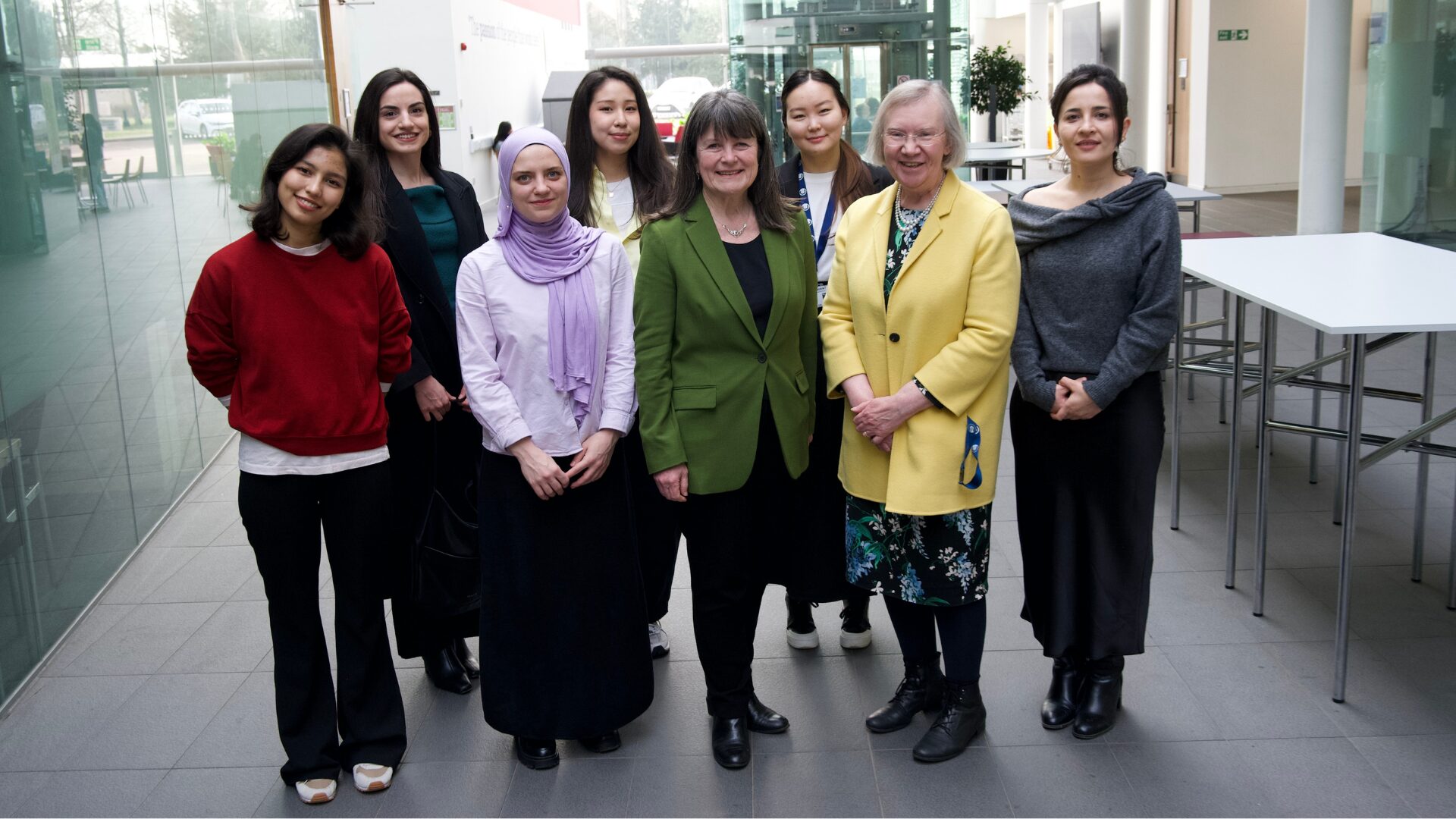
What happens when female scholars meet influential leaders?
On the 5 March 2026, our British Council Women in STEM Scholars had the privilege of sitting down with two excellent role models of industry and academia: Professor Dame Karen Holford, ...
From MSc to CEO: Igniting a research revolution
For many, a master’s degree is achieving a big milestone. Kilyan Ocampo, Computational Fluid Dynamics alumni shares how studying at Cranfield helped launch his career in the energy sector. Today, Kilyan ...
Commuting, collaborating and growing: My first term experience at Cranfield
My first term at Cranfield University has been an extremely positive and rewarding experience. While the course has been intense at times, it has pushed me in the best possible way and allowed me ...

Sourcing country analysis – a guide to Library sources
For those researching a country, you will find that country information tends to take two forms: Analysis - country reports are descriptive reports covering most areas of interest on a country. They contain an analysis ...

The degree that launched my marketing career
Insights from Tayo George, Strategic Marketing MSc Alumni I chose the Strategic Marketing MSc at Cranfield because I wanted a programme that combined academic rigour with practical, commercial relevance. The emphasis on applied learning, ...