

Submarine hunter by day, PhD student by night – an update: What I wish I’d known at the start…
21/04/2021
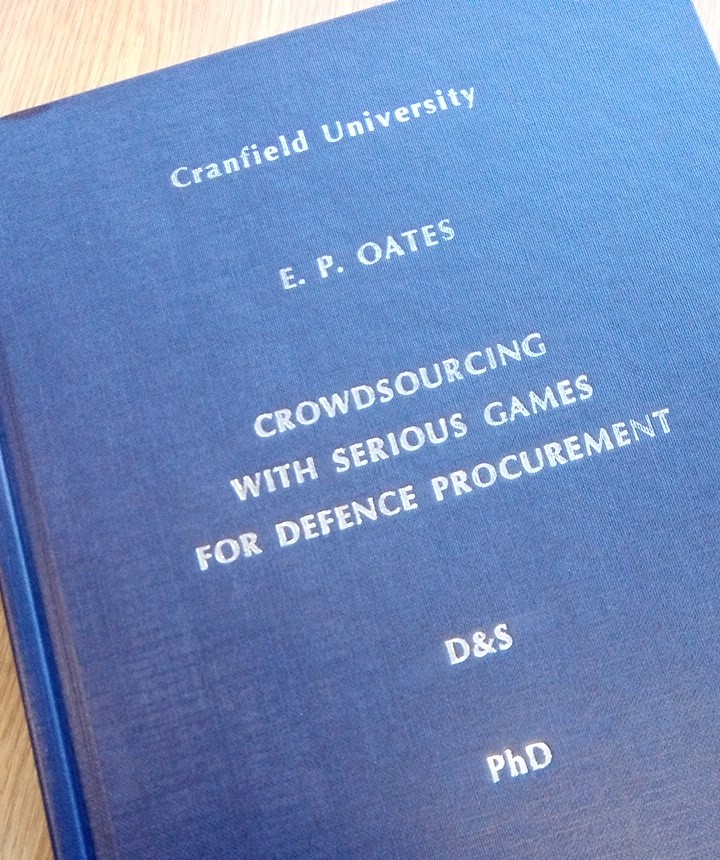
Lieutenant Commander Ed Oates wrote about his experiences while completing a PhD part-time at Cranfield Defence and Security in 2017. After recently successfully defending his thesis, Crowdsourcing with serious games for defence procurement, Dr Oates shares some reflective thoughts on the process, including his experience with funding:
Having completed a part-time PhD with Cranfield University, here are a few thoughts to inform those who follow on, or are thinking of following on. What I’ve experienced is, inevitably personal, but read a few of these experiences and pick out the bits that apply to you as well…
Towards the end of my studies which took a year and a half to plan, and six and a half years to implement, a book was published that covered a fair-sized chunk of what I was working on. I read the book and then went back to the Preface where the author stated: ‘… this is the book that I wish I’d had at the start of my career …’. I nearly fell off my chair – that was exactly what I was feeling!
For some, it might be a fear that as you work towards a final draft of your thesis, your work will be overshadowed by another student publishing on the same topic ahead of you. For a full-time thesis over three years this might be less of a worry, but research is moving at such a pace that you will almost certainly be working in parallel with someone else, somewhere in the world.
Don’t worry. If you’re working independently your work will always be unique and will withstand any other publication. You will have added to the store of academic knowledge on the subject and will be at least a comparator with anything else but more likely offer an alternative approach to the topic. For example, during the eight years I was working, a commercial version of my Serious Game started and then ran out of funds and was never completed, and another academic study took a different branch because they had greater funding. The end result was: do it this way if you’re short of funding or do it that way if you’re fully-funded, both options have value.
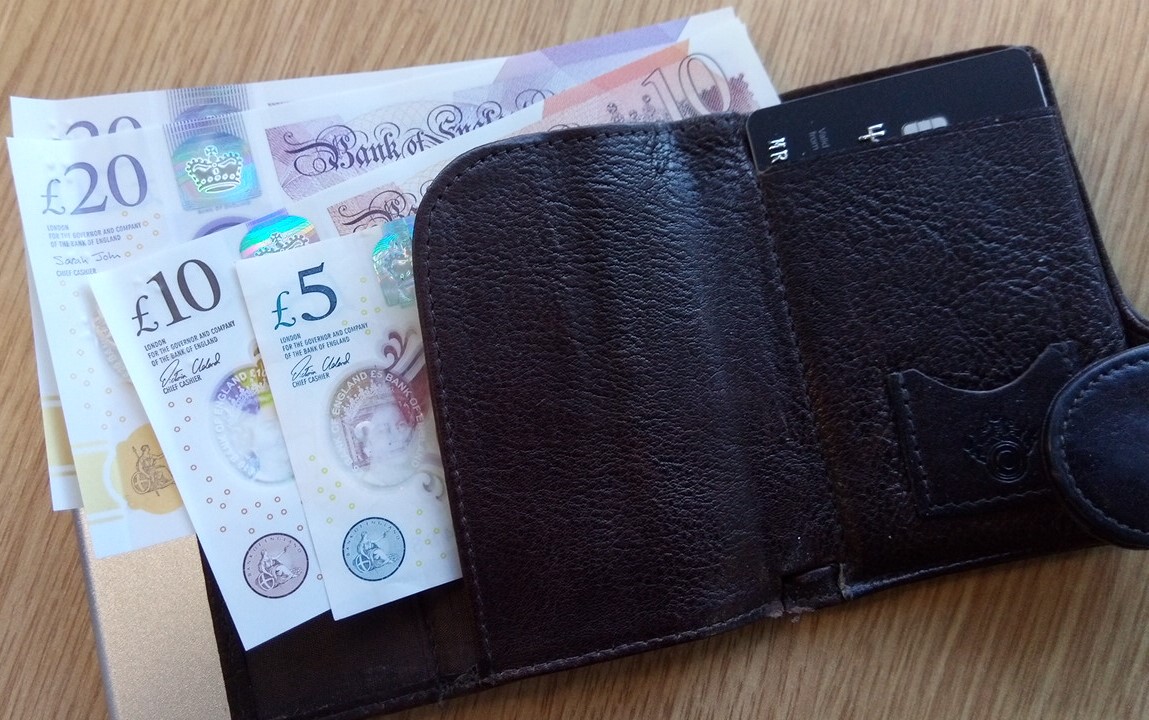
Having mentioned ‘funding’, I’d better address that aspect. If you can get funding from your employer then that’s great, but in my case, I thought I was going to be funded but then it came to nothing, so I started as a self-funded student. Then, three years into the study and with something to show for my work, I gained part-funding. You just don’t know how things are going to turn out. In my first week of the introductory programme, I was sitting next to an employer-funded student who wanted to know what arrangements were in place to cover their conference fees, and travel and subsistence costs. To me, that sounded so strange. I was fully invested in my thesis and so long as I could eat, I was prepared to invest in the pursuit of knowledge and personal development.
A PhD is a huge investment of time and money, and these are both finite resources but way more important than either of these is the personal will underpinned by a deep interest in the subject. Answer these questions to yourself: Is this subject your hobby, obsession, or deep abiding interest? Then ask yourself: Is there time in your lifestyle to give weekends, evenings, holidays and other odd-moments to this topic? Only after that, think about the funding because with a commitment to the subject and time to devote to it, you will bring others with you, including those who control the cash!

Categories & Tags:
Leave a comment on this post:
You might also like…

Keen to develop your study skills?
Alongside the technical skills and academic knowledge that you will gain on your course, as a Cranfield student you have the opportunity to develop a range of other skills that can enhance your learning experience. ...
The V-conomy: powering the sixth wave of global economic growth
The world could be on the verge of a major surge in economic growth and development, driven by the convergence of AI and clean energy technology. Waiting to ride the K-wave The Russian ...

Need help using the Python programming language?
We know some of our students are currently trying to learn Python, so we wanted to make you aware of some great LinkedIn Learning videos that can help. But don't you have to pay for ...
What does it really take to become a Chevening Scholar?
Say “Turkmenistan” to most people and you’ll get a blank look. That was true when I left Ashgabat for the UK to study an MSc in Logistics and Supply Chain Management at Cranfield University ...

Get a head start on referencing and plagiarism
We offer a module on Referencing And Avoiding Plagiarism which you can find on your Canvas dashboard. It explains the role and importance of citing references and how to incorporate the work of other authors ...

How Cranfield shaped my journey as an Aerospace Engineer
If I'm being specific about the moment it clicked, it was reading a paper called "On the Role and Challenges of Computational Fluid Dynamics (CFD) in the Aerospace Industry" by two Boeing engineers, P. ...