


From mechanics to the cosmos: Kicking off my Astronautics and Space Engineering MSc at Cranfield
05/11/2025
The first few weeks at Cranfield have been a whirlwind of new ideas, new faces, and the sheer excitement of finally tackling the universe’s most complex challenges. As I settle into the MSc in Astronautics and Space Engineering, I wanted to share my journey here, from my initial spark of inspiration to what makes Cranfield the perfect launchpad for my ambitions.
My passion for the universe wasn’t a discovery, it was always a part of me. Since childhood, shows like ‘Cosmos’, ‘Through the Wormhole’, and backyard science segments captivated my curiosity, making the cosmos the ultimate frontier.
My formal path began with a B.Tech. in Mechanical Engineering. While my professional time after graduation involved software development, sharpening my problem-solving and collaboration skills, my true north remained fixed on space exploration.
This period of pivot happened during the COVID-19 pandemic. As a fresh graduate planning to pursue higher education abroad, sudden lockdowns and travel restrictions left my plans in limbo. This intense time, which included fighting off the virus myself, forced me to develop resilience and adaptability in the face of global uncertainty.
By late 2021, I pivoted toward gaining industry experience at TCS, an experience that has only strengthened my technical foundation. This whole journey proved that no matter the chaos, my ultimate goal of space exploration remained constant.
Cranfield: A launchpad chosen for impact
When it came time to choose my MSc, I was fortunate to have multiple options, securing scholarships at several prestigious universities. Yet, I chose Cranfield (the only university where I didn’t get a scholarship).
My decision was driven purely by Cranfield’s reputation as a premier institution, renowned for its cutting-edge research, strong industry links, and state-of-the-art facilities. The MSc in Astronautics and Space Engineering perfectly aligns with my goals.
I was particularly drawn to core modules such as Space Systems Engineering, Space Propulsion, Orbital Mechanics, and Space Environment. The combination of its comprehensive curriculum and Cranfield’s unique emphasis on practical, hands-on learning ensures I am prepared not just to learn current technologies, but to drive future innovations in the space sector.
The opportunity to work on real-world projects and access advanced research facilities here was simply unmatched.
My mission is to fuse curiosity with compassion. I believe the tools we develop for space can be repurposed to protect our own fragile planet. I see space engineering not just as a journey outward, but as a lens to reflect on how we can use technology for sustainability and empathy here on Earth.
Adapting to the UK: Finding friendship and community
Moving to the UK, a global leader in space innovation, has been an exhilarating experience. The biggest adjustment has been shifting to the independent, research-driven focus of the Cranfield academic environment.
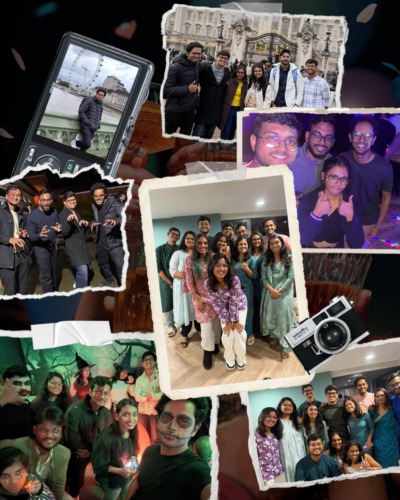
However, the transition was made surprisingly easy by the university itself. As someone who is naturally an introvert, I can’t believe how quickly I’ve made friends. Cranfield organised various networking events and parties for new students, and these simple gatherings created an instant, warm community.
The biggest help in settling in has been the supportive cohort of my peers. For instance, we recently celebrated Diwali with our Indian friends, which was a wonderful way to connect and make Cranfield feel like a home away from home. Living on campus has significantly enhanced my experience by joining these social events organised by the Cranfield Students’ Association (CSA), like the Halloween party and the London coach trip. These events have been crucial in building a close-knit community right outside our door.
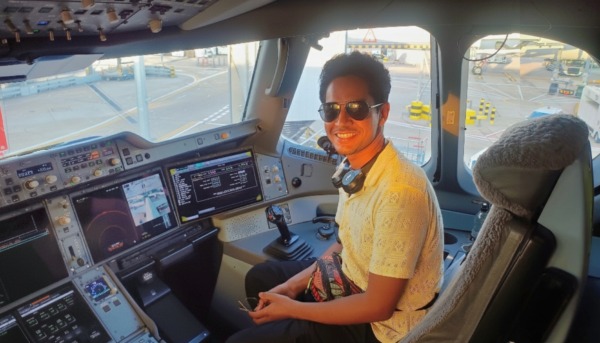
P.S. The journey from India to the UK was quite the adventure itself! As I was disembarking the flight after landing in London, I simply asked the friendly crew if it would be possible to have a brief tour of the cockpit, mentioning my excitement about starting my MSc in Astronautics and Space Engineering at Cranfield. The staff were incredibly kind, and the Captain invited me in for a quick chat! It was a genuinely inspiring moment to be on the flight deck and have the crew explain a couple of things about how the systems work. I managed to get the below picture before leaving the aircraft.
My course highlights so far
First term has been incredibly exciting! We’ve already delved into complex space propulsion, and the initial work on Space Systems Engineering is directly building on my mechanical background to deepen my understanding of designing and integrating complex space systems.
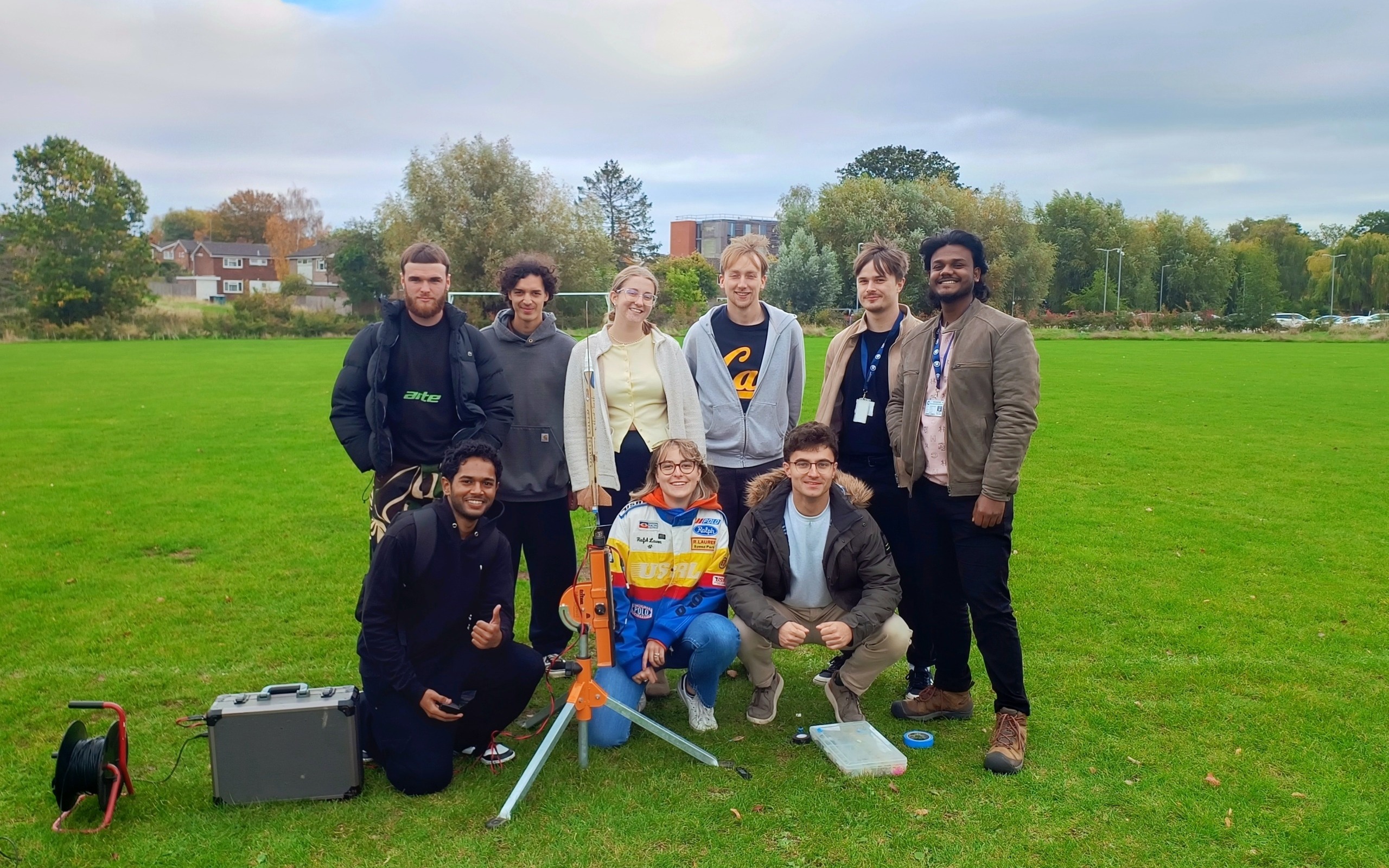
Also, my classmates and I formed a team to complete an icebreaker activity where we designed and launched a model rocket, and the experience of working together was incredibly rewarding. Collaborating with such talented individuals has been very academically enriching.
The upcoming modules like Orbital Mechanics and Space Environment are what I’m truly looking forward to, and I’ll soon be starting the group project. The topic we are focusing on is GEO-Swarm, which stands for a Geostationary Satellite Swarm. The core objective is to conduct a feasibility study and conceptual design of a geostationary satellite swarm operating as a distributed sparse-aperture phased-array antenna.
We are currently holding the initial project meetings and defining our scope. I have joined the missions team, where we will be focusing on the initial deliverables. This project addresses a fundamental trade-off in today’s leading architectures, where neither LEO (Low Earth Orbit) constellations nor GEO (Geostationary) systems alone can optimally meet the emerging multi-mission demands for flexibility, persistence, and control. I’m very much looking forward to applying the principles from our core modules to this challenging and highly relevant project.
My overall goal is to leverage the skills gained at Cranfield to work on innovative space exploration projects that ultimately serve life on Earth. The journey has just begun, and I’m confident the advanced skills and knowledge gained here will help me make significant contributions to the future of space technology.
“We are all connected; to each other, biologically. To the earth, chemically. To the rest of the universe, atomically.” — Neil deGrasse Tyson


Categories & Tags:
Leave a comment on this post:
You might also like…

How do I access the full-text of Harvard Business Review (HBR)?
This is a frequently asked question, and it's worth knowing how to access this key management journal. So, how do you access HBR in full-text? The short answer is via our eJournals finder. You can find ...
Engineering problem to solve? Let Knovel help you find a solution
Did you know that Knovel provides you with more than just eBooks? Knovel is a key database for many engineering, mechanical and materials courses here at Cranfield University, and contains content from an extensive range ...
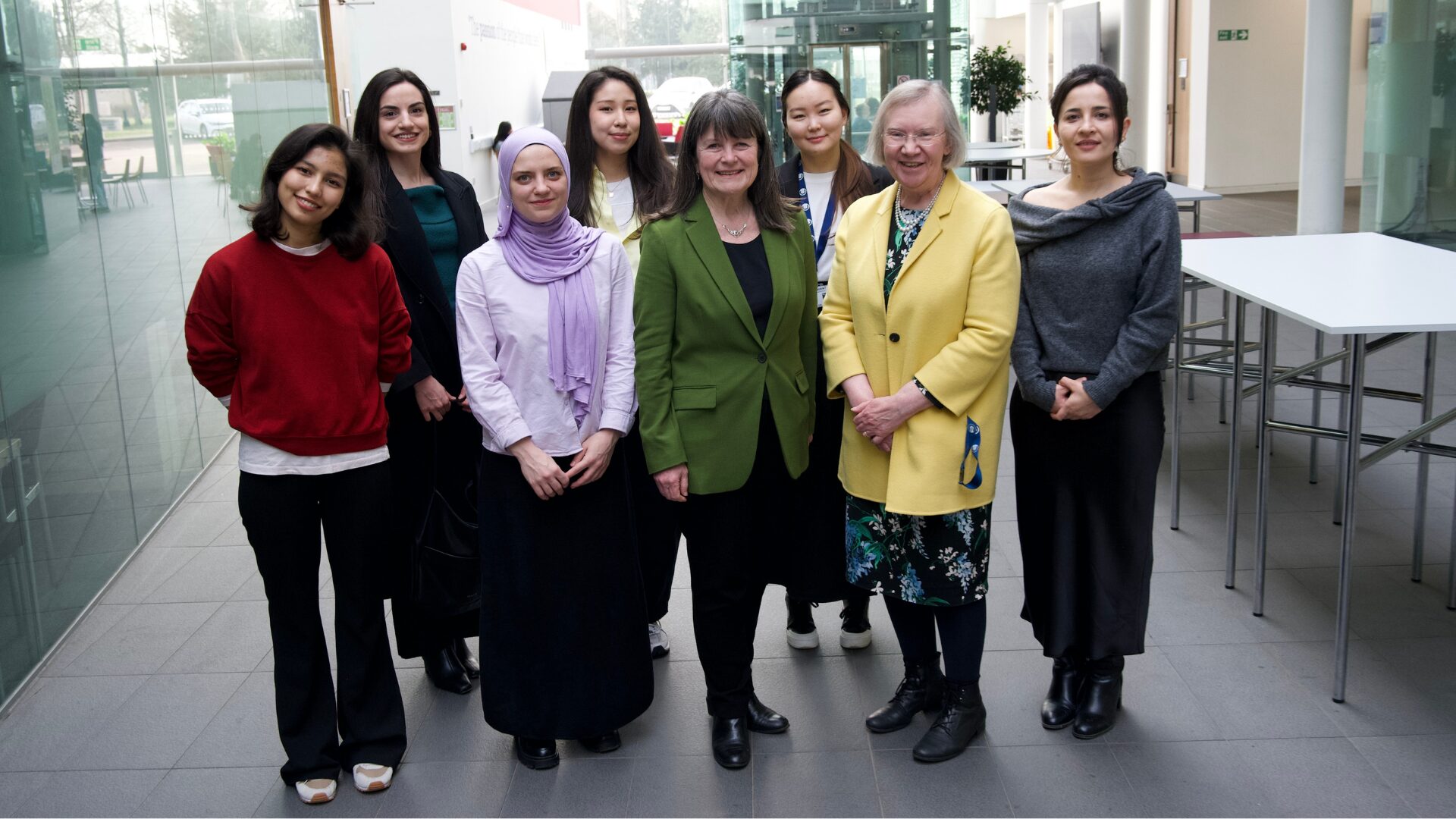
What happens when female scholars meet influential leaders?
On the 5 March 2026, our British Council Women in STEM Scholars had the privilege of sitting down with two excellent role models of industry and academia: Professor Dame Karen Holford, ...
From MSc to CEO: Igniting a research revolution
For many, a master’s degree is achieving a big milestone. Kilyan Ocampo, Computational Fluid Dynamics alumni shares how studying at Cranfield helped launch his career in the energy sector. Today, Kilyan ...
Commuting, collaborating and growing: My first term experience at Cranfield
My first term at Cranfield University has been an extremely positive and rewarding experience. While the course has been intense at times, it has pushed me in the best possible way and allowed me ...

Sourcing country analysis – a guide to Library sources
For those researching a country, you will find that country information tends to take two forms: Analysis - country reports are descriptive reports covering most areas of interest on a country. They contain an analysis ...
Comments are closed.