

Working with students and industry at Cranfield University
18/02/2022
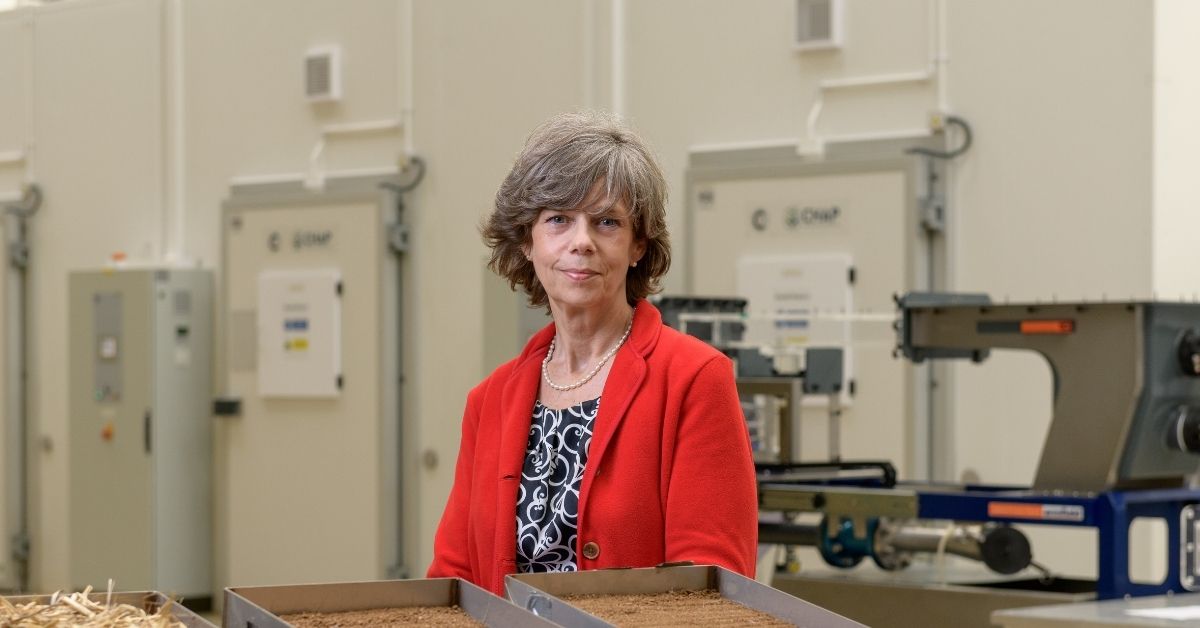
Can you tell us more about your role at Cranfield University and your area of research?
I am Professor of Soil Erosion and Conservation in the School of Water, Energy and Environment. Within the School, I belong to the Cranfield Soil and AgriFood Institute. My broad area of research is in natural resource management, specialising in sustainable land management. I am interested in understanding environmental processes (especially soil functions) and their role in delivering ecosystems goods and services to the whole of society. In other words, how soils underpin agricultural production, regulate water supplies (e.g., floods and droughts), enhance biodiversity, and help us mitigate and adapt to climate change.
Are you able to bring students into your work?
Yes, I like to involve students in my research wherever possible. I use my research to come up with ideas for MSc Group Projects and for individual MSc theses. This might include carrying out literature reviews to identify gaps in current knowledge, or more likely undertaking fundamental research to test scientific hypotheses. This might involve setting up experiments in the laboratory or field trials where we can generate some data. I would then get the students to analyse the data and present the results.
What support do you give students with group or thesis projects?
Many of the projects where I involve students are part of a larger research project. This means I can draw down resources to support the students, such as buying consumables, providing a travel budget etc. Students are also supported by getting access to our first-class experimental facilities, often operating at near field scale. Students can also take advantage of our wide network of interested stakeholders including industry partners and farmers etc. Finally, I can support students with my own experience of supervising MSc students – now dating back some 30 years +!
How do the student and companies work together?
Often our strong connections with industry will lead to conversations of their research needs and how the University can help. Often these needs can be met through student projects (both individual or Group projects). Once the scope of the project is agreed and appropriate supervisors are identified, the project ideas are put to the students, who are then able to select the projects of their choice. They would then work with the company in refining the research questions and undertake the work, all the while reporting back to the company on a regular basis. Throughout the project, the student / group would be guided and supported by their academic supervisor(s) and the company. The main supervisor would be a senior academic with plenty of experience of supervising Master’s projects and working with external clients to make sure everyone’s expectations are realistic and that delivery is of the required standard and is on time. These are useful skills for the students in their future careers.
Do we approach companies or do companies approach us?
Probably a bit of both. Cranfield has very strong and long-term relationships working with and for industry. Our contacts regularly approach us to solve their particular challenges. At the same time, we are always developing and expanding our network of new contacts, who we hope will provide opportunities for student projects. These student projects are often a good way of undertaking a ‘proof of concept’ project, and if successful, this might be followed up by a larger research contract, maybe even a PhD for the MSc student involved.
What are the benefits to industry to sponsoring a project?
Sponsoring a MSc project will bring a range of benefits to industry. Our students often come from varied academic backgrounds, bringing a range of skills and multidisciplinary approaches. This is really useful in the group projects, where students from different MSc courses will be working together. They may bring a range of subject expertise and experience to the project, including natural sciences, engineering, technology and social sciences….and more importantly, by working together, the transdisciplinary students will integrate these disciplines and find synergies between them.
The company also has the benefit of knowing the projects will be supervised by experienced academic staff, who will be guiding the students, ensuring that the work done is of quality and deliverables are made on time.
What are the benefits to the student?
The students get the opportunity to work on a ‘real-life’ challenge, set by an external industrial / company sponsor. This allows them to apply the knowledge and skills they have acquired during the taught course component of their master’s course. They get experience of working in that sector and an opportunity to build relationships and networks through their connections with the company. Carrying out applied research in this way with an external organisation looks very impressive on their CV, so hopefully increases their chances of employment once they graduate – this might even be within the company that supported their project!
Can you give us some examples of any memorable or successful industry sponsored group or thesis projects?
Recently we had a Group Project with Luton Borough Council, concerning future management of Wardown Park, which is included in the English Heritage’s Register of Historic Parks and Gardens. Within the Park, Wardown Lake delivers important goods and services to local residents, such as flood control, urban green space, recreation and biodiversity. However, the storage capacity and water quality of the lake has decreased over time due to siltation and pollution. The students had to design cost effective solutions that address these issues, but at the same time, deliver wider benefits in the upstream catchment. Students brought their specialist knowledge from a range of MSc courses, including Environmental Engineering, Geographical Information Management, Advanced Water Management and Environmental Management for Business.

Categories & Tags:
Leave a comment on this post:
You might also like…

Keen to develop your study skills?
Alongside the technical skills and academic knowledge that you will gain on your course, as a Cranfield student you have the opportunity to develop a range of other skills that can enhance your learning experience. ...

The V-conomy: powering the sixth wave of global economic growth
The world could be on the verge of a major surge in economic growth and development, driven by the convergence of AI and clean energy technology. Waiting to ride the K-wave The Russian ...

Need help using the Python programming language?
We know some of our students are currently trying to learn Python, so we wanted to make you aware of some great LinkedIn Learning videos that can help. But don't you have to pay for ...

What does it really take to become a Chevening Scholar?
Say “Turkmenistan” to most people and you’ll get a blank look. That was true when I left Ashgabat for the UK to study an MSc in Logistics and Supply Chain Management at Cranfield University ...

Get a head start on referencing and plagiarism
We offer a module on Referencing And Avoiding Plagiarism which you can find on your Canvas dashboard. It explains the role and importance of citing references and how to incorporate the work of other authors ...
How Cranfield shaped my journey as an Aerospace Engineer
If I'm being specific about the moment it clicked, it was reading a paper called "On the Role and Challenges of Computational Fluid Dynamics (CFD) in the Aerospace Industry" by two Boeing engineers, P. ...
Comments are closed.