


First module experience on Future Food Sustainability MSc
05/11/2018
I am glad I chose Cranfield University for my postgraduate studies. As I was going through the list of universities a year ago, Cranfield stood out for this one reason; its close partnership and links with industrial players. I experienced this first hand in my first module on the Future Food Sustainability MSc, ‘Principles of Sustainability’. We had an external delivered lecture and a very interactive session from the Ellen MacArthur Foundation. The session was on understanding the Circular Economy concept and why a shift from a linear economy is long overdue.
The quality of the lecturers has been world class, delivered by professionals who have vast knowledge in their fields of study. Classes in the tuition week were lively, with constructive and insightful questions from both students and lecturers. One that vividly comes to mind is Dr Paul Burgess teaching about the ‘doughnut economy’ concept and students remarking that the university should have provided doughnuts for that specific class to further their understanding. It is possible that there could be students who did not know what a doughnut is considering Cranfield’s high student diversity status.
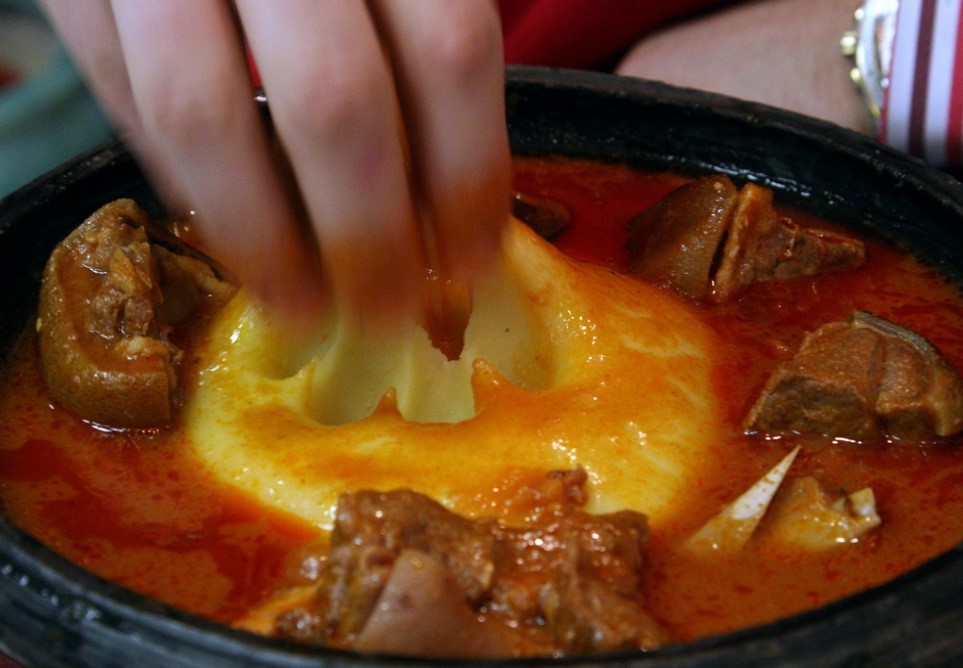
At the end of the first week I gave my first ‘professional’ presentation, assuming the one we did during the induction week on making the delicious Ghanaian cassava fufu and goat pepper soup was a test run. (A picture is at the top for those who might have forgot.)
Since my arrival at Cranfield, I have already experienced a lot of new culture, made new friends and constantly learning a new thing each day. This week was my study week and the week to write my assignment, there were late nights working on this assignment. I am at ease now it is submitted and grateful for all the assistance I received from Clare Humphries in doing my references on Mendeley, to doing a more accurate library search. Overall, I have had good first module experience and I have had a great conviction that things can only get better in my future modules.

Categories & Tags:
Leave a comment on this post:
You might also like…

Keen to develop your study skills?
Alongside the technical skills and academic knowledge that you will gain on your course, as a Cranfield student you have the opportunity to develop a range of other skills that can enhance your learning experience. ...

The V-conomy: powering the sixth wave of global economic growth
The world could be on the verge of a major surge in economic growth and development, driven by the convergence of AI and clean energy technology. Waiting to ride the K-wave The Russian ...

Need help using the Python programming language?
We know some of our students are currently trying to learn Python, so we wanted to make you aware of some great LinkedIn Learning videos that can help. But don't you have to pay for ...

What does it really take to become a Chevening Scholar?
Say “Turkmenistan” to most people and you’ll get a blank look. That was true when I left Ashgabat for the UK to study an MSc in Logistics and Supply Chain Management at Cranfield University ...

Get a head start on referencing and plagiarism
We offer a module on Referencing And Avoiding Plagiarism which you can find on your Canvas dashboard. It explains the role and importance of citing references and how to incorporate the work of other authors ...

How Cranfield shaped my journey as an Aerospace Engineer
If I'm being specific about the moment it clicked, it was reading a paper called "On the Role and Challenges of Computational Fluid Dynamics (CFD) in the Aerospace Industry" by two Boeing engineers, P. ...