


What is Economic Success?
09/10/2014

Every day we see references to GDP and profit. Today, for example, we hear the World Bank has estimated that if the Ebola epidemic spreads beyond Liberia, Guinea and Sierra Leone to neighbouring countries Nigeria and Ivory Coast, the cost to those economies could be 3.3pc ($32.6bn) of the combined GDPs of those countries affected. We also read that Tesco issued a third “profit warning” last month and that Marston’s (brewers and pub operators) 356 “destination” and “premium” sites generate almost five times the profit per pub against the rest of its estate. Clearly the terms “GDP” and “profit” are useful in these contexts. They provide a reference for our understanding of the situation. But are they sufficient as our two main measures of economic success?
GDP and profit shape the way we think about the economy and business and have a deep effect on the way we behave. We strive towards higher GDP and higher profits and, of course, the generation of wealth should ultimately support the wellbeing of individuals as it pays for healthcare, education, infrastructure and many other services people in developed countries often take for granted. But, is it enough?
On Wednesday Cranfield students and members and guests of ICAEW took part in a discussion about what the characteristics of a successful economy and a successful business should be. The results were perhaps not surprising. Whilst money did feature on both lists, other more- difficult- to measure factors predominated. Education was common to both the economy and the business list as was integrity and good governance. Freedom of opportunity, healthy population and innovation were listed. Happiness was also cited – but only 90% as an element of discontent was seen as necessary for development.
Similar discussions have taken place around the country and results are more or less the same …. So is it time to reconsider and give greater weight to some of these factors when
measuring success? For more information about ICAEW’s project see http://www.ion.icaew.com/Talkaccountancyblog/post/GDP-and-Profit—Are-they-what-we-mean-by–economic-success–

Categories & Tags:
Leave a comment on this post:
Comments are closed.
You might also like…

How Cranfield shaped my journey as an Aerospace Engineer
If I'm being specific about the moment it clicked, it was reading a paper called "On the Role and Challenges of Computational Fluid Dynamics (CFD) in the Aerospace Industry" by two Boeing engineers, P. ...
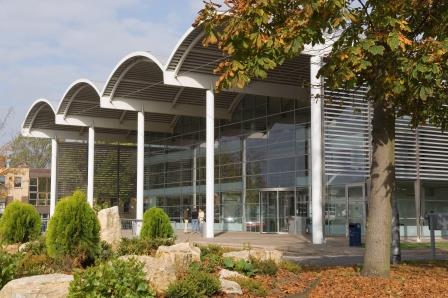
Introducing Kings Norton Library
Welcome to all our new students! We are looking forward to meeting you soon. You will find Kings Norton Library in the centre of the Cranfield campus, and it is open 24/7 to all staff ...

Setting your research on the right course: Four questions every researcher should ask
Whether you are just beginning your doctoral journey or are already well into your research career, successful research rarely happens by accident. Like any successful mission, it depends on good planning, informed decisions, and getting ...

5 budgeting mistakes students make (and how to avoid them)
Good financial planning isn't about how much money you have. It's about the habits you build. We asked Dr Lakshmy Subramanian, Course Director for the Banking, Economics and Finance MSc, about the budgeting mistakes ...

Finding your reading materials
Use Library Search Library Search is the first place to start when you are trying to find academic sources for your work. This is the search box on the library website homepage. It allows you ...

Formula 1 was the dream and Cranfield was the conduit
I still remember the exact moment Formula 1 (F1) got its hooks into me. I was in my first year of an aerospace undergraduate engineering degree when I watched a video about the sport ...
It will be interesting to see how this project develops. Measuring GDP and profit can be complex enough. However, there are comparatively objective to assess when compared to health, education, opportunity and happiness.