

Helping circular economy business leaders see beyond their own time
06/07/2017

“The eyes of the future are looking back at us and they are praying for us to see beyond our own time.” – T.T. Williams
The quote resonates. The eyes of the future are upon us. Never have we had more information at our fingertips and never have we been more connected. Yet, it seems the challenges have never been greater.
The social, political, digital, and economic disruptions we are experiencing are unprecedented and world-changing. But history has taught us that immense challenges spark great ingenuity. Rather than succumb to the threats of the present, skilled people armed with the right motivation, information, and tools can reinvent the future.
Circular economy business skills are in short supply
For sustainable business leaders, there is no shortage of skilled business people. The challenge is: there are relatively few people with the competencies to drive Circular Economy (CE) business model innovations within organizations.
Even the most knowledgeable among us are far from being experts in implementation – we’re all learning – and learning from each other. We know why building CE business models matter – to our businesses, customers, society, and the natural world – but there is still a persistent gap in understanding how to translate CE principles into scalable models that drive consistent, innovative outcomes.
As a 100-year-old company, Steelcase is faced with some challenging and exciting questions:
- How do we shift conversation from business optimization to business transformation?
- How do we unleash culture to drive new CE design capabilities and business models?
- How can we leverage existing models and achievements to pivot into new opportunities?
- How can we leverage technology to drive new value creation?
- How can we build on existing circular economy capabilities to grow new ones?
We’ve been working to answer these questions and others like them for a while. Decades ago, we began designing to Cradle to Cradle principles to avoid toxic chemicals, optimise lifecycle performance and enable materials recovery at end of life. Ten years ago, we started piloting new business models including product/service integration, pay-for-use workspace solutions, and end of use services. Today, we continue to iterate and scale our early models as we imagine and test new ones — building the agility and resilience we’ll need in the next 100 years.
Skilled people are central to harnessing the digital revolution for good
Building effective CE business models will be a common thread between thriving companies of the future. The digital revolution will bring the sensing power and systems analytics needed to drive deep insights around use patterns, provenance, product condition and customer value. These advancements promise to finally decouple economic growth from resource consumption.
The key word is ‘promise’. To deliver on the promise, we still need people.
- We need brave and capable visionaries, entrepreneurs, and innovators inside today’s largest and smallest companies, and throughout society, to turn this promise into reality.
- We need translators, practitioners, and designers who can transform the things we make into resilient economic engines that grow resource abundance as they deliver better solutions for society and customers.
- We need educators to innovate learning programs and convene communities of practice that help people master the principles of CE and help them build the empathy skills needed to unleash their practice expertise within companies.
We need people with new skills and the ability to see the future with new eyes.
Training vital to help business leaders ‘see beyond our own time’
As an Ellen MacArthur Foundation Pioneer University, Cranfield University, in collaboration with EMF, has leveraged their renowned expertise to create an exciting, part-time Executive MSc course. Technology, Innovation and Management for a Circular Economy marries circular economy principles and cross-disciplinary practice within the context of the digital revolution.
This newly minted course aims to equip professionals with the knowledge to see beyond our own time – and the skills to transform our global economy one institution and one company at a time.
The next generation of business leaders will be challenged by scarcity, outdated economic systems, and a rapidly changing business context. Disrupting the status quo with new operating models will require innovative systems design thinking and a deep understanding of the barriers and opportunities ahead. Courses like the Cranfield MSc can help professionals develop the skills and strategic perspectives to not only succeed in the future context, but to fundamentally transform it.
If you haven’t considered an advanced course in Circular Economy, you should.
The future needs you.

Categories & Tags:
Leave a comment on this post:
You might also like…

Moving to the UK to study? How to plan for banking, exchange rates and transfers
Currency and banking are two of the most practical parts of financial planning for international students. They are also often the most overlooked. We asked Dr Lakshmy Subramanian, Course Director for Cranfield University's Banking, ...

Cranfield: an environment where innovation thrives
The latest Knowledge Exchange Framework rankings from UK Research and Innovation (UKRI) gives an insight into the real and meaningful impact that UK universities have. The seven categories that make up KEF6 cover everything ...
How Cranfield accelerated my career in Logistics and Supply Chain Management
After graduating from the MSc in Logistics and Supply Chain Management at Cranfield University, I've been reflecting on the experiences that made my journey so valuable and the impact it has had on my ...

Mendeley: a powerful tool to organise and manage your references
Are you looking for a way to manage your references, create in-text citations and reference lists for your assignments or thesis? If so, you may wish to consider using Mendeley. What is it? Mendeley is ...
Keen to develop your study skills?
Alongside the technical skills and academic knowledge that you will gain on your course, as a Cranfield student you have the opportunity to develop a range of other skills that can enhance your learning experience. ...
The V-conomy: powering the sixth wave of global economic growth
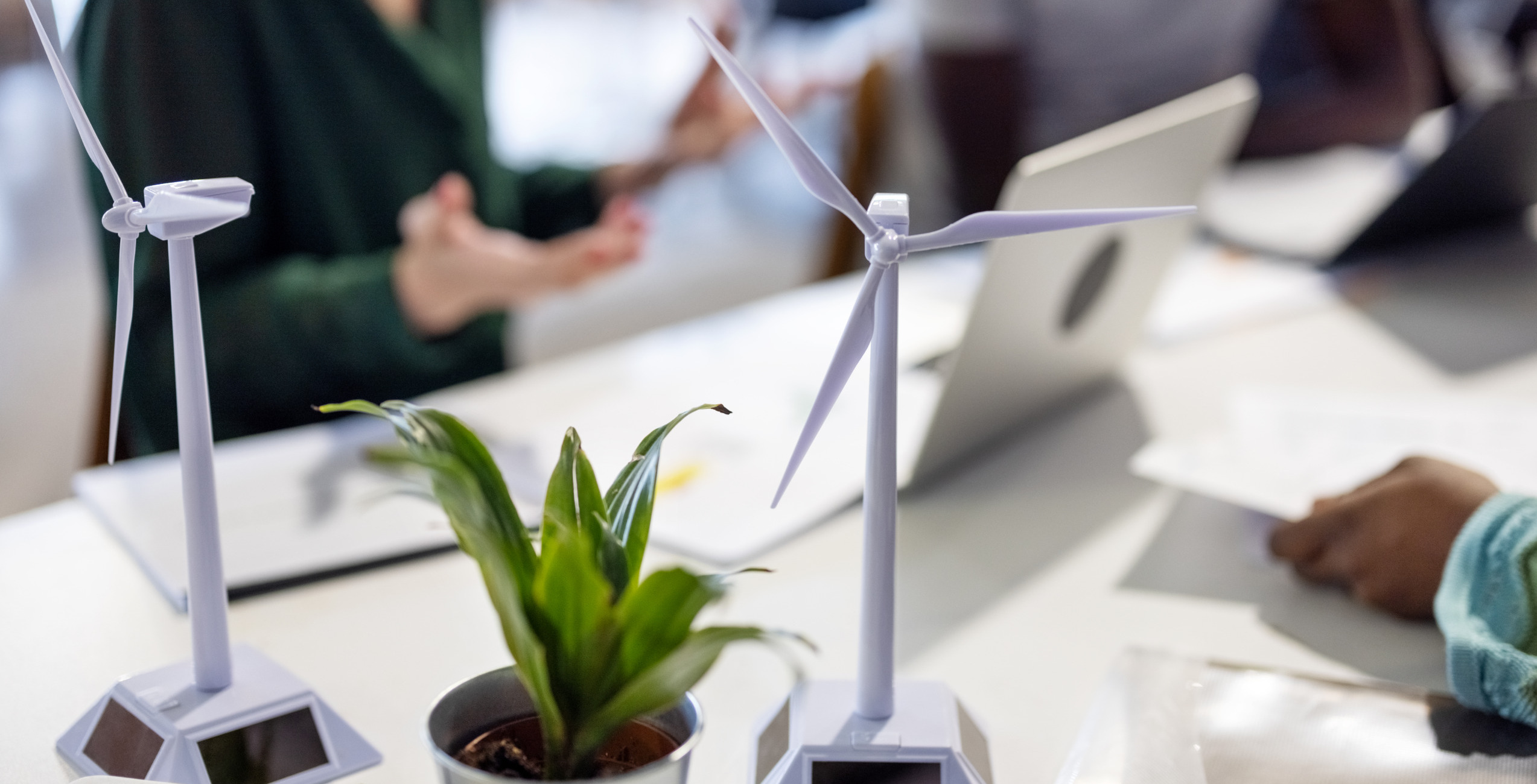
The world could be on the verge of a major surge in economic growth and development, driven by the convergence of AI and clean energy technology. Waiting to ride the K-wave The Russian ...