

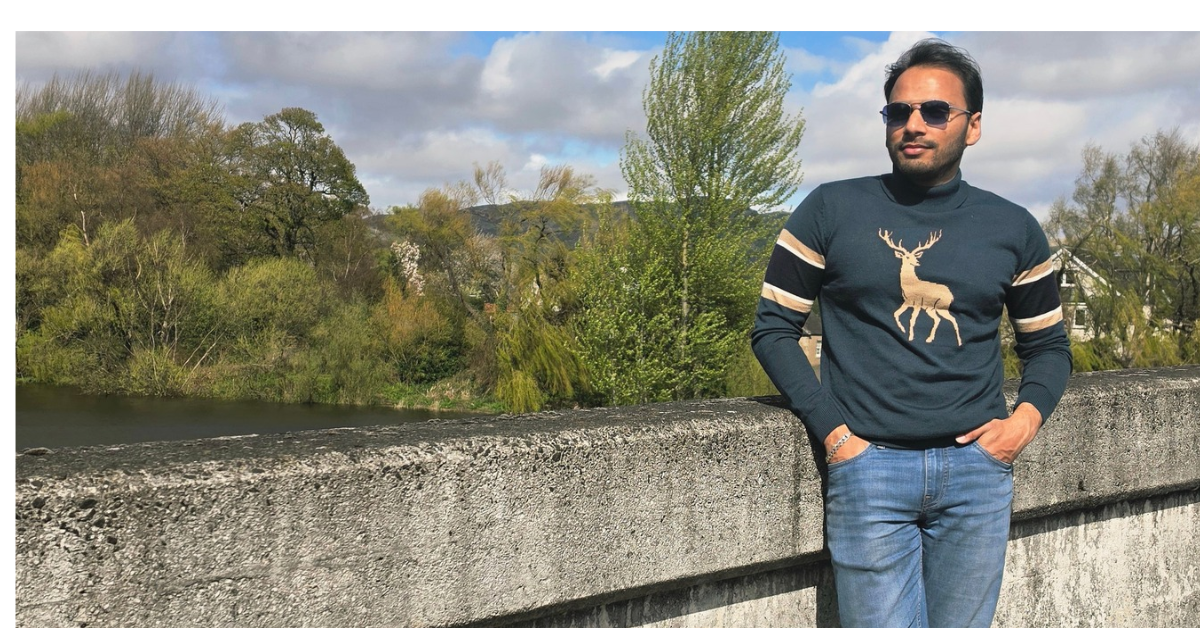
From insurance to aerospace: why I chose to study a PhD with Cranfield
20/08/2026

My path to studying for a PhD wasn’t exactly a straight line.
I had just graduated with an MEng in Aerospace Engineering from the University of Surrey and, like a lot of people, wasn’t sure what came next. I ended up on a graduate scheme with an insurance company. It was a job, but it wasn’t engineering, and I knew pretty quickly that I wanted to get back to it. Research kept pulling at me, so I started looking seriously at PhD options.
Why a PhD?
I wasn’t just looking for a way back into engineering. I wanted to actually build research skills and, just as importantly, learn how to communicate that research to people outside academia. There’s no point doing brilliant work if you can’t explain why it matters.
That’s what made The EPSRC Centre for Doctoral Training in Net Zero Aviation stand out. It’s a genuinely exciting opportunity to do novel research while getting a proper, full picture of what decarbonisation actually looks like across the aviation industry, not just one narrow slice of it.
Cranfield being one of the key partners of the CDT made the decision easier, but it wasn’t the only factor. This is a university with a serious reputation in aerospace innovation, and the sheer number of industry links it has is a massive plus, especially for a CDT that’s built around applying research to real industry problems.
I chose to study full-time because I wanted to fully commit to the research, the learning, the training, all of it. And funding mattered too. I only looked at fully-funded projects, and this one ticked that box with a stipend that made the decision straightforward.
What is the schedule like?
So far, it’s been genuinely enjoyable. I’ve taken modules in areas like Air Transport Sustainability, Hydrogen, and Manufacturing, which have been a great way to build on what I already knew from my undergrad and give proper context to my own research project.
Next year, I’ll be doing modules and fieldwork with NCAS as part of the CDT. I’m looking forward to that. It’s another chance to build up practical, hands-on skills, especially around data collection, which will directly feed into the research.
Is Cranfield right for you if you want to study Aviation?
Honestly? Anyone who wants to make a real difference in aviation will feel right at home at Cranfield. If you want to help push the industry towards net zero, work alongside a wide range of industry partners, and learn from people who are genuinely world-leading in their field – this is the kind of institution that lets you do that.
Where I think this is taking me
I want to go into research and development within industry, and I think this PhD is exactly the kind of path that gets me there. Beyond the technical side, I’m learning how to do research that actually produces results industry can use – not just research for research’s sake.
I will be continuing my study at University of Strathclyde Glasgow, key collaborators alongside Cranfield and Cardiff University with the EPSRC Centre for Doctoral Training in Net Zero Aviation.
My advice to those considering a PhD
Make sure you actually care about the area you’re researching. That sounds obvious, but a PhD takes both effort and passion in equal measure, and you’ll need both to get through it and produce work you’re proud of.
If I had to sum up my time at Cranfield in one word so far? Inspirational.


Categories & Tags:
Leave a comment on this post:
You might also like…

Moving to the UK to study? How to plan for banking, exchange rates and transfers
Currency and banking are two of the most practical parts of financial planning for international students. They are also often the most overlooked. We asked Dr Lakshmy Subramanian, Course Director for Cranfield University's Banking, ...

Cranfield: an environment where innovation thrives
The latest Knowledge Exchange Framework rankings from UK Research and Innovation (UKRI) gives an insight into the real and meaningful impact that UK universities have. The seven categories that make up KEF6 cover everything ...
How Cranfield accelerated my career in Logistics and Supply Chain Management
After graduating from the MSc in Logistics and Supply Chain Management at Cranfield University, I've been reflecting on the experiences that made my journey so valuable and the impact it has had on my ...

Mendeley: a powerful tool to organise and manage your references
Are you looking for a way to manage your references, create in-text citations and reference lists for your assignments or thesis? If so, you may wish to consider using Mendeley. What is it? Mendeley is ...

Keen to develop your study skills?
Alongside the technical skills and academic knowledge that you will gain on your course, as a Cranfield student you have the opportunity to develop a range of other skills that can enhance your learning experience. ...

The V-conomy: powering the sixth wave of global economic growth
The world could be on the verge of a major surge in economic growth and development, driven by the convergence of AI and clean energy technology. Waiting to ride the K-wave The Russian ...