


How to build a business that keeps growing
12/08/2026

Ask any business owner about their ambitions and “growth” will almost certainly feature near the top of the list. More customers, higher revenues, larger teams and new markets are often seen as signs of success. Yet growth in the short-term can be misleading.
Businesses can grow rapidly while becoming less profitable, less efficient and more dependent on their owners. The real objective is not growth for its own sake. It is building a business that can keep growing over the long-term.
One of the biggest misconceptions among SMEs is that if demand increases, the business will naturally adapt. In reality, growth often exposes weaknesses that were previously hidden. Systems begin to fail, communication becomes difficult, customer service suffers and business owners often find themselves working longer hours rather than creating greater value. Often the real challenge is not attracting growth, it is having a business that is capable of handling it.
The first question every business owner should ask is:
Can my business operate without me?
Many SMEs are built around the founder’s knowledge, relationships and decision-making. That approach usually works well in the early stages, but it quickly becomes a barrier as the business expands. If every important decision, customer issue or operational challenge still lands on the owner’s desk, growth simply creates more pressure instead of more opportunity. Building scalable systems, documenting processes and empowering others to make decisions are not administrative exercises. They are the foundations of a business that keeps growing.
The second question is:
Can my people grow with the business?
Winning new customers is important, but long-term business growth depends just as much on developing the people behind the business. As organisations expand, success increasingly relies on employees who can solve problems, take ownership and make sound decisions. Strong leadership is not about doing everything yourself, it is about creating an environment where others are empowered. Investing in people, building trust and creating a culture of accountability enables businesses to grow without becoming overly dependent on the owner.
The final question is perhaps the most important:
Am I growing as a leader?
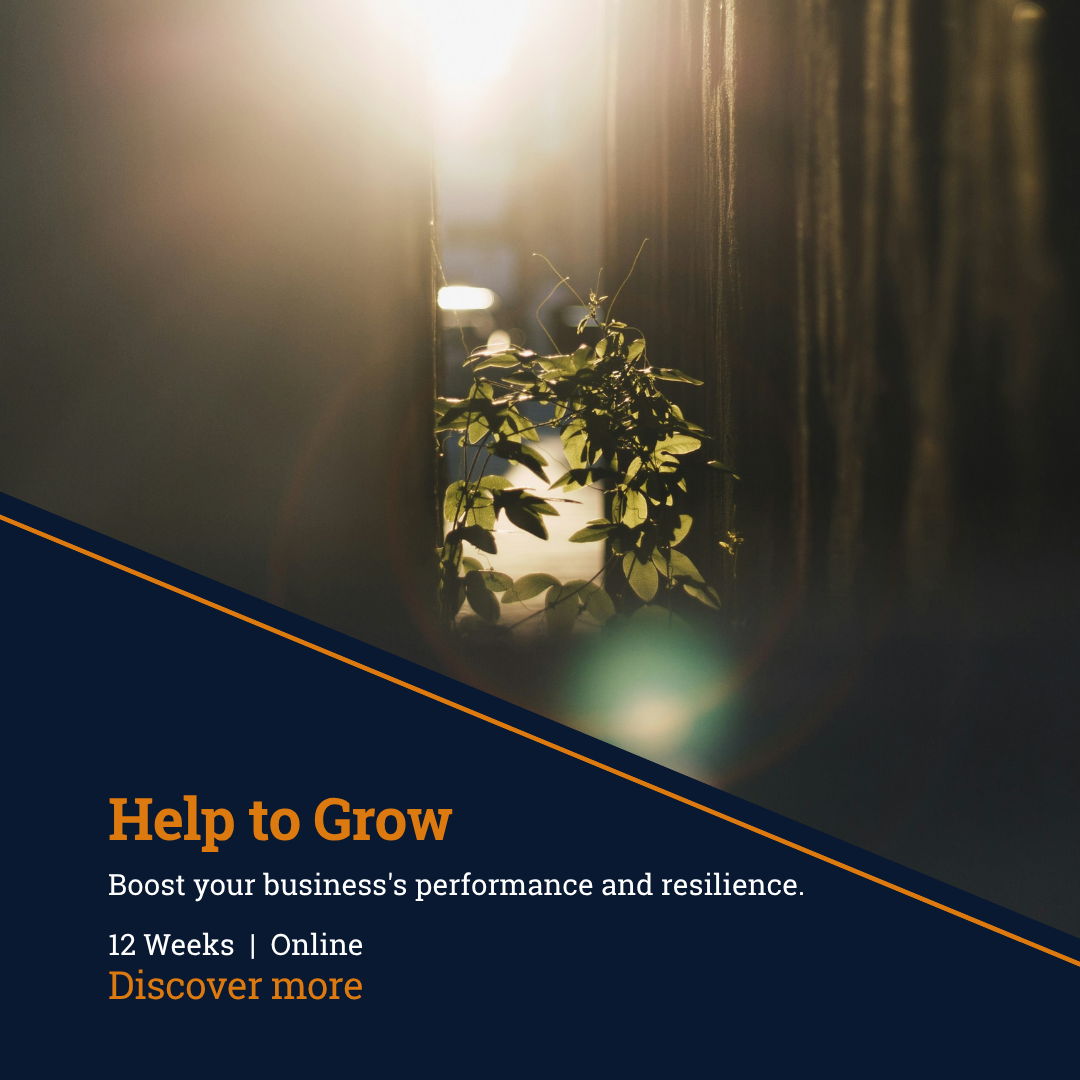
Many entrepreneurs believe that experience is the best teacher. However, experience only teaches us what we have already encountered. Markets evolve, technologies change and customer expectations continue to shift. Leaders who actively seek new ideas and different perspectives are often better prepared for what comes next. Networking with other business owners, learning from mentors and participating in leadership development programmes, such as the UK government-backed Help to Grow: Management programme, can provide practical insights, fresh thinking and the confidence to make better strategic decisions. After all, businesses rarely outgrow the capabilities of their people before they outgrow the capabilities of their leaders.
Building a business that keeps growing is not about chasing every opportunity or expanding as quickly as possible. It is about creating the foundations that allow growth to continue, year after year. When your systems can scale, your people are empowered and you continue to grow as a leader, your business is far better placed to turn opportunities into lasting success.


Categories & Tags:
Leave a comment on this post:
You might also like…

Keen to develop your study skills?
Alongside the technical skills and academic knowledge that you will gain on your course, as a Cranfield student you have the opportunity to develop a range of other skills that can enhance your learning experience. ...

The V-conomy: powering the sixth wave of global economic growth
The world could be on the verge of a major surge in economic growth and development, driven by the convergence of AI and clean energy technology. Waiting to ride the K-wave The Russian ...

Need help using the Python programming language?
We know some of our students are currently trying to learn Python, so we wanted to make you aware of some great LinkedIn Learning videos that can help. But don't you have to pay for ...

What does it really take to become a Chevening Scholar?
Say “Turkmenistan” to most people and you’ll get a blank look. That was true when I left Ashgabat for the UK to study an MSc in Logistics and Supply Chain Management at Cranfield University ...

Get a head start on referencing and plagiarism
We offer a module on Referencing And Avoiding Plagiarism which you can find on your Canvas dashboard. It explains the role and importance of citing references and how to incorporate the work of other authors ...

How Cranfield shaped my journey as an Aerospace Engineer
If I'm being specific about the moment it clicked, it was reading a paper called "On the Role and Challenges of Computational Fluid Dynamics (CFD) in the Aerospace Industry" by two Boeing engineers, P. ...