


Cleared for the future: Why aviation leaders must embrace environmental sustainability
06/01/2026

Environmental sustainability is not a niche concern for aviation anymore, it’s central to how we think about the future of our industry.
In my work as an Associate Professor of Airport Decarbonisation, I see first-hand how airlines, airports, regulators, and global organisations are being pushed by customers, investors, and society at large to act on carbon emissions, noise pollution, energy demand, and even non-CO₂ impacts. Leaders today simply must internalise sustainability principles if they’re going to make sound operational and strategic decisions.
Understanding these fundamentals is not just helpful — it’s essential. It enables better decision-making day to day, improves long-term strategic responses to regulation, and opens up opportunities for competitive advantage and operational resilience.
The challenge of commitment: Aviation’s net zero future
The International Civil Aviation Organisation (ICAO) has set the goal of net-zero carbon emissions for aviation by 2050, in support of the Paris Agreement. Achieving that ambition involves collaboration across governments, airlines, airports, and international bodies, not just within single organisations. It’s a systemic challenge that demands systemic responses.
Meanwhile, sustainability performance is firmly on the compliance agenda. For example, Europe’s Fit for 55 framework mandates Sustainable Aviation Fuel (SAF) blending and introduces enhanced carbon pricing from 2025. Globally, airlines must monitor, report and offset emissions under ICAO’s CORSIA scheme. These pressures, set against dynamic geopolitical conditions, make sustainability both a regulatory imperative and an operational challenge.
Soaring with Sustainable Aviation Fuel?
Sustainable Aviation Fuel (SAF) has garnered significant attention as a pathway towards net-zero. By using feedstocks that absorb CO₂ from the atmosphere, SAF has the potential to reduce lifecycle carbon emissions compared to conventional jet fuel. But it’s not a silver bullet: supply remains limited, scaling production is commercially challenging, and non-CO₂ impacts at cruise still require deeper scientific and operational understanding. The term ‘SAF’ also covers a wide range of fuel production pathways, each with its own trade-offs.
For operators trying to navigate this terrain, it can be confusing — which is exactly why informed leadership matters.
Collective and collaborative contribution
Aviation has weathered crises before, from global recessions to pandemics, and each time the industry has adapted and emerged more resilient. But sustainability is arguably the defining challenge of this generation. This isn’t just about ticking compliance boxes: understanding aviation sustainability from both practical and strategic perspectives is essential for long-term success.
By integrating environmentally resilient operations, innovative fuel technologies, and proactive sustainability management into core decision-making, aviation leaders can help chart a feasible and prosperous course for the industry.
About the Sustainable Aviation Leadership course
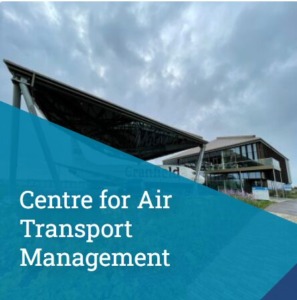
To support that transformation, I’m proud to contribute to the Sustainable Aviation Leadership short course — a 1.5-day professional programme offered through the Centre for Air Transport Management at Cranfield. Designed for managers and decision-makers, the course provides the frameworks and tools needed to lead sustainability transitions in aviation.
“In my experience working across research and industry partnerships, I’ve seen how critical it is for leaders to not only understand sustainability metrics but to be confident in applying them meaningfully in an operational context. This course equips students with exactly that — the ability to turn sustainability knowledge into strategic action that benefits both organisations and the wider sector.”



Categories & Tags:
Leave a comment on this post:
You might also like…

Referencing the use of generative AI in your work
We recognise that Artificial Intelligence (AI) has, and will increasingly, become a part of our everyday lives and that we need to adapt to it. Hopefully you will have already seen the guidance for staff ...

Finding part-time work whilst studying at Cranfield – is it right for you?
We know that the cost of living in the UK is a real and ongoing challenge for many students. Whether you are still considering postgraduate study or already preparing for life at university, you ...

Leaving Cranfield soon? Have you heard about Alumni Library Online?
We are proud to offer one of the UK’s leading university library services for alumni. Alumni Library Online gives you instant access to thousands of top quality journal articles and the latest thinking to support ...

Want to know more about research methods?
Research methods are the strategies and tools used to gather, analyse and interpret data or evidence to uncover new information or create better understanding of a topic. Research methodology is the theory, justification and assumptions ...

Come for Cranfield, stay for Milton Keynes: how Bucks, Beds and the OxCam region are just getting started
Heard the one about the entry-level job that needed three years of experience? Sadly we all have, and that’s why in a jobs market where practical, hands-on experience is so important, study where collaboration ...

British Standards and ISO standards demystified
We are frequently asked how to find ISO (International Standards Organisation) standards. The best way to find them is to go straight to our British Standards Online (BSOL) service. Why go to British Standards if you ...
Comments are closed.